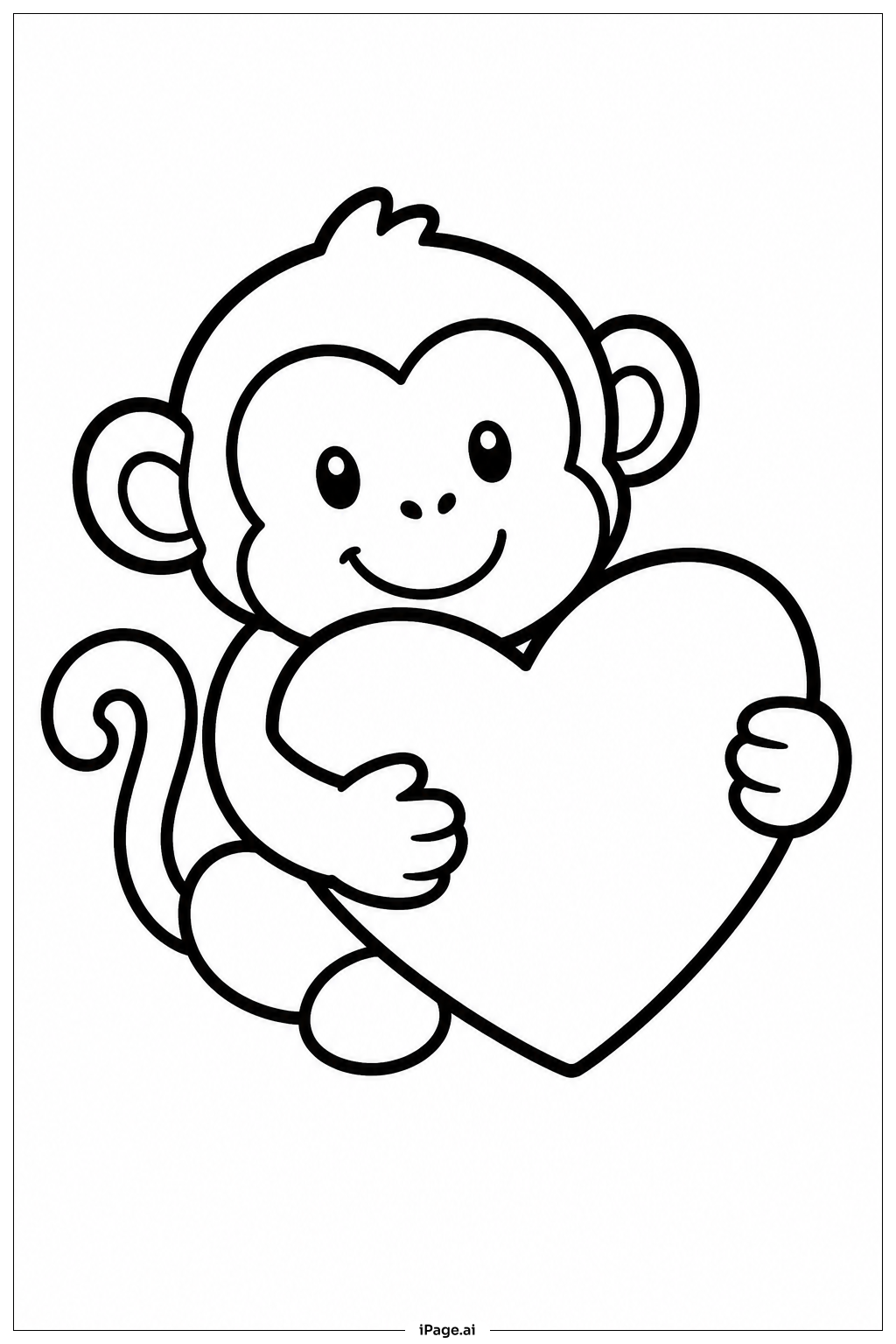
Coloring tips: How to color Monkey With Heart coloring page well?
Start with the monkey's body. Use warm shades of brown for the fur, such as tan, caramel, or golden brown. Use a slightly lighter color for the face, belly, and inner ears to show contrast. Add a soft peach or cream tone to the snout area. For the heart, bright red or pink works beautifully and makes it stand out. You can also try purple or orange for a fun twist. Use dark brown or black to carefully outline the eyes, then fill them with a warm color like hazel or dark brown. Add a small white dot to each eye to make them look shiny and alive. The tail can match the body color or use a gradient from dark to light. Feel free to add a simple background with yellow, sky blue, or soft green to make the whole image pop.
Coloring challenges: Which parts are difficult to color and need attention for Monkey With Heart coloring page?
• Fur Texture Details: The monkey's body is covered with fine fur lines that create texture. Coloring inside these small lines without going over the edges takes patience and a sharp colored pencil or thin marker. Young colorists may find it tricky to stay within these narrow areas while still making the fur look natural and layered.
• Heart Shape Precision: The large heart held by the monkey is a key focal point. Getting a smooth, even color fill without streaks or uneven patches can be challenging, especially for beginners. Blending two shades, such as red and pink, to create a gradient effect on the heart requires careful and gentle strokes.
• Facial Expression Details: The monkey's face has small but important features, including the eyes, nose, and smile. These areas are close together and quite small. Coloring them neatly without smudging or overlapping colors needs a fine-tip tool and a steady hand. The shiny highlight dot in each eye is especially tiny and easy to accidentally color over.
• Color Contrast Between Body Parts: Showing the difference between the darker fur on the body and the lighter tones on the face, ears, and belly requires good color selection. Choosing colors that are clearly different but still look natural together can be a fun challenge for young artists learning about shading and tone.
• Tail Curve and Outline: The long, curling tail sweeps around the body in a curved shape. Coloring along its curved edges smoothly without going outside the lines takes focus, especially where the tail curves tightly or overlaps near the body.
Benefits of coloring books: Advantages of drawing Monkey With Heart coloring page
Coloring this sweet monkey holding a heart offers many wonderful benefits for kids. First, it helps build fine motor skills. Staying inside the lines, controlling pencil pressure, and handling small detail areas all strengthen the hand muscles and improve coordination. These skills are important for writing and everyday tasks.
Second, this image encourages creativity. Kids get to choose their own colors for the fur, the heart, and the background. There is no single right answer, so every child can create something unique and personal. This builds confidence and self-expression.
Third, coloring has a calming effect. Focusing on a simple, joyful image like this monkey helps children slow down, breathe, and feel relaxed. It is a great quiet-time activity after school or before bed.
Fourth, the heart symbol in the image opens up conversations about love, kindness, and feelings. Parents and teachers can use this coloring page to talk to kids about sharing love with family and friends.
Finally, finishing the page gives children a real sense of pride and accomplishment. Displaying their completed artwork builds positive self-esteem and motivates them to keep creating.