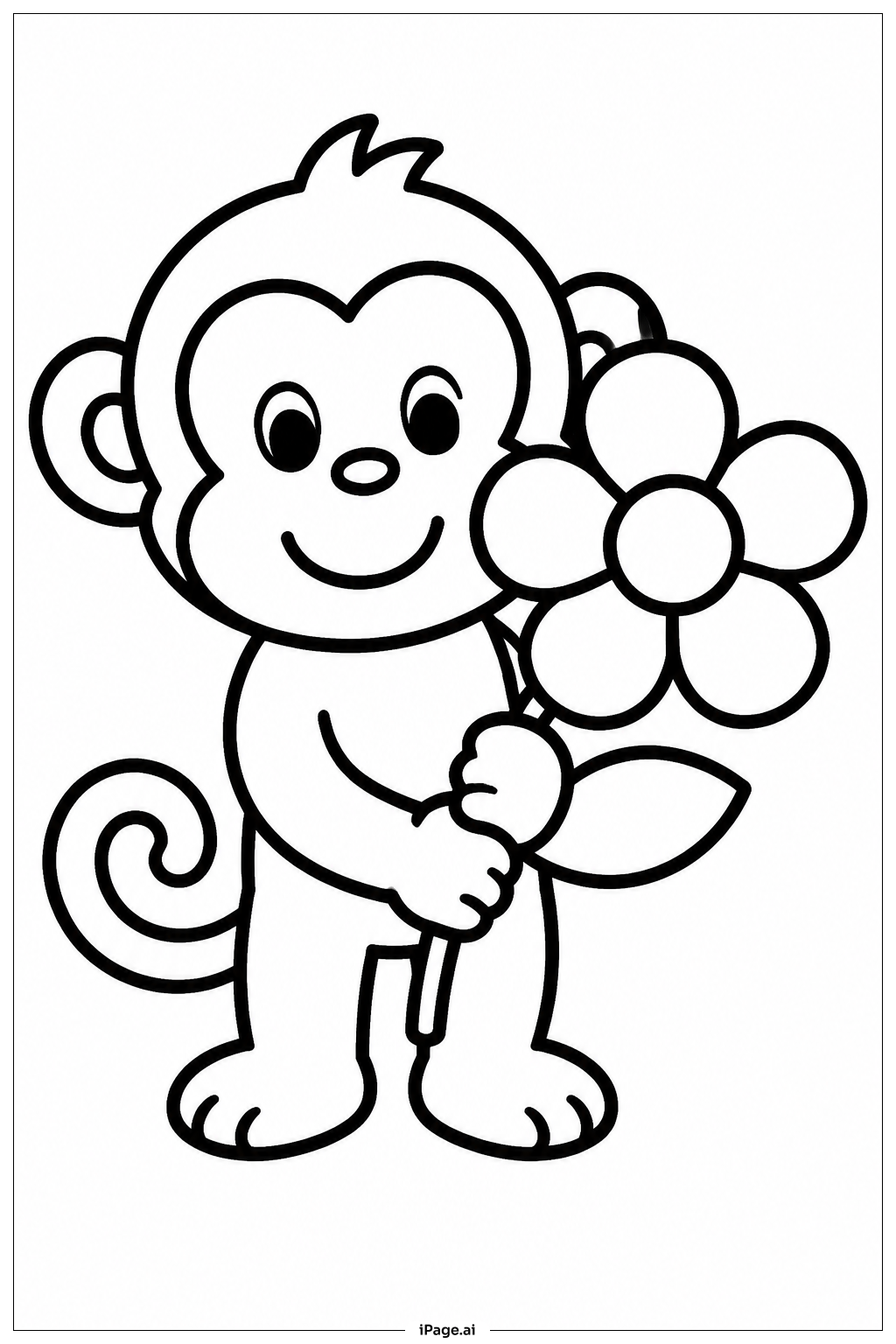
Coloring tips: How to color Monkey With Flower coloring page well?
Start with the monkey's body by choosing warm brown or tan shades for its fur. Use a slightly darker brown for shadowed areas, like under the arms, around the face, and along the back, to give the fur a natural, fluffy look. The monkey's face, ears, and palms are often lighter, so try a soft peach or cream color there. For the flower, pick bright and cheerful colors like yellow, pink, orange, or red for the petals. Use a deeper shade of the same color near the base of each petal to add depth. Color the flower's center with golden yellow or orange. For any leaves or vines, use different shades of green to make them look lively. Light green works well for highlights, while darker green adds shadow. Try to keep the background simple, maybe a soft blue sky or light yellow, so the monkey and flower remain the main focus. Have fun mixing colors!
Coloring challenges: Which parts are difficult to color and need attention for Monkey With Flower coloring page?
• Monkey Fur Texture: The monkey's fur is made up of many fine, short lines layered across the body. Coloring this area evenly while still showing the texture can be tricky. Try using short, light strokes that follow the direction of the fur lines rather than filling in large areas all at once. Layering two shades of brown helps create a more realistic and dimensional look.
• Facial Details: The monkey's face has small, closely spaced features including the eyes, nose, and mouth. These areas require a steady hand and a sharp pencil or thin marker. Be careful not to color over the white highlights in the eyes, as those tiny spots bring the face to life. Use lighter skin tones around the inner face to separate it from the darker outer fur.
• Flower Petal Shading: Each petal of the flower benefits from a gradual color shift, darker at the base and lighter toward the tip. Blending two shades smoothly within a small petal shape takes patience and practice. Going too dark too quickly can make the petals look flat instead of soft and dimensional.
• Overlapping Elements: Where the monkey's hands meet the flower stem, or where the tail curves near the body, the lines overlap closely. It can be easy to accidentally color over a boundary line. Take extra care in these tight spots by using a smaller coloring tool or slowing down your strokes near the edges.
• Background Balance: If a background is included, keeping it light enough so it does not compete with the main subject is a common challenge. Use very gentle pressure and soft, pale tones to fill background areas without overpowering the monkey and flower at the center.
Benefits of coloring books: Advantages of drawing Monkey With Flower coloring page
Coloring this Monkey With Flower image brings a wonderful range of benefits for children and young learners. First, it builds fine motor skills. Carefully staying within the lines of the monkey's fur and the flower's petals helps strengthen the small muscles in the hands and fingers, which supports better handwriting and coordination. Second, it encourages creativity. Choosing colors for the fur, petals, and background lets kids express their own imagination and develop a personal sense of style. There is no single right answer, which makes the activity freeing and fun. Third, it promotes focus and patience. Detailed areas like the monkey's face and flower shading require concentration, helping children practice sitting still and working carefully toward a finished goal. Fourth, it introduces nature appreciation. The image of a monkey interacting gently with a flower opens conversations about animals, plants, and the natural world, sparking curiosity and a love of wildlife. Finally, completing the page gives children a real sense of accomplishment and boosts confidence. It is a calming, screen-free activity that supports both emotional well-being and artistic growth.