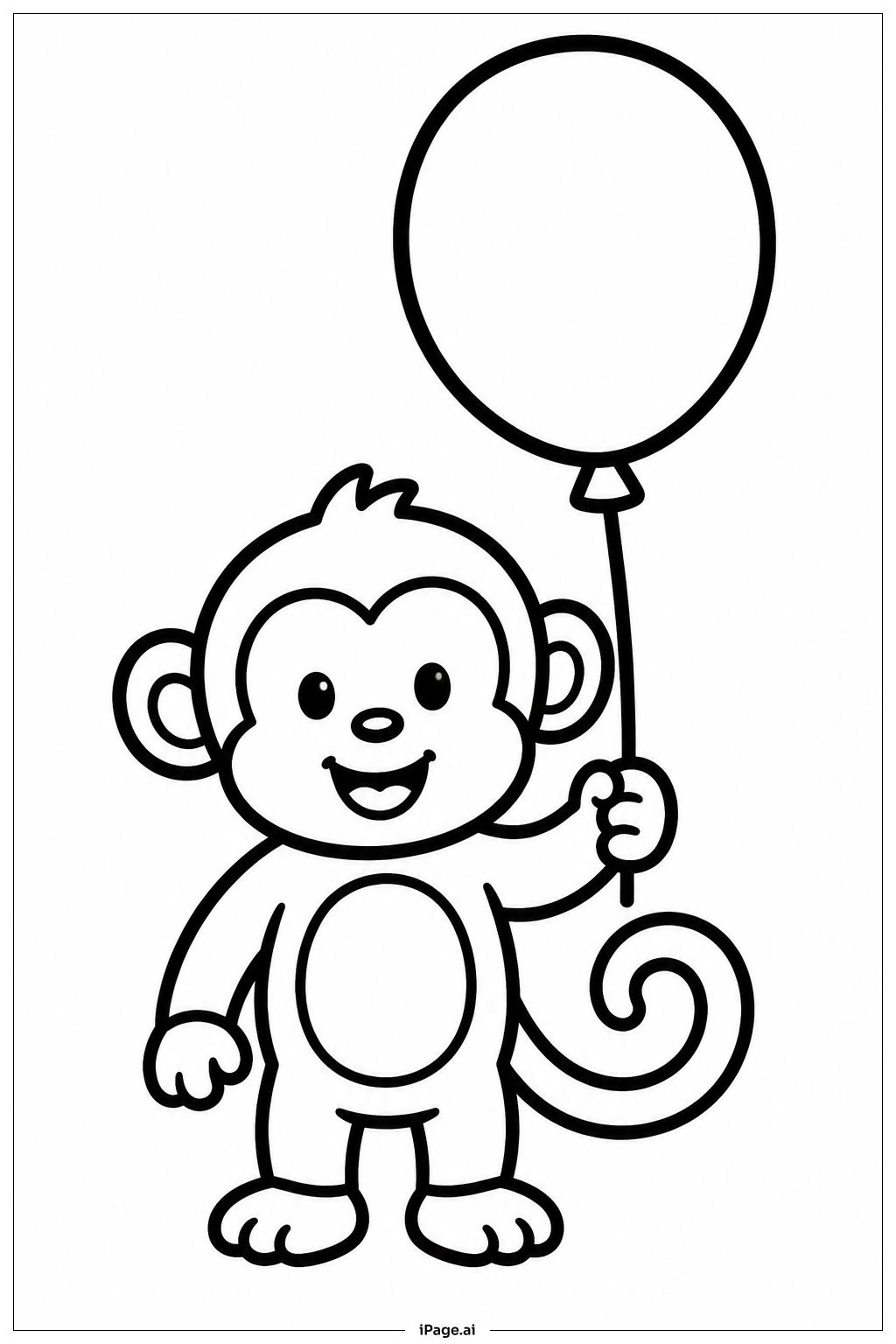
Coloring tips: How to color Monkey With Balloon coloring page well?
Start with the monkey's body before moving on to the balloon. Use warm brown or golden yellow tones for the fur. Add a slightly lighter shade to the face, palms, and belly to show softer areas of skin. For the balloon, pick a bold, bright color like red, orange, or yellow to make it pop. A cheerful color will contrast nicely with the brown fur. Use a soft pink or peach tone for the inside of the ears and the mouth area. Color the eyes dark brown or black, and leave a small white dot to create a shiny, lively look. The string can be colored in white or light gray. The background can be left plain or filled with a soft sky blue to give a sense of the balloon floating in open air. Encourage kids to try blending two shades of brown for the fur to add depth and texture. Keep the overall palette bright and fun to match the monkey's playful mood.
Coloring challenges: Which parts are difficult to color and need attention for Monkey With Balloon coloring page?
• Fur Texture Details: The monkey's fur has many small lines and curves that show its fluffy, layered texture. Staying within these fine lines while applying color takes a steady hand and patience. Using colored pencils or fine-tip markers will help keep each stroke neat and controlled. Young colorists may find this part the most time-consuming.
• Smooth Balloon Surface: The balloon is a large, rounded shape that looks best when colored smoothly and evenly. Getting a clean, gradient-free fill with crayons can be tricky. To avoid streaks, color in small circular motions and apply light pressure first, then build up intensity toward the edges while leaving a lighter area near the top to suggest shine.
• Face Expressions and Small Features: The monkey's face includes small details like expressive eyes, a curved smile, and tiny nostrils. These require careful coloring with a fine tool to avoid smudging or going outside the lines. The contrast between the dark eyes and lighter face needs to be handled gently to keep the expression looking lively and friendly.
• Distinguishing Body Zones: The monkey has different skin tones across its body, with softer, lighter areas on the face, palms, and belly. Switching between shades and keeping each zone cleanly separated without blending into the wrong area is a challenge, especially for younger colorists who are still developing color control.
• String and Tail Curves: The curling balloon string and the monkey's arching tail are thin, winding elements. Coloring inside or along these narrow shapes without going outside the lines requires focus and a sharp pencil or fine marker tip.
Benefits of coloring books: Advantages of drawing Monkey With Balloon coloring page
Coloring this fun monkey with a balloon image offers many wonderful benefits for children and beginners alike. It helps build focus and concentration as kids work through the different sections of the image, from the fluffy fur to the smooth balloon. Staying within the lines trains fine motor skills and improves hand and eye coordination, which supports everyday tasks like writing and drawing.
Choosing colors for the monkey's fur and balloon encourages creative thinking and color awareness. Kids learn how different colors work together and develop their own sense of style and artistic expression. This kind of free creative choice builds confidence in decision-making.
The playful subject matter makes the activity enjoyable and relaxing. Coloring a happy monkey can lift a child's mood and reduce feelings of stress or restlessness. It gives kids a calming, screen-free activity that keeps their hands and minds engaged in a positive way.
For slightly older children, trying shading or texture techniques on the fur and balloon can introduce early artistic concepts in a low-pressure setting. Overall, this image is a great tool for combining fun, learning, and creativity in one simple activity that the whole family can enjoy together.