Coloring tips: How to color Monkey With Baby coloring page well?
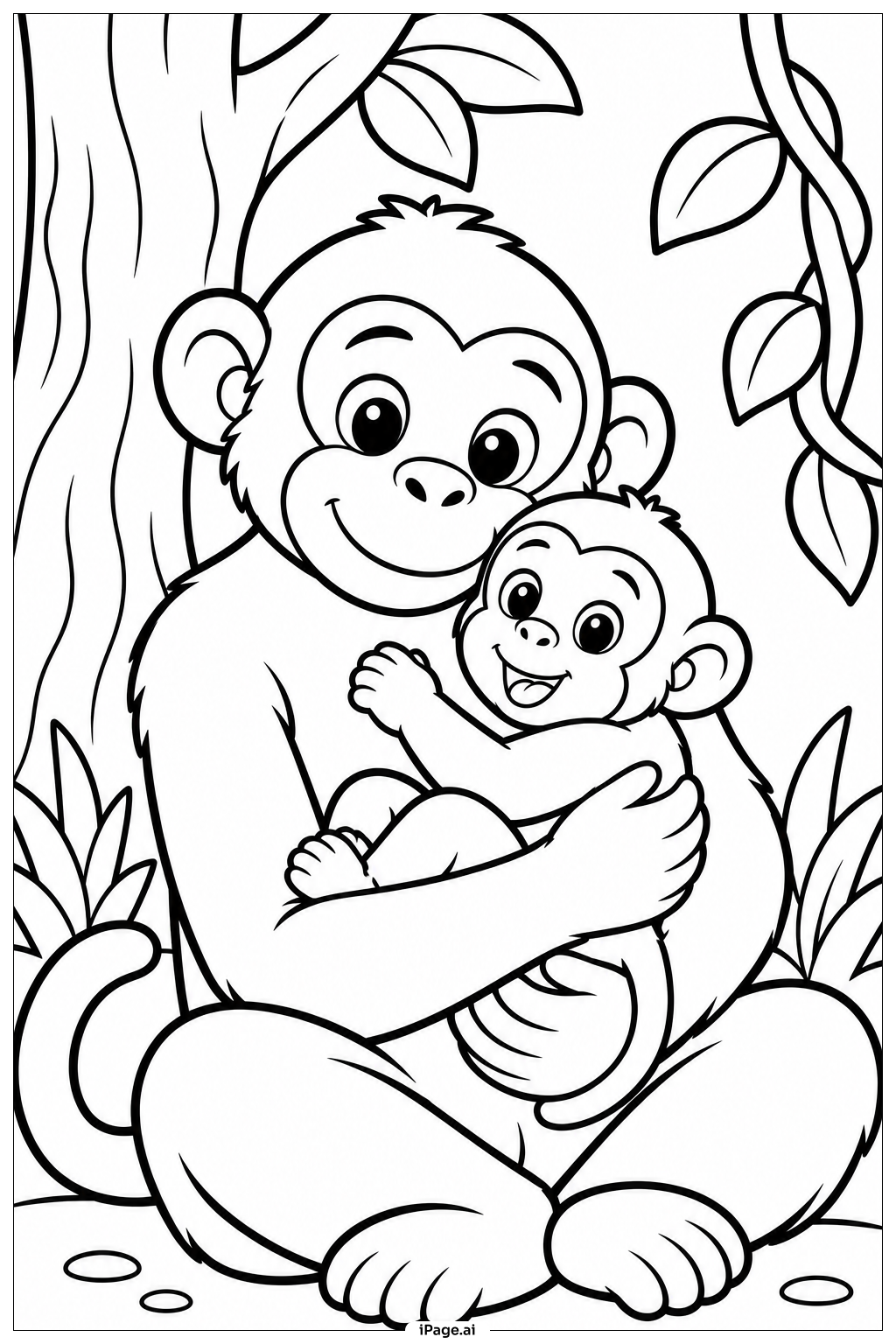
Start with the monkeys' fur using warm brown tones. Use a light tan or beige for the face, palms, and belly areas where the skin is smoother and lighter. Add a darker brown for the fur along the back, top of the head, and limbs to give depth and dimension. The baby monkey can be colored slightly lighter than the mother to show its youth. Use soft greens for the leaves in the background and earthy browns for the branches. Try yellow-green highlights on the leaves to make them look fresh. Keep the faces simple — use a soft peach or warm beige and add a gentle pink blush on the cheeks to bring the characters to life. For the eyes, use dark brown or black with a small white dot to add a sparkle. Take your time with the fur details — short, gentle strokes work best to follow the direction of the fur and make it look natural and fluffy.
Coloring challenges: Which parts are difficult to color and need attention for Monkey With Baby coloring page?
• Fur Texture Rendering: The most challenging part of this image is capturing the look of natural monkey fur. The fur has many fine lines going in different directions across the body. Coloring these lines neatly requires patience and a sharp pencil or thin marker. Using light, short strokes that follow the direction of the fur will help create a realistic and fluffy appearance. Rushing this step can make the fur look flat or messy.
• Facial Details and Expressions: Both the mother and baby monkey have expressive faces with small but important features — eyes, nose, and mouth. These areas are compact and close together, making it tricky to color without going outside the lines. A fine-tipped tool is best for these spots. The key is to color slowly and carefully to preserve the warmth and emotion in their expressions.
• Size Contrast Between Mother and Baby: The baby monkey is much smaller than the mother, meaning its features and body details are also tinier. Coloring the baby requires extra precision to avoid covering up fine lines or blending areas that should stay separate. Keeping the baby slightly lighter in color than the mother helps show the size and age difference effectively.
• Background Leaves and Branches: The leaves and branches surrounding the monkeys add natural detail but can be tricky to color without accidentally bleeding into the monkey figures. Using a steady hand and coloring the background elements last — after the monkeys are fully colored — will help keep the sections clean and well-defined.
• Blending Light and Shadow: Adding dimension to the rounded bodies of both monkeys means thinking about where light hits and where shadows fall. Blending two shades of brown smoothly without creating harsh lines can be difficult, especially for younger colorists.
Benefits of coloring books: Advantages of drawing Monkey With Baby coloring page
Coloring this Monkey With Baby image offers a wide range of wonderful benefits for kids and beginners alike. First, it helps build fine motor skills. Carefully coloring the small facial features and detailed fur lines trains hand-eye coordination and strengthens finger control — skills that are useful in writing and everyday tasks. Second, it encourages focus and patience. The intricate fur texture and tiny details ask colorists to slow down and concentrate, which helps improve attention span over time. Third, this image sparks creativity. Choosing colors for the monkeys, leaves, and background gives young colorists the freedom to make their own artistic decisions and explore color combinations. Fourth, it introduces children to the natural world. The scene of a mother monkey caring for her baby gently teaches kids about animal behavior, family bonds, and nature — making it both an artistic and educational activity. Finally, coloring this sweet, nurturing scene can be emotionally calming and uplifting. The image of a mother holding her baby carries a sense of warmth and safety, which can help reduce stress and bring joy to the coloring experience. It is a great activity for quiet, peaceful time at home or in the classroom.