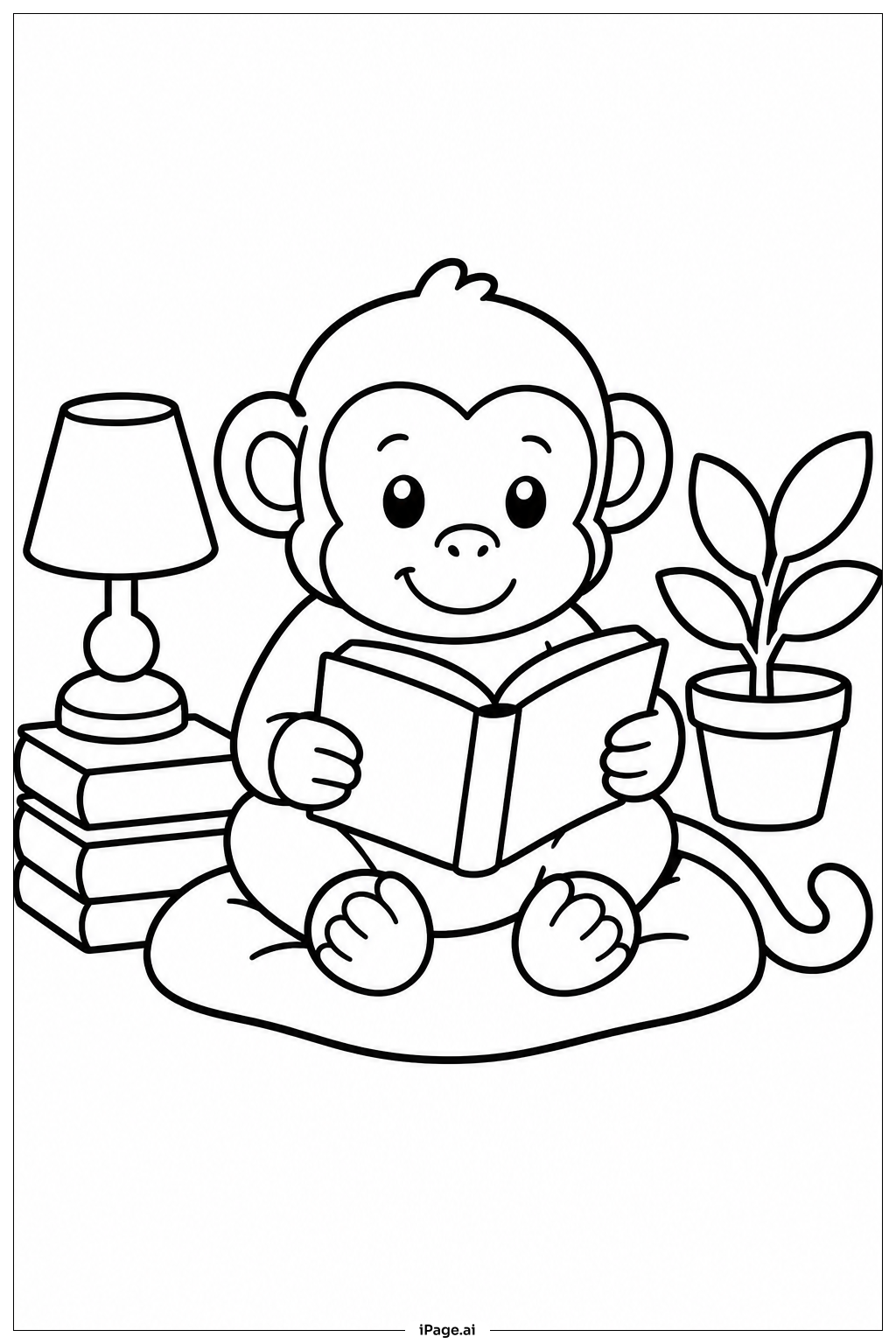
Coloring tips: How to color Monkey Reading Book coloring page well?
Start with the monkey's body by choosing warm shades of brown, tan, or golden yellow for its fur. Use a lighter cream or peach tone for the face, ears, and belly to create a natural contrast. The book can be colored in any fun way — try a bright red or blue cover with white or cream pages. Add pale yellow or soft orange tones to the background to keep the scene warm and inviting. Use darker brown or gray for any shadows under the arms or around the fur edges to add depth. Feel free to make the monkey's eyes dark brown or black with a tiny white shine to bring them to life. Kids can also get creative and color the book pages with tiny doodles or patterns. There are no strict rules — pick colors that make you happy and make the scene feel full of life and energy.
Coloring challenges: Which parts are difficult to color and need attention for Monkey Reading Book coloring page?
• Monkey Fur Texture: The fur on the monkey's body can be tricky to color well. Fur has layers and depth, so using only one flat shade of brown will make it look dull. Try using two or three shades of the same color — a light base, a medium mid-tone, and a darker shade for shadows. Color in short, light strokes that follow the direction of the fur to make it look fluffy and real.
• Facial Details: The monkey's face has many small features packed close together — eyes, nose, mouth, and the lighter muzzle area. Staying inside the lines in such a small area takes patience and a sharp, fine-tipped colored pencil or marker. Use a very light touch and work slowly to avoid coloring over the outlines.
• Book Pages and Cover: The open book has two visible pages plus a cover. Each section needs a slightly different color or shade to show that they are separate surfaces. The pages should look bright and clean, while the cover benefits from a bolder, richer color. Adding a slight shadow along the spine of the book helps give it a three-dimensional feel.
• Hands and Fingers: The monkey's small hands gripping the book have thin fingers with subtle curves. These are easy to miss or rush over, but taking time to carefully shade each finger adds a lot of realism and character to the overall image.
• Background Balance: If the image includes a background such as a tree branch, chair, or stack of books, it is important to choose colors that do not compete with the monkey. Keep background tones softer and less saturated so the monkey remains the clear focal point of the scene.
Benefits of coloring books: Advantages of drawing Monkey Reading Book coloring page
Coloring this Monkey Reading Book image offers a wonderful mix of fun and learning for children of all ages. First, it helps build fine motor skills as kids carefully fill in small details like the monkey's fingers, facial features, and book pages. This kind of careful, controlled movement strengthens the hand muscles needed for writing.
Second, choosing colors for the fur, book, and background encourages creative thinking and self-expression. There is no single right answer, so children feel free to experiment and build confidence in their own choices.
Third, this image quietly promotes a love of reading. Seeing a monkey happily absorbed in a book sends a positive message — that reading is fun and something to enjoy. It can spark conversations between children and parents about books, stories, and learning.
Fourth, focusing on coloring a detailed image like this builds concentration and patience, which are skills that help in school and everyday life. Sitting quietly and completing a task from start to finish gives children a real sense of accomplishment.
Finally, the playful subject matter keeps children engaged and smiling throughout the activity, making coloring feel like pure play while delivering real developmental benefits. It is a perfect activity for both Boys and Girls.