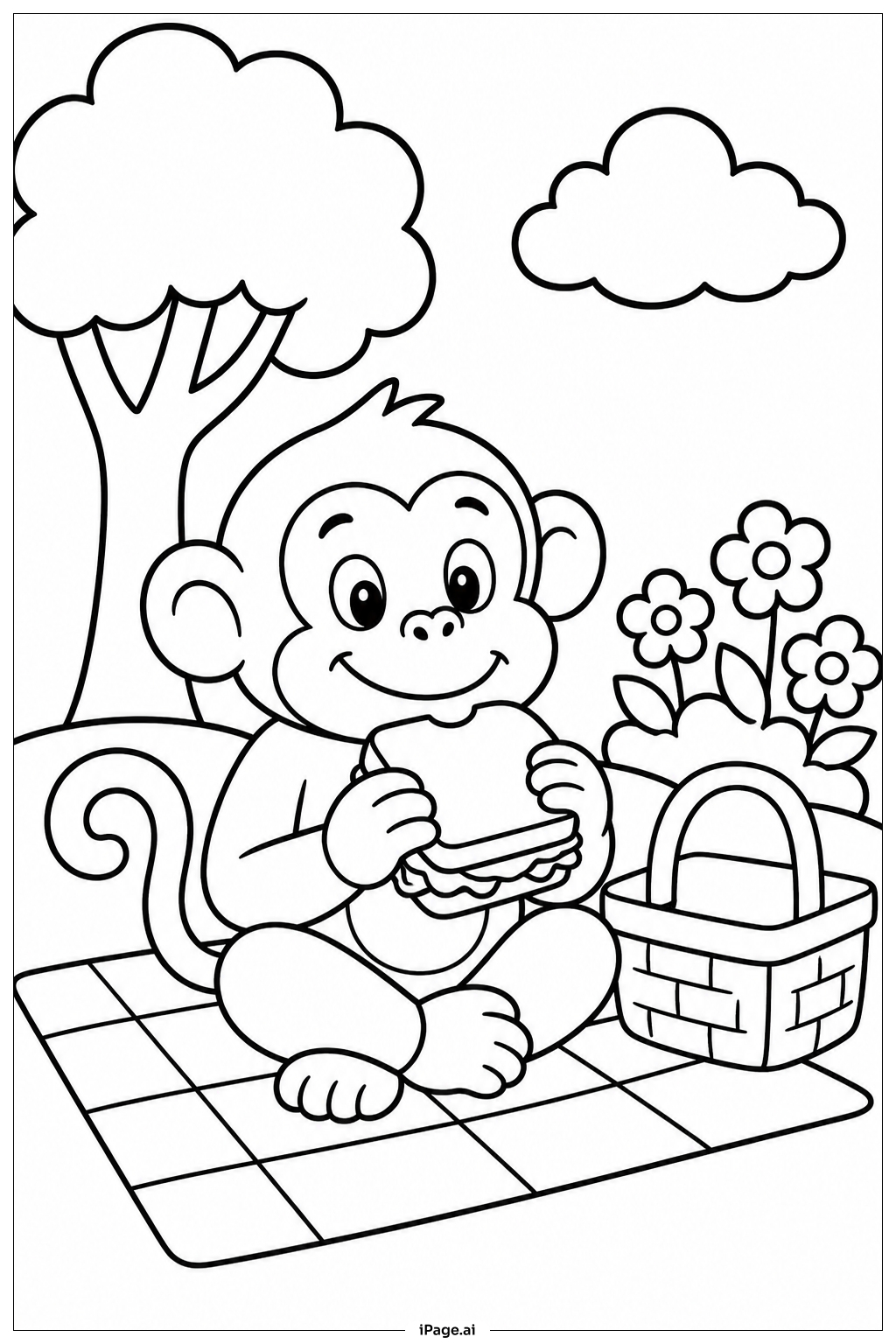
Coloring tips: How to color Monkey On Picnic Blanket coloring page well?
Start with the monkey's body. Use warm browns or golden tans for the fur. Add a lighter shade of cream or peach for the face, ears, hands, and belly area. Give the monkey bright, expressive eyes using dark brown or black with a small white highlight spot to make them sparkle. For the picnic blanket, try a classic red and white or blue and white checkered pattern — it is easy and fun to color. Use cheerful yellows, reds, and oranges for the fruit. Color the picnic basket in shades of tan and brown. The cup and other items can be any color you like — this is your chance to be creative! For the background leaves and grass, use different shades of green to add depth. Try using darker green near the edges and lighter green in the center to make the monkey pop. Do not be afraid to mix colors and have fun making this scene your own.
Coloring challenges: Which parts are difficult to color and need attention for Monkey On Picnic Blanket coloring page?
• Monkey Fur Texture: The monkey's fur requires careful shading to look natural and fluffy. Using two or three shades of brown together — light, medium, and dark — can help show the curves of the body. Staying within the fur outlines without coloring into the face or belly area takes patience and a steady hand, especially for younger colorists.
• Checkered Blanket Pattern: The picnic blanket has a repeating checkered pattern made up of many small squares. Keeping each square neat and alternating the colors evenly is one of the trickiest parts of this image. Using a fine-tipped coloring tool helps a lot. Rushing through this section often leads to uneven squares, so take it slowly.
• Small Picnic Details: The food items and accessories on the blanket — such as fruit, a basket, and a cup — are small and close together. Coloring these tiny areas without accidentally going over the outlines into a neighboring item requires precision. Using sharp colored pencils or thin markers works best for these detailed sections.
• Facial Expression: The monkey's face holds the most emotion in the image. The eyes, nose, and smile need careful attention. Using the right shades for the eyes — dark brown or black with a light reflection dot — makes the face feel alive. Coloring the face too dark can hide the friendly expression, so lighter, softer tones work best here.
• Background Foliage: Leaves and nature elements in the background can be easy to overlook, but they frame the whole scene. Using varied greens and adding gentle shadows helps the background feel full without drawing attention away from the monkey at the center.
Benefits of coloring books: Advantages of drawing Monkey On Picnic Blanket coloring page
Coloring this monkey picnic scene offers a wide range of benefits for children and young learners. The playful subject — a happy monkey enjoying a picnic — naturally draws kids in and keeps them engaged. As they color, children practice fine motor skills by carefully filling in small spaces like the checkered blanket and tiny food items. This kind of focused hand movement helps build the muscle control needed for writing.
The variety of elements in the image — fur, fabric, food, and nature — encourages kids to think about colors in a real-world context. What color is a banana? What does a woven basket look like? These small moments of thinking boost observational skills and color recognition.
Choosing colors for the scene also sparks creativity and self-expression. There is no single right answer, which helps children feel confident in their choices. Completing the full image builds a sense of achievement and pride.
For older children, the shading challenges — like blending fur tones or creating depth in the background — develop more advanced artistic skills. The calm, repetitive nature of coloring also supports focus and can reduce stress, making it a great quiet-time activity. Overall, this image is both fun and educational for a wide age range.