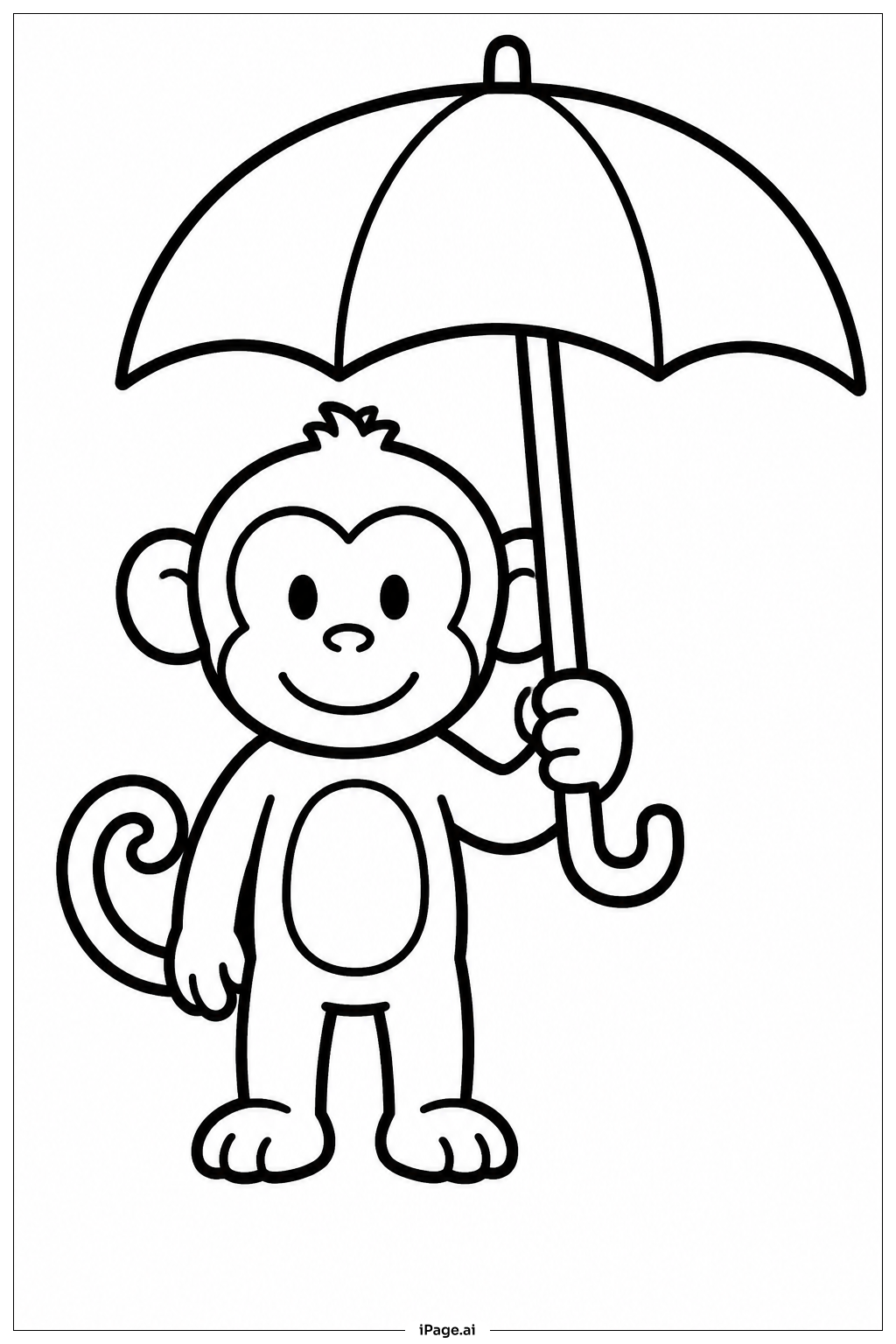
Coloring tips: How to color Monkey Holding Umbrella coloring page well?
Start by coloring the monkey's body first. Use warm brown shades for the fur and a lighter tan or peach tone for the face, palms, and belly. You can add a slightly darker brown for shading along the edges of the arms, legs, and tail to give the monkey a rounded, three-dimensional look. For the eyes, use dark brown or black with a tiny white dot to make them sparkle. Color the umbrella in bright, cheerful colors. Try alternating panel colors like red, yellow, orange, and blue to make it look fun and festive. The handle can be colored gray, black, or even a bright color like purple or green. Use a light blue or sky color in the background to suggest a rainy day sky. You can also add soft gray or white cloud shapes. Keep the colors bold and bright to make the whole scene lively and cheerful.
Coloring challenges: Which parts are difficult to color and need attention for Monkey Holding Umbrella coloring page?
• Umbrella Panel Sections: The umbrella has multiple curved panels radiating from a central point. Coloring each panel neatly without going over the dividing lines requires careful hand control, especially near the narrow tips at the top center. Young colorists may find it tricky to stay within each small section cleanly.
• Monkey Fur Texture: The fur lines across the monkey's body are closely spaced and detailed. Coloring within these fine lines while still suggesting the natural texture of fur can be challenging. Using short, directional strokes that follow the fur lines will help, but this technique takes patience and practice.
• Facial Details: The monkey's face includes small features such as eyes, nostrils, and a smiling mouth. These areas are compact and close together. Applying color precisely without accidentally blending or overlapping features requires a fine-tipped coloring tool and steady hands.
• Curved Tail and Limbs: The monkey's curling tail and long arms create curved, narrow shapes. Filling these narrow spaces with smooth, even color without smudging or leaving uneven patches is a common difficulty, especially when using thicker markers or crayons.
• Shading and Depth: To make the monkey and umbrella look three-dimensional, colorists need to add shading in the right places, such as under the umbrella edge, along the side of the monkey's body, and beneath the arms. Deciding where shadows fall naturally and applying gradual color transitions is an advanced skill that challenges older or more experienced colorists.
Benefits of coloring books: Advantages of drawing Monkey Holding Umbrella coloring page
Coloring this fun monkey with an umbrella offers many wonderful benefits for kids and beginners alike. It helps children develop fine motor skills as they carefully fill in the fur lines, umbrella panels, and small facial features. Controlling a crayon or marker within neat boundaries strengthens hand muscles and improves coordination, which supports handwriting skills too. Choosing colors for the umbrella panels encourages creative thinking and color theory exploration. Kids can experiment with complementary or rainbow color combinations, building their artistic confidence. The playful subject matter keeps children engaged and motivated, turning a creative activity into an enjoyable experience rather than a chore. Focusing on coloring a detailed image also trains concentration and patience, helping children practice staying on task in a calm, low-pressure setting. For older children, attempting shading and blending techniques on the monkey's fur and the umbrella's curved surface introduces foundational visual art skills. The whimsical theme of a monkey in the rain sparks imagination and can inspire storytelling, encouraging children to create their own adventure around the scene. Overall, this Coloring Pages activity is a simple yet rewarding way to blend fun, learning, and creative expression in one place.