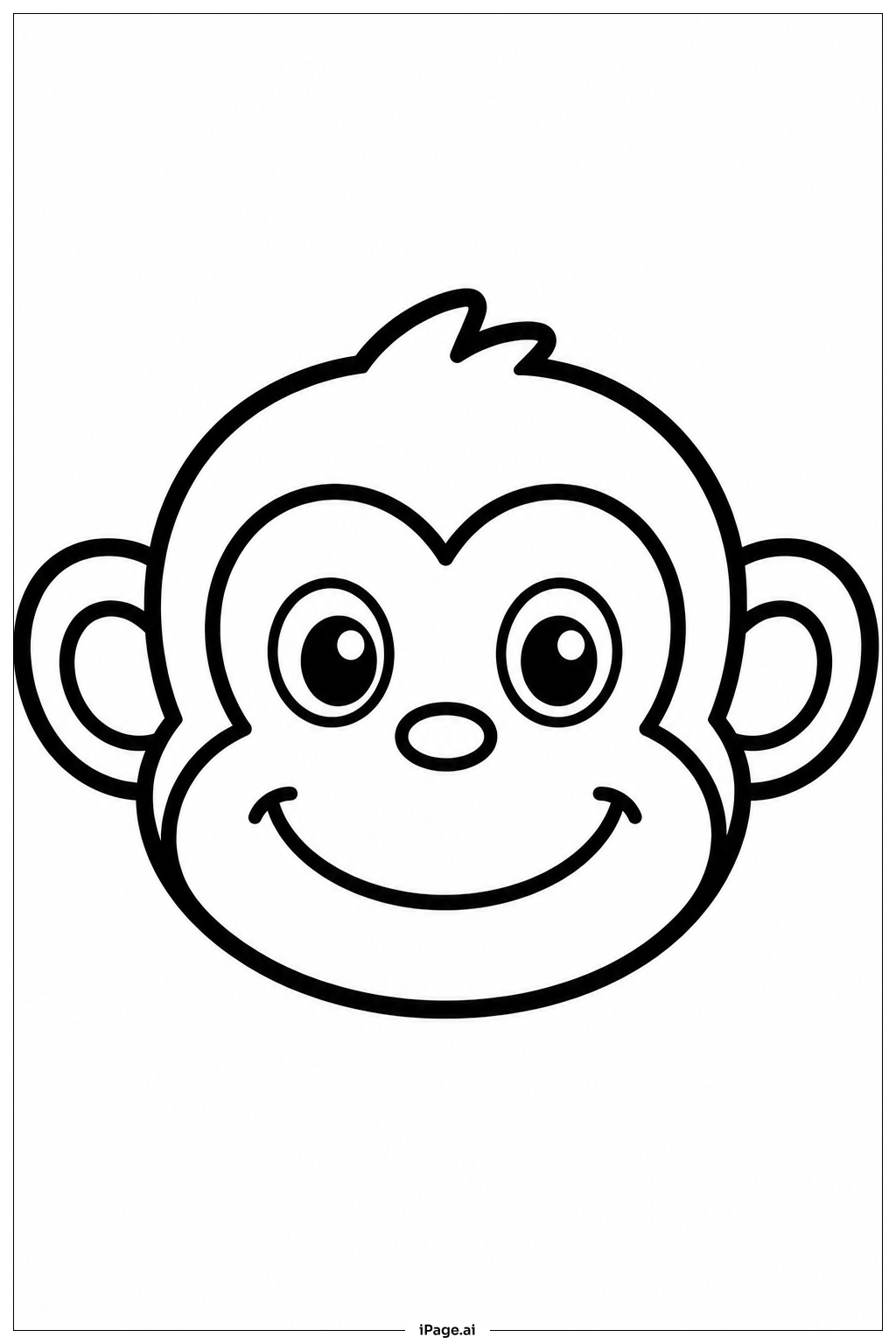
Coloring tips: How to color Monkey Face Closeup coloring page well?
Start with the face by using warm tan, golden brown, or light caramel tones for the skin around the eyes, nose, and mouth. Use a deeper brown or dark chocolate color for the fur that surrounds the face. The ears can be filled with a mix of pinkish-beige on the inside and brown on the outer edges. Give the eyes a rich amber, hazel, or deep brown color, and leave a tiny white spot to show a natural shine. Use a soft pink or peachy tone for the lips and inner mouth area. For a fun and creative twist, kids can experiment with imaginative colors like purple fur or teal eyes. Blend light and dark shades of the same color to add texture to the fur. Take your time on the detailed fur lines for a realistic and satisfying result.
Coloring challenges: Which parts are difficult to color and need attention for Monkey Face Closeup coloring page?
• Fur Texture and Layering: The monkey's fur is made up of many fine, overlapping lines that radiate outward from the face. Coloring each strand individually takes patience. To avoid a flat look, use at least two shades of brown, applying a lighter base first and then adding darker strokes on top to mimic the natural flow and depth of real fur.
• Facial Skin Tones: The skin on the face, especially around the eyes, nose, and mouth, is a different tone from the fur. Choosing the right warm, muted skin tone and keeping it smooth without muddying it with the surrounding fur colors requires a careful hand and clean transitions between color zones.
• Eye Detail and Shine: The eyes are one of the most expressive parts of the image. Filling them in with the right depth of color while preserving the small highlight spot is tricky. Using too dark a color can flatten the eyes, while too light a tone may lose their emotional intensity. A graduated approach from dark pupil to lighter iris works best.
• Symmetry and Balance: Because this is a centered, frontal closeup, any color imbalance between the left and right sides of the face is immediately noticeable. Keeping both cheeks, ears, and eye areas consistent in color and shading takes focus and attention throughout the process.
• Smooth Transitions Between Zones: Where the facial skin meets the fur, and where light areas meet shadow, smooth blending is key. Harsh lines between color zones can break the natural look of the face. Using a light touch and circular strokes near boundaries helps achieve a more polished, lifelike finish.
Benefits of coloring books: Advantages of drawing Monkey Face Closeup coloring page
Coloring this Monkey Face Closeup page offers a wide range of benefits for both kids and adults. For younger children, filling in the large fur zones and bold facial features helps build hand control and fine motor coordination. Following the natural lines of the fur encourages attention to detail and patience.
For older kids and teens, the challenge of blending fur textures and matching skin tones introduces basic color theory in a fun and pressure-free way. It sparks creative thinking as they decide between realistic tones or imaginative color choices.
For adults, focusing on the intricate fur patterns and smooth transitions between color zones provides a calming, meditative experience. It helps reduce stress and quiet a busy mind, turning coloring into a form of mindful relaxation.
The expressive face of the monkey also sparks emotional connection and storytelling. Kids often imagine a personality for the monkey based on the colors they choose, which supports creative thinking and emotional expression.
Overall, this image is a wonderful tool for building focus, nurturing artistic confidence, and simply enjoying the quiet satisfaction of bringing a character to life one color at a time. It is a rewarding coloring experience suitable for all skill levels.