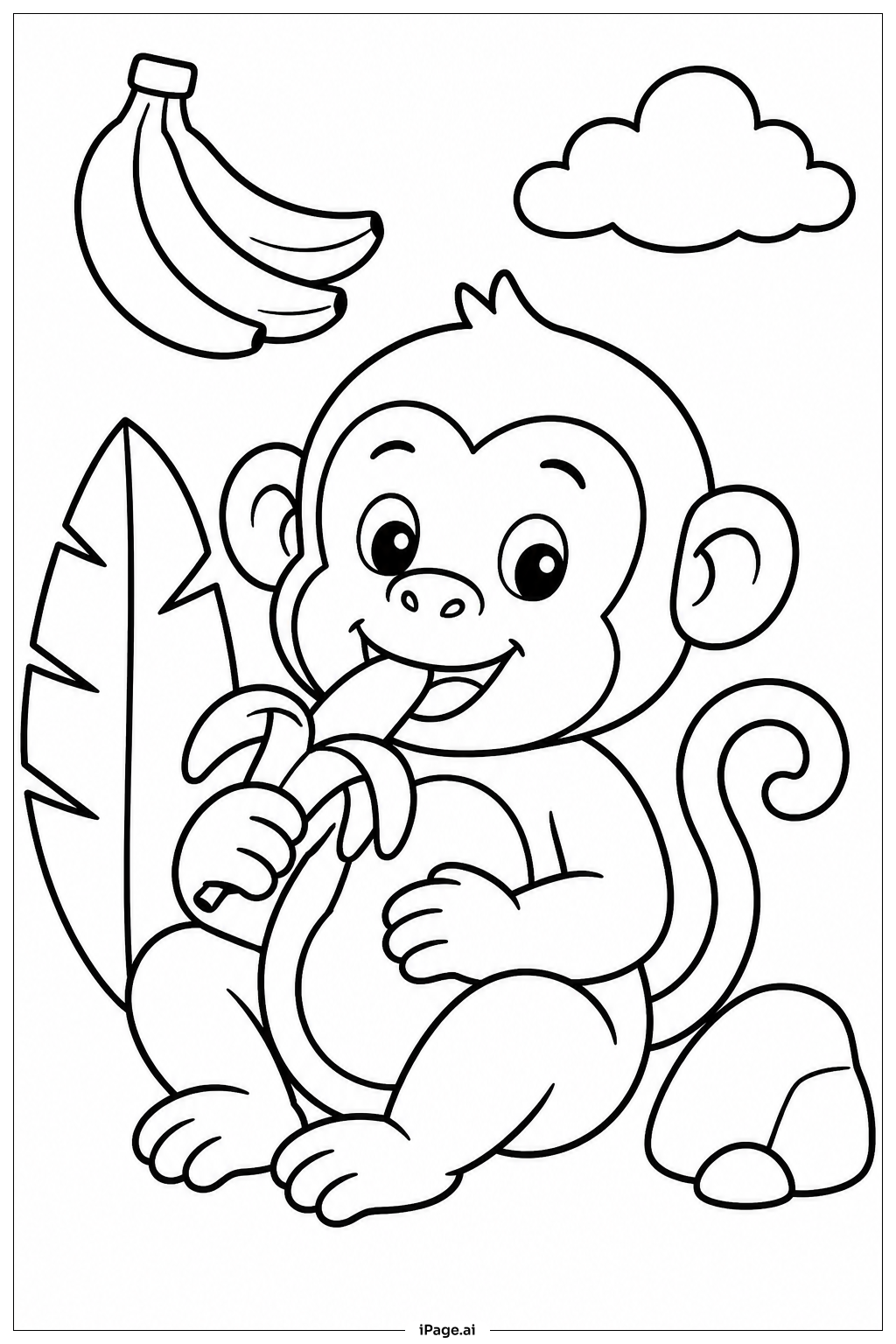
Coloring tips: How to color Monkey Eating Banana coloring page well?
Start with the monkey's body. Use warm golden brown or tan for most of the fur. Use a lighter cream or peach tone for the belly, inner ears, and face. The monkey's eyes can be dark brown with a tiny white highlight to bring them to life. Color the banana bright yellow, with light green near the tips to show it is fresh and ripe. Add a touch of brown or black along the peeled edges for a natural look. The banana peel can have slightly darker yellow streaks for texture. For the background leaves, use different shades of green such as lime, forest green, and olive to create depth. Keep the overall palette bright and fun. Do not worry about being perfect. Try blending two shades of the same color to make the fur look soft and fluffy. Use light strokes for the fur areas and steady strokes for the banana. Have fun adding your own colors to make this monkey truly unique.
Coloring challenges: Which parts are difficult to color and need attention for Monkey Eating Banana coloring page?
• Fur Texture and Shading: The monkey's body is covered in fur, which requires layering and blending to look natural. Using two or more shades of brown and applying short, light strokes in the direction of the fur can help. This technique takes patience and a steady hand, which may be challenging for younger colorists.
• Facial Details: The monkey's face is full of expression with eyes, a nose, a mouth, and lighter skin patches. These small features are close together, making it easy to accidentally color outside the lines. Using a fine-tipped colored pencil or a thin marker works best in this area to keep details clean and precise.
• Banana Colors and Highlights: A banana seems simple, but making it look ripe and three-dimensional requires thoughtful color choices. Leaving small uncolored areas or using a lighter yellow in the center helps create a natural highlight. Blending yellow with light green at the tips adds realism and depth.
• Peeled Banana Edges: The curling peel pieces have thin, curved edges that are tricky to color neatly. The inside of the peel is lighter than the outside, so using two different tones of yellow or adding a hint of white helps distinguish these areas without making them look muddy.
• Background Leaves: Coloring the jungle leaves behind the monkey without letting the greens bleed into the monkey's fur is a common challenge. Working carefully along the border between the monkey and the background, or coloring the monkey first and the background second, helps keep the two areas distinct and visually clear.
Benefits of coloring books: Advantages of drawing Monkey Eating Banana coloring page
Coloring this playful Monkey Eating Banana image offers a wide range of benefits for children and beginners alike. It is a fun and engaging activity that supports healthy development in many ways.
First, it helps build fine motor skills. Holding crayons or colored pencils and staying within the lines strengthens the small muscles in the hands and fingers, which are important for writing and everyday tasks.
Second, it encourages creativity and self-expression. Choosing colors for the monkey's fur, the banana, and the jungle background lets kids make their own artistic decisions and feel proud of their work.
Third, it supports focus and concentration. Completing a detailed image like this one requires attention and patience, helping children practice sitting still and working toward a goal.
Fourth, it introduces basic color theory in a natural, relaxed way. Mixing shades of yellow for the banana or layering browns for the fur teaches kids how colors work together.
Finally, it is simply enjoyable and calming. Coloring reduces stress and brings a sense of accomplishment when the page is finished. This cheerful monkey scene is a perfect starting point for colorists of all ages to relax, explore, and have fun.