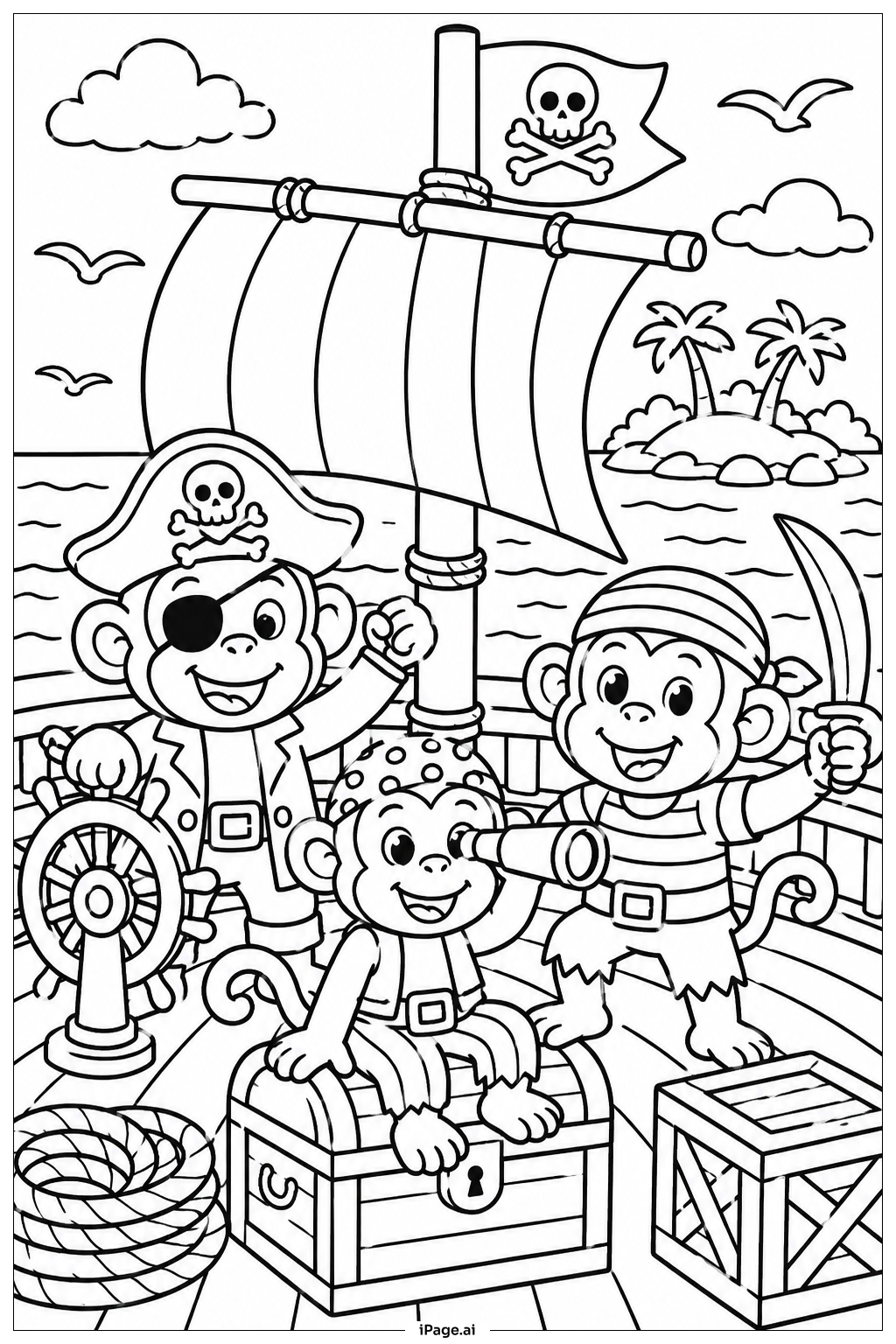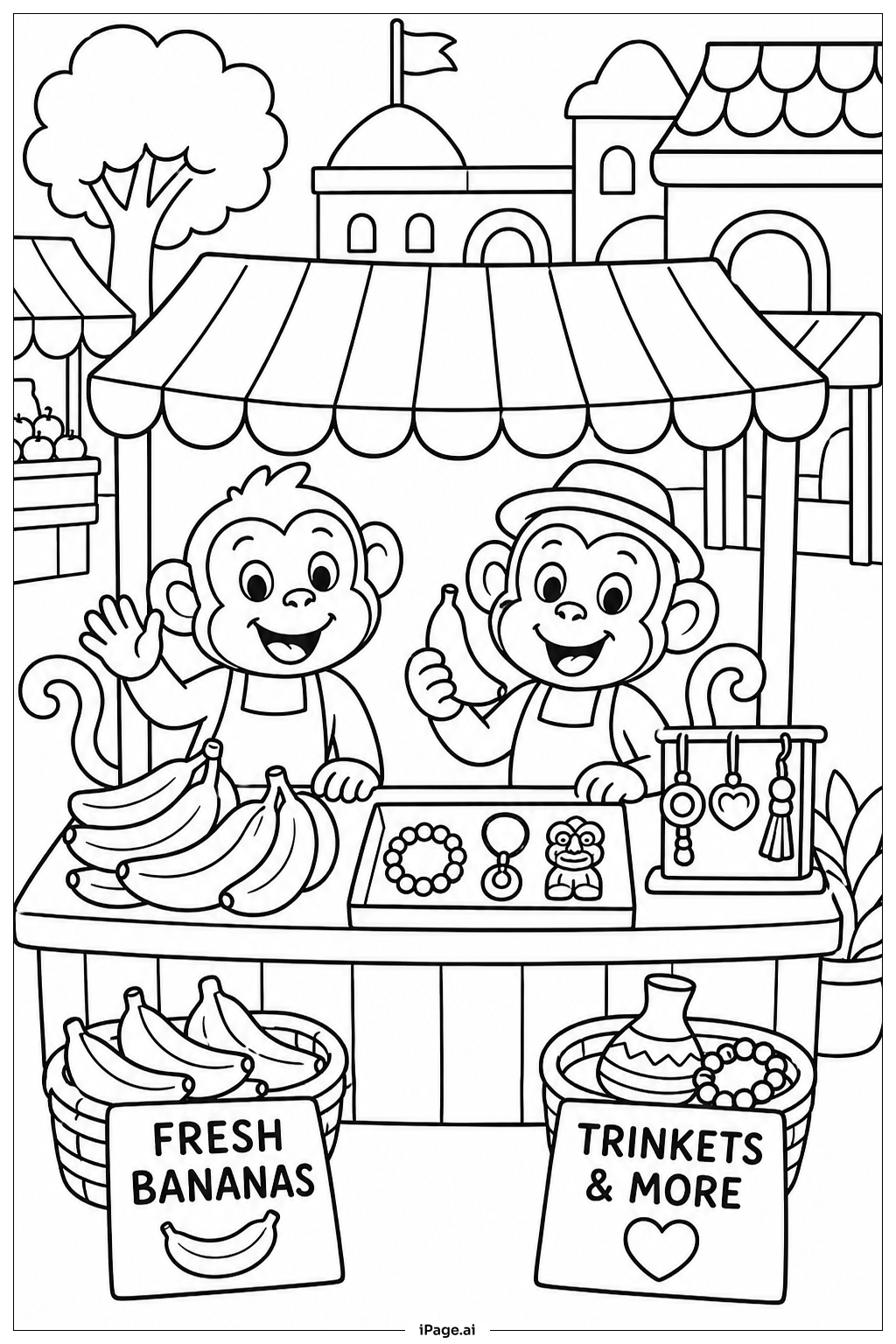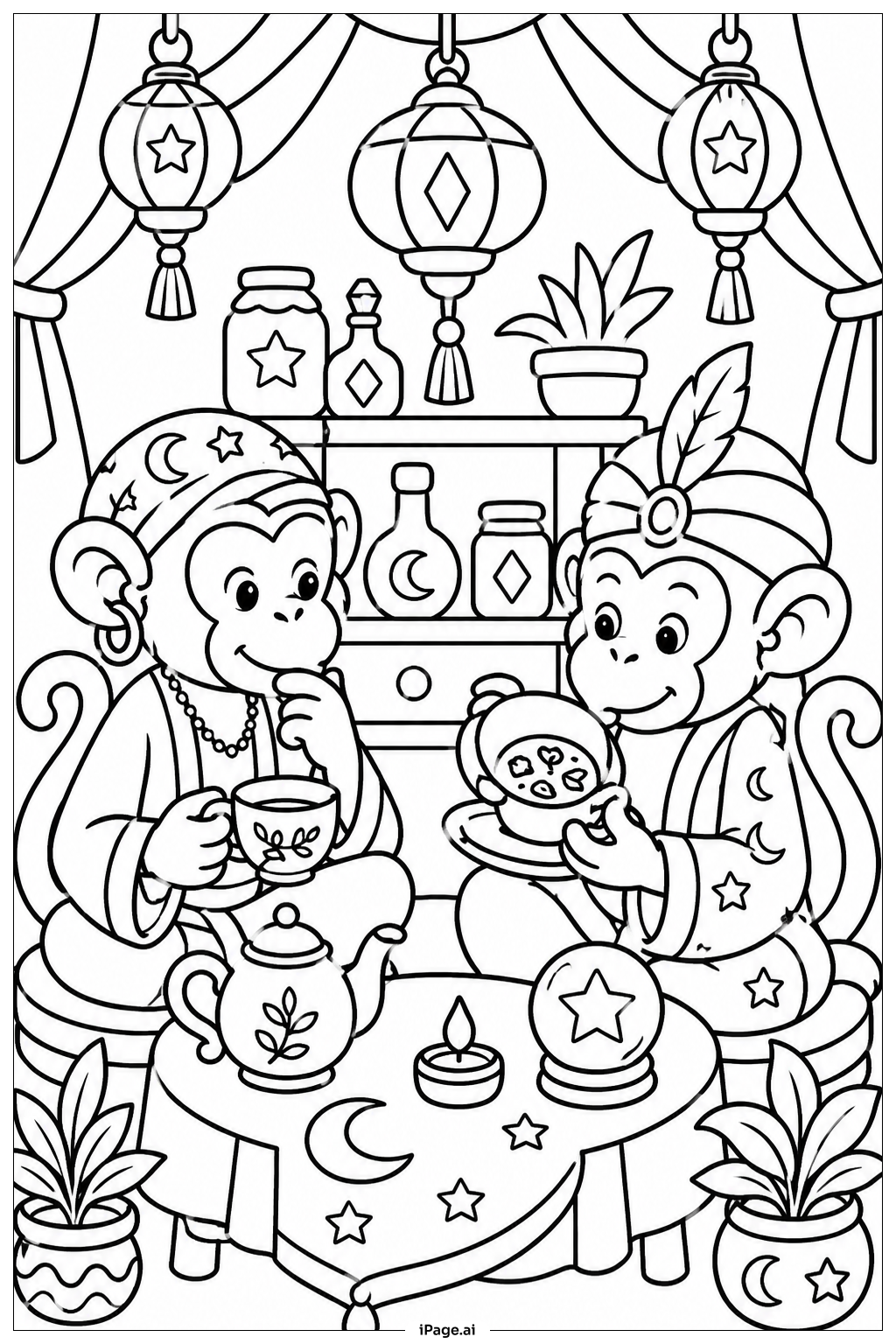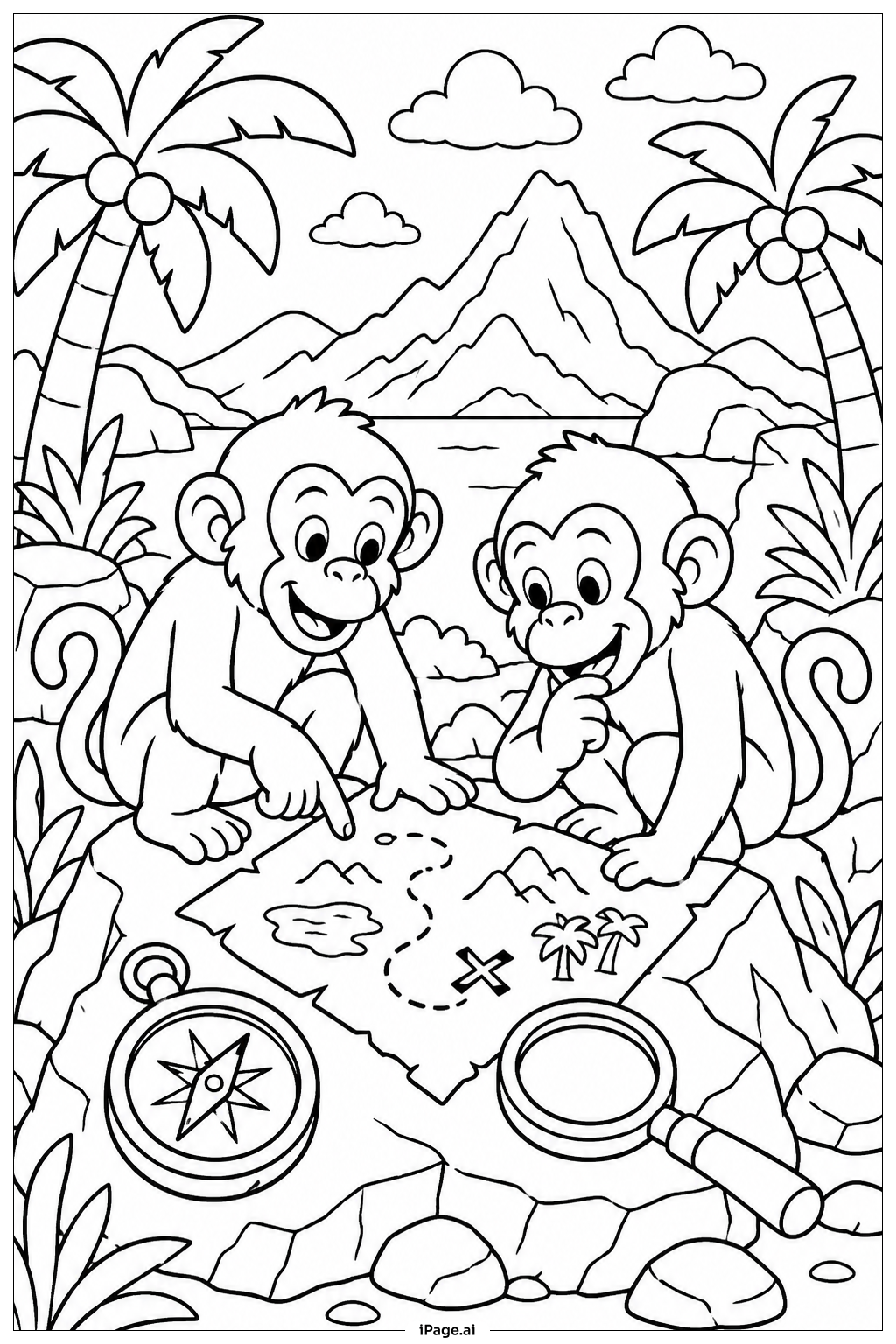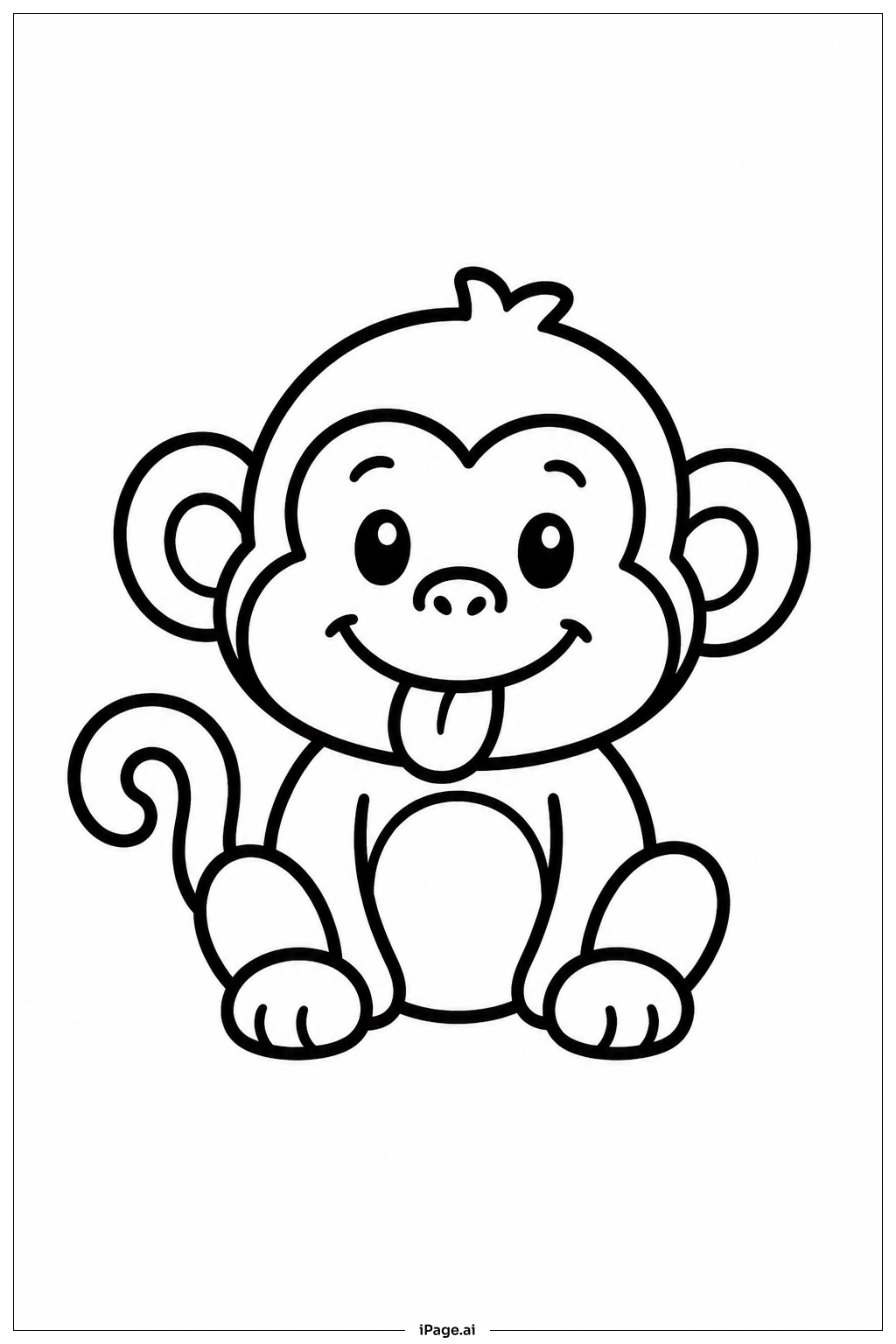
Coloring tips: How to color Grinning Monkey With Tongue Out coloring page well?
Start with the monkey's face and body fur. Use warm brown or golden-tan shades for the main fur. Add lighter cream or peach tones on the belly, inner ears, and around the muzzle to give the monkey a natural look. Use a darker brown for shading along the edges of the fur to add depth. Color the eyes with dark brown or black pupils, and add a small white highlight to make them look bright and lively. The tongue can be colored a fun pink or rosy red. For the ears, blend light pink on the inside. Feel free to get creative — try an orange or reddish-brown coat, or even give the monkey a fun, colorful background like a jungle, trees, or a bright sunny sky. Use darker shades carefully around the edges to make the monkey pop off the page.
Coloring challenges: Which parts are difficult to color and need attention for Grinning Monkey With Tongue Out coloring page?
• Fur Texture Details: The monkey's fur is made up of many small, overlapping lines that follow the curves of its body. Staying consistent with the direction of these lines while coloring is tricky. You will need to blend light and dark tones carefully to make the fur look soft and natural rather than flat or patchy.
• Facial Expression Accuracy: The grin and the tongue-out expression involve many small facial features packed close together — the lips, teeth, tongue, and cheek curves. Coloring these tiny areas without going outside the lines takes patience and a fine-tipped pencil or marker. Getting the shading right around the mouth area is especially challenging.
• Smooth Skin and Fur Transition: The monkey has areas of bare skin, such as around the muzzle, palms, and inner ears, that are lighter than the surrounding fur. Blending from a warm tan fur color into a soft peach or pinkish skin tone without a harsh border requires careful, gradual layering of color.
• Eye Highlights: The large, expressive eyes need a shiny, lively look. Leaving a small white dot for the highlight while coloring the iris and pupil is a common challenge. If you color over the highlight by mistake, it makes the eyes look dull and lifeless.
• Shading and Depth: Giving the monkey a three-dimensional appearance means adding shadow beneath the chin, under the ears, and along the sides of the body. Knowing where to place these darker tones and how dark to go without overworking the image takes practice and a good eye for light direction.
Benefits of coloring books: Advantages of drawing Grinning Monkey With Tongue Out coloring page
Coloring this grinning monkey is a wonderful activity for kids and creative minds of all ages. The cheerful, expressive image immediately sparks joy and makes the coloring experience fun and engaging right from the start.
For younger children, working on the monkey's details helps build fine motor skills and hand-eye coordination. Carefully staying within the lines of the fur, face, and tongue trains the hand muscles used for writing and drawing.
The image also encourages creative thinking. Children get to choose their own colors, decide on backgrounds, and experiment with shading — all of which nurture imagination and personal expression. There is no single "right" way to color this monkey, which helps children feel confident and free.
For older kids and teens, the fur texture and facial shading present a gentle artistic challenge that teaches blending, color layering, and tonal contrast — real skills used in drawing and painting.
Beyond skills, coloring is deeply calming. Focusing on a fun image like this playful monkey helps reduce stress, improve concentration, and bring a sense of mindfulness. It is a screen-free activity that keeps hands busy and minds at ease.
Sharing the finished page with friends or family also builds social connection and gives children a sense of pride and accomplishment in their creative work.