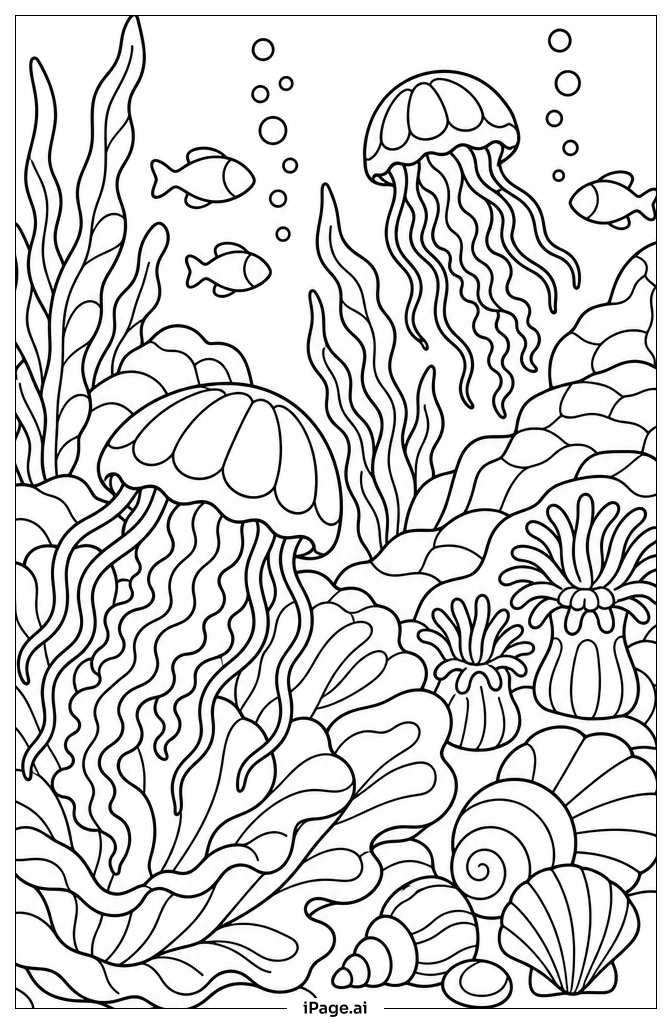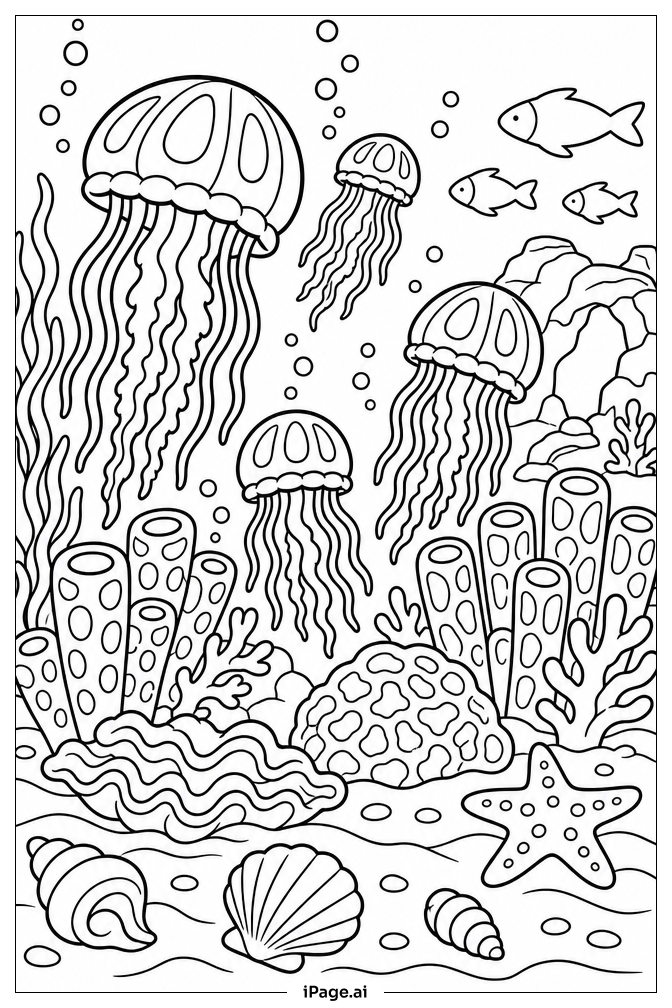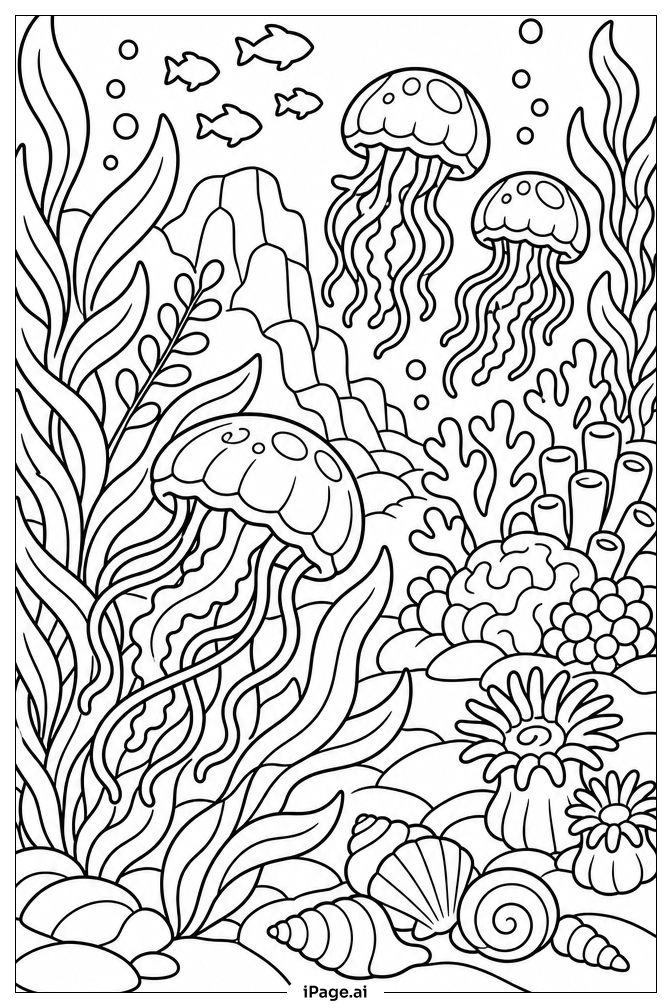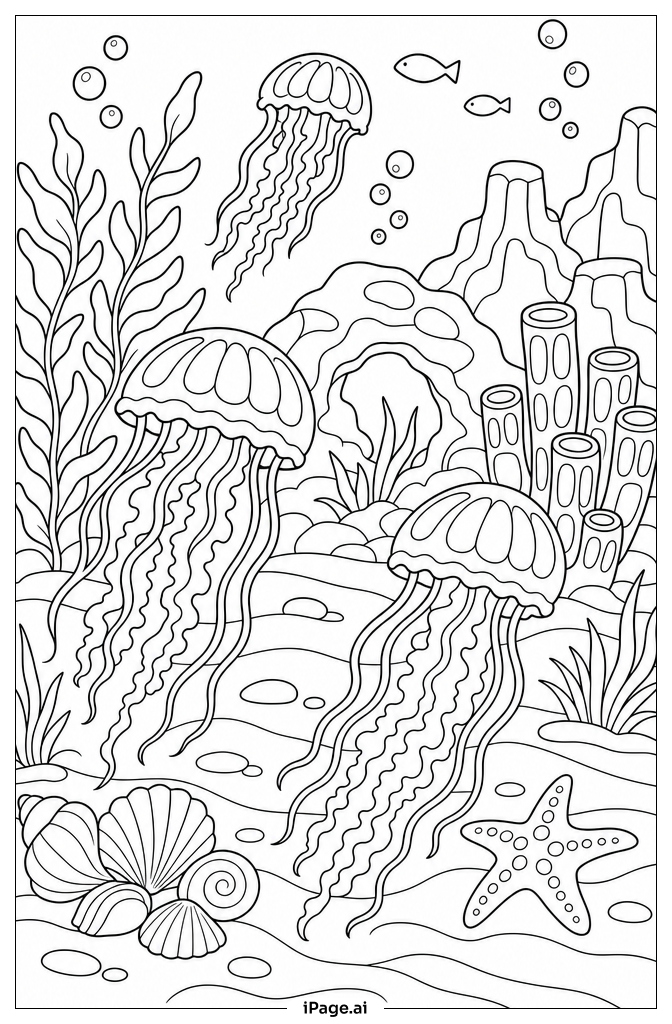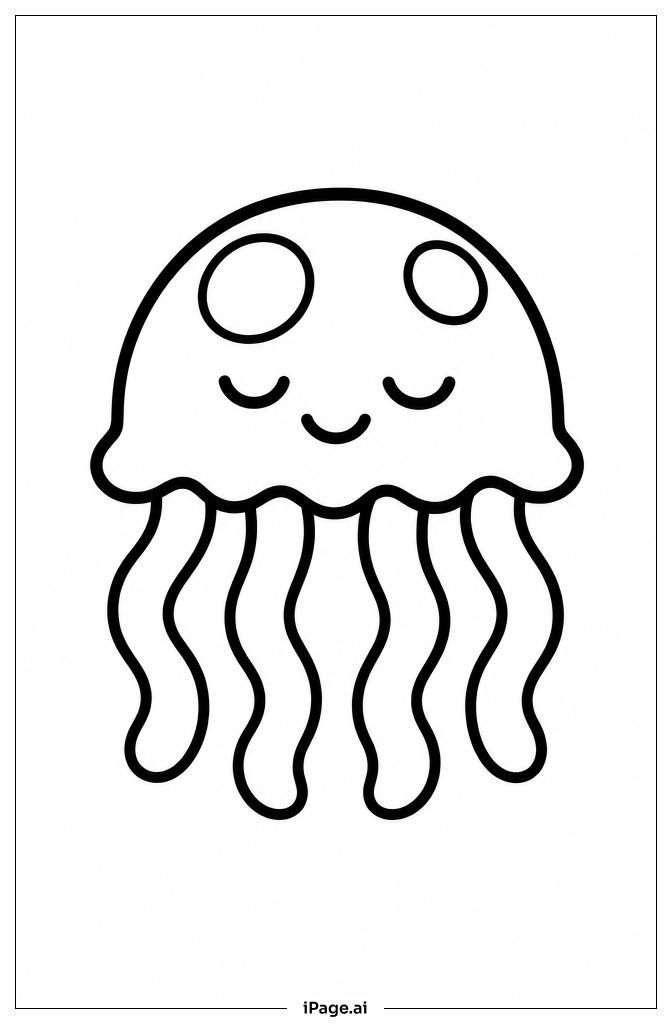
Coloring tips: How to color Sleepy Jelly Fish coloring page well?
Start with the jellyfish bell using soft, dreamy colors like pale lavender, soft pink, or light blue to capture its sleepy, peaceful mood. You can add a gentle gradient by making the top of the bell slightly darker and fading to a lighter shade toward the edges. For the tentacles, try using slightly deeper shades of the same color family — lilac, rose, or sky blue — to create a flowing, harmonious look. Color the bubbles in light aqua or leave them with just a thin outline for a glassy effect. The background ocean can be filled with calm blues and teals, using soft strokes to suggest gentle water movement. Feel free to add light yellow or soft gold highlights on the jellyfish to make it glow like it is lit from within. Keep the overall palette soft and cool to match the sleepy, dreamy theme of this friendly sea creature.
Coloring challenges: Which parts are difficult to color and need attention for Sleepy Jelly Fish coloring page?
• Tentacle Details: The jellyfish tentacles are long, thin, and curling in multiple directions. Staying inside such narrow, winding lines requires a fine-tipped coloring tool. Using colored pencils or thin markers will give you much better control than thick crayons, especially where the tentacles overlap or curl close together.
• Smooth Bell Gradients: The large rounded bell shape looks best when colored with a smooth gradient from darker at the top to lighter at the edges. Achieving this blended effect can be tricky for beginners. Try layering light strokes and slowly building up color rather than pressing hard all at once. Blending with a white pencil or a colorless blender can help soften the transition.
• Expressive Facial Features: The sleepy face — with its half-closed eyes and soft smile — is small and detailed. Coloring the eyes carefully without smudging the surrounding area takes patience. A very fine-tipped tool works best here. Keeping the face light and gentle helps preserve the sweet, drowsy expression that makes this jellyfish so charming.
• Bubble Outlines: The tiny bubbles scattered around the jellyfish are small circular shapes that are easy to accidentally fill in too heavily. The trick is to color them very lightly or use a pale blue tint just along the inner edge, leaving the center mostly uncolored to give them a transparent, glassy look.
• Background Water Depth: Filling the ocean background with a sense of depth and calm without overpowering the main jellyfish character can be challenging. Use soft, even strokes in cool blue and teal tones and keep the background slightly lighter than the jellyfish to help it stand out naturally.
Benefits of coloring books: Advantages of drawing Sleepy Jelly Fish coloring page
Coloring this sleepy jellyfish page offers a wide range of wonderful benefits for children and young artists. The calm, peaceful theme naturally encourages a relaxed, focused state of mind, making it a great activity for winding down after a busy day or before bedtime. Working carefully within the tentacle lines and small facial details helps develop fine motor skills and improves hand-eye coordination in a fun, low-pressure way. Choosing a soft color palette to match the sleepy mood encourages creative thinking and color awareness, helping children learn how colors can express feelings and atmosphere. The repetitive, rhythmic motion of coloring flowing tentacles and gentle waves can be meditative and soothing, reducing stress and anxiety. This page also sparks curiosity about ocean life, giving children a natural opening to explore and learn more about jellyfish and underwater ecosystems. Whether colored solo or with friends and family, this friendly sea creature makes the whole experience joyful, imaginative, and deeply satisfying for colorists of all skill levels.