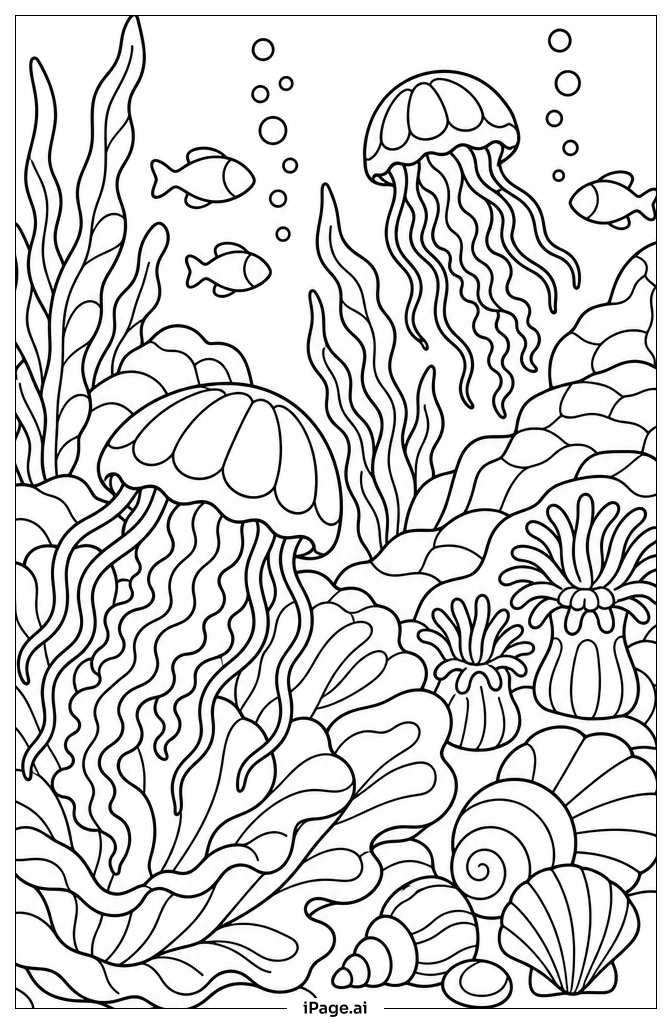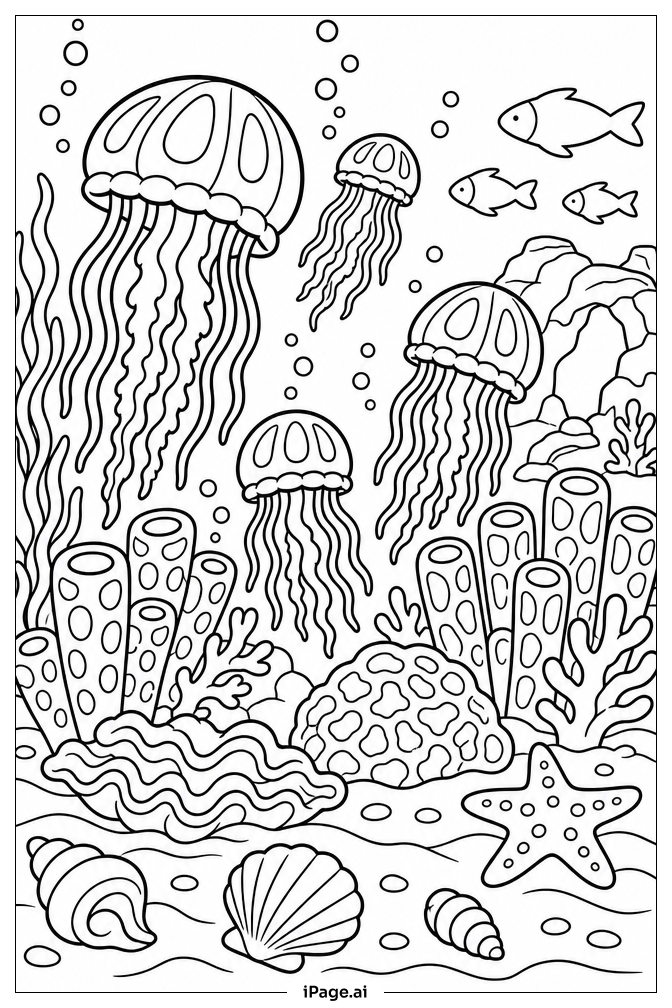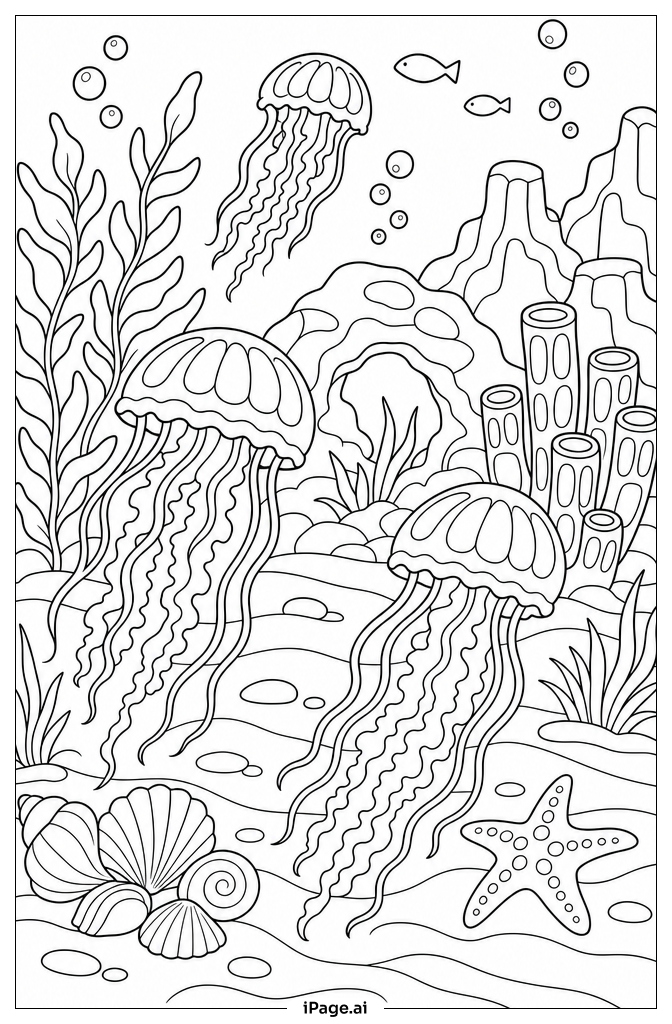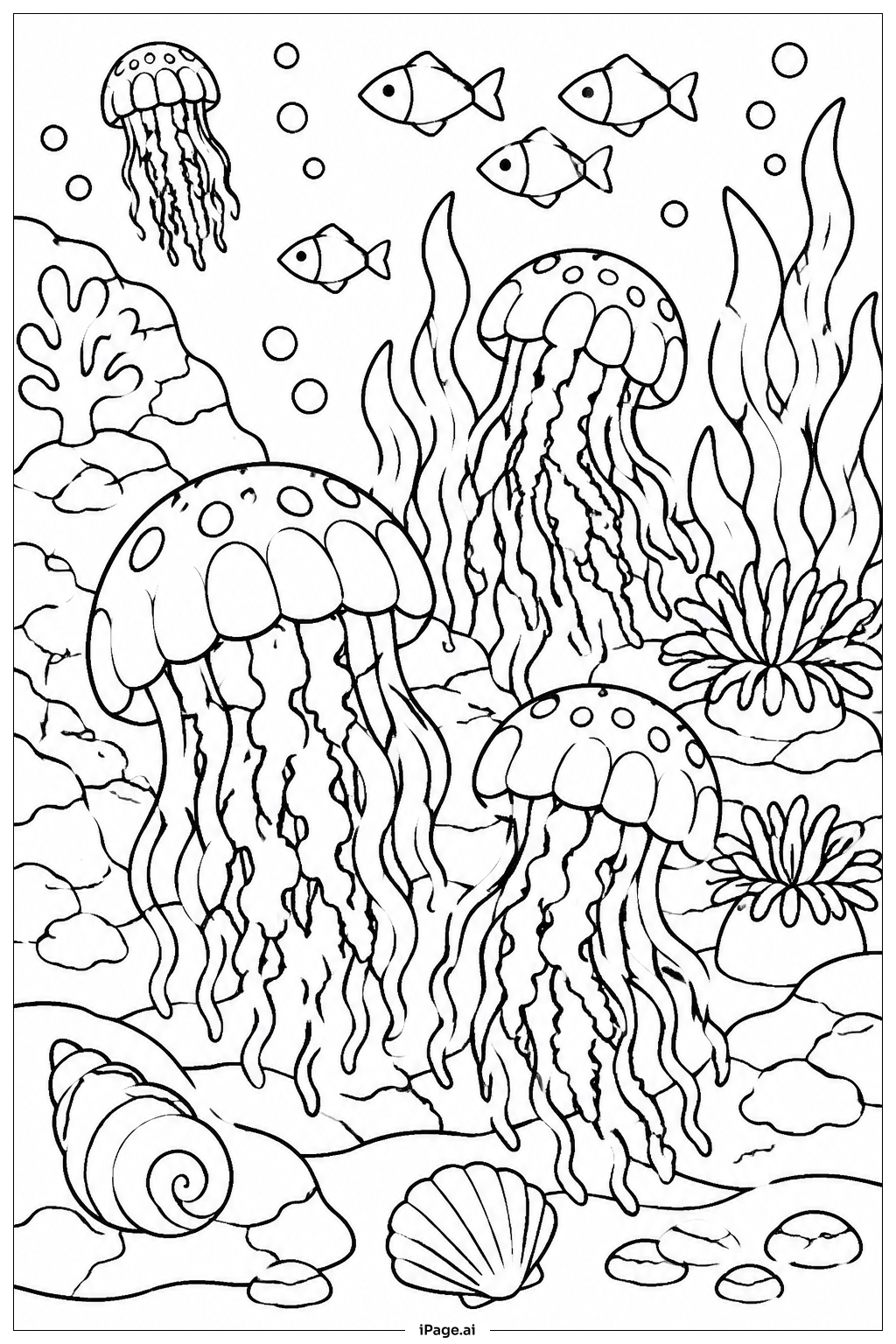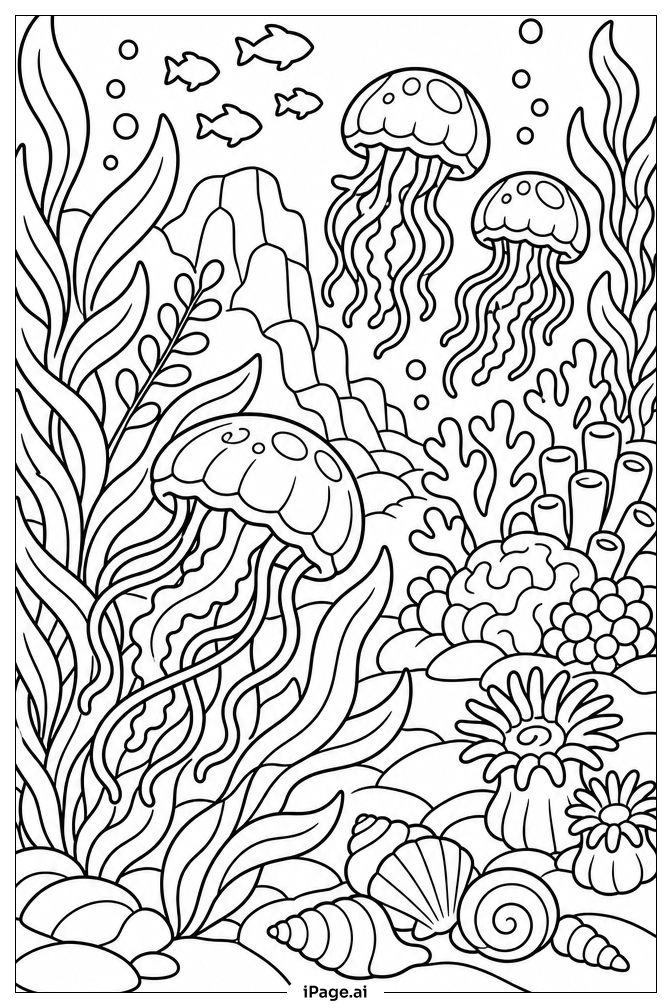
Coloring tips: How to color Jelly Fish Kelp Forest coloring page well?
Start with the jellyfish bell using soft, translucent colors like pale blue, lavender, or light pink. Use slightly darker shades near the edges to give it a glowing, see-through look. Color the tentacles in long, flowing strokes using deeper purples or teals to show movement. For the kelp, use various shades of green — dark forest green for the stalks and brighter lime green for the leaves. Add a touch of yellow-green to show where sunlight hits. Paint the water background in deep ocean blues and teals, getting lighter near the surface. Color small fish in bright oranges or yellows to make them pop. Use brown and gray for rocks and seafloor details. Finally, add light golden streaks to show sunlight filtering through the water — this will bring the whole scene to life!
Coloring challenges: Which parts are difficult to color and need attention for Jelly Fish Kelp Forest coloring page?
Coloring this jellyfish kelp forest scene comes with several fun but tricky challenges:
• **Jellyfish transparency:** The hardest part is making the jellyfish look see-through and soft. Real jellyfish are translucent, so you need to layer light colors carefully and blend edges smoothly. Using too much dark color can make it look solid instead of delicate and glowing.
• **Kelp depth and layers:** The kelp forest has many overlapping stalks and leaves at different distances. Showing depth means using darker greens for kelp in the background and brighter greens for the front. Keeping each stalk separate without the colors blending together takes patience and a steady hand.
• **Flowing tentacles:** The jellyfish tentacles are long, thin, and curling in many directions. Staying inside the lines while coloring these narrow shapes is challenging, especially where tentacles overlap or cross each other. Using fine-tipped markers or sharp pencils helps a lot here.
• **Water and light effects:** Creating the look of underwater light filtering through the water requires careful blending of blues and teals. Adding soft yellow or white streaks to show sunbeams is a delicate technique that can easily look messy if not done slowly and gently.
• **Background vs. foreground balance:** With so many elements — fish, rocks, bubbles, kelp, and the jellyfish — it can be hard to balance the colors so nothing looks too crowded or flat. Planning your color choices before you start will help the whole image feel balanced and vibrant.
Benefits of coloring books: Advantages of drawing Jelly Fish Kelp Forest coloring page
Coloring this jellyfish kelp forest scene offers many wonderful benefits for kids and beginners alike.
Working on the jellyfish's soft, rounded shape helps build fine motor skills and teaches gentle pencil control. Choosing colors for the underwater world sparks creativity and imagination, encouraging kids to explore color combinations they might never use on land.
This scene also introduces children to ocean life in a fun and hands-on way. As they color the kelp, jellyfish, fish, and seafloor, they naturally learn about marine habitats and the creatures that live there. It's a quiet, screen-free way to connect with nature.
The flowing shapes of the tentacles and swaying kelp promote calm, focused attention. Spending time on a detailed scene like this helps improve concentration and patience — skills that carry over into school and everyday life.
For older kids or adults, the layering and blending challenges in this image make it a satisfying artistic exercise. Completing it gives a real sense of accomplishment. Overall, this coloring page is both relaxing and educational — a perfect creative activity for anyone who loves the ocean.