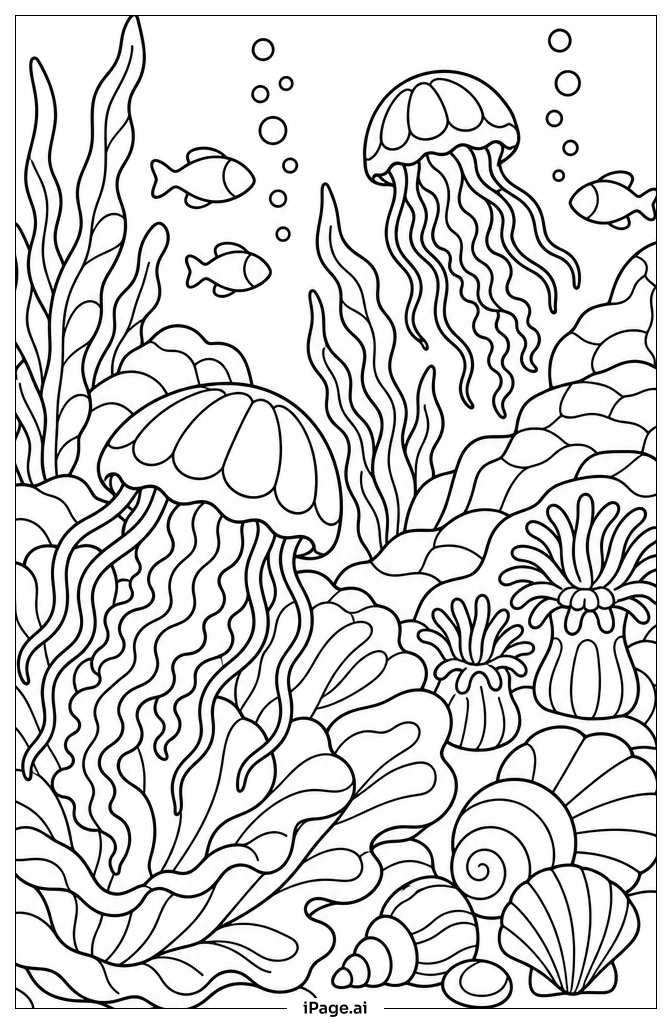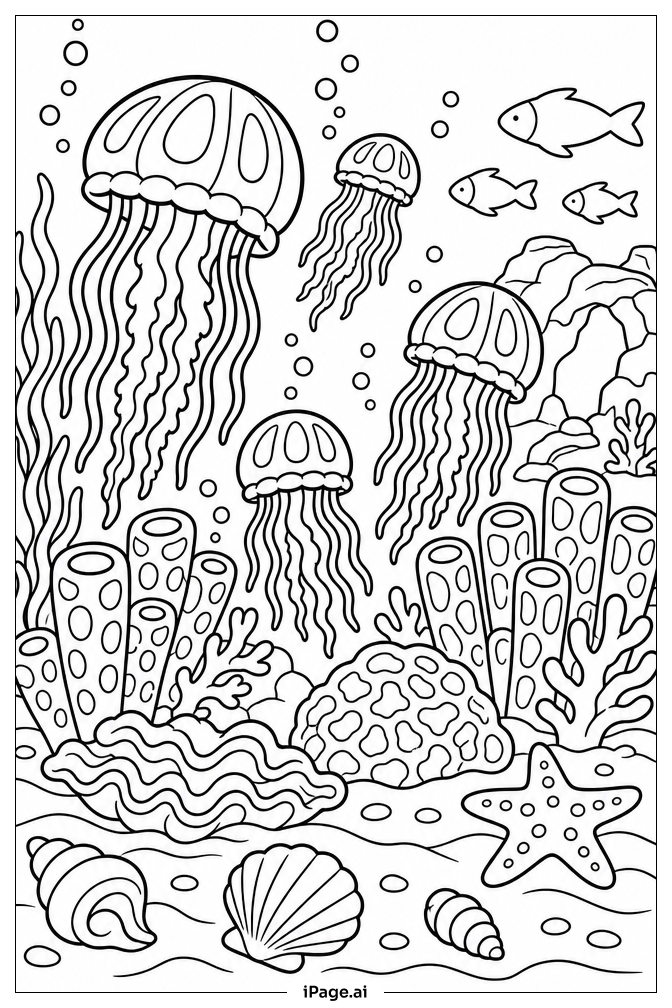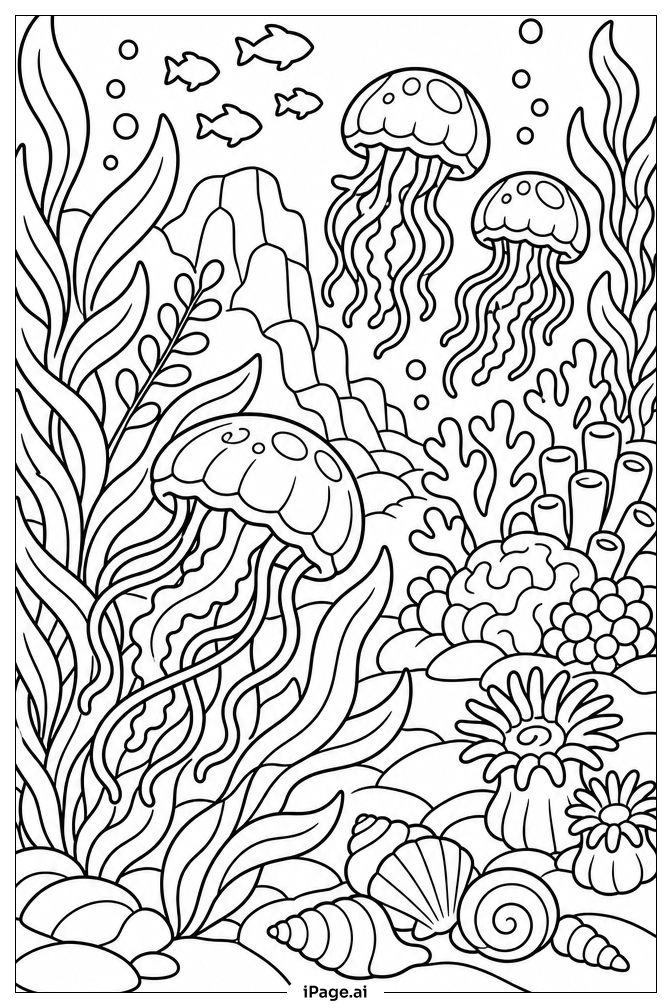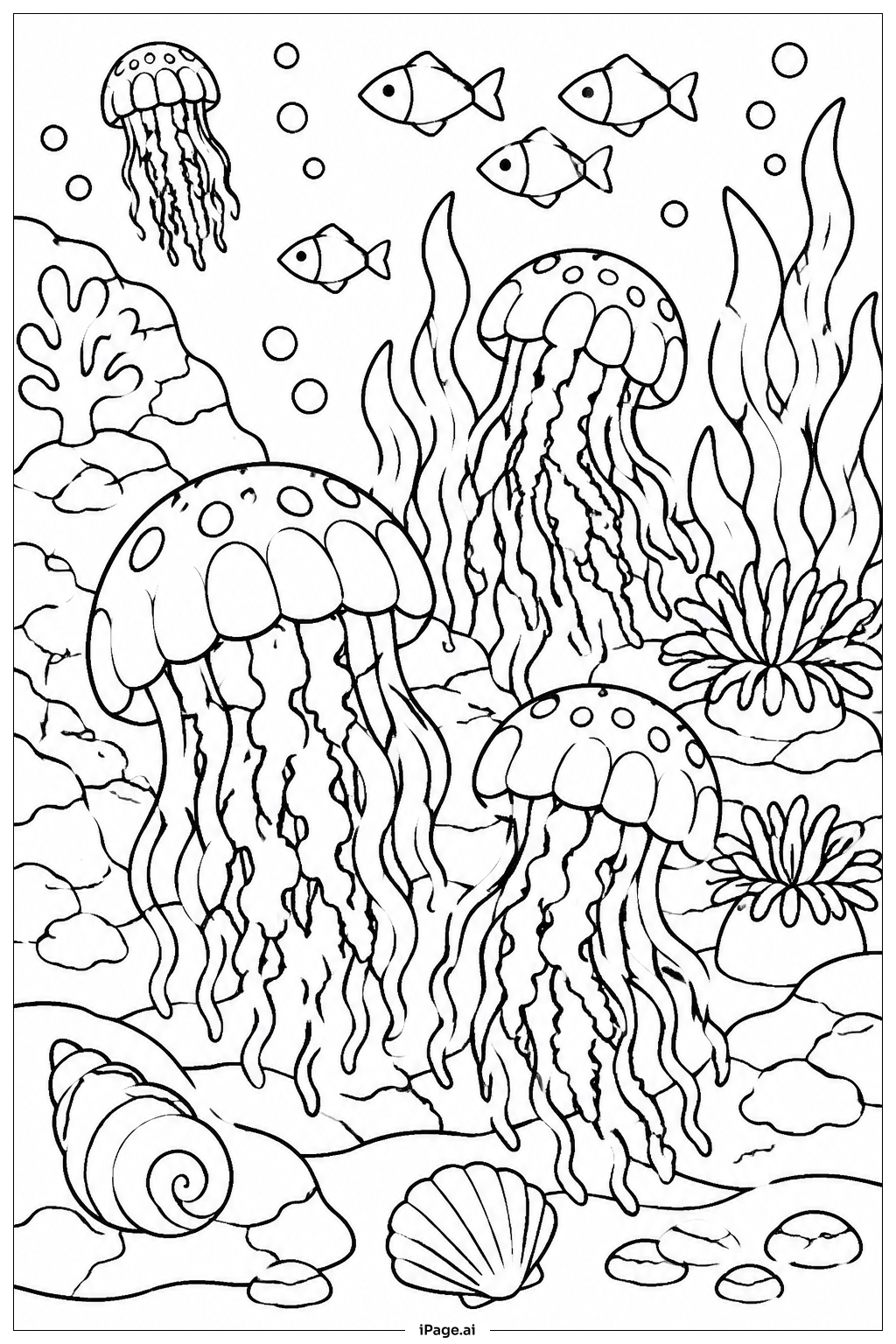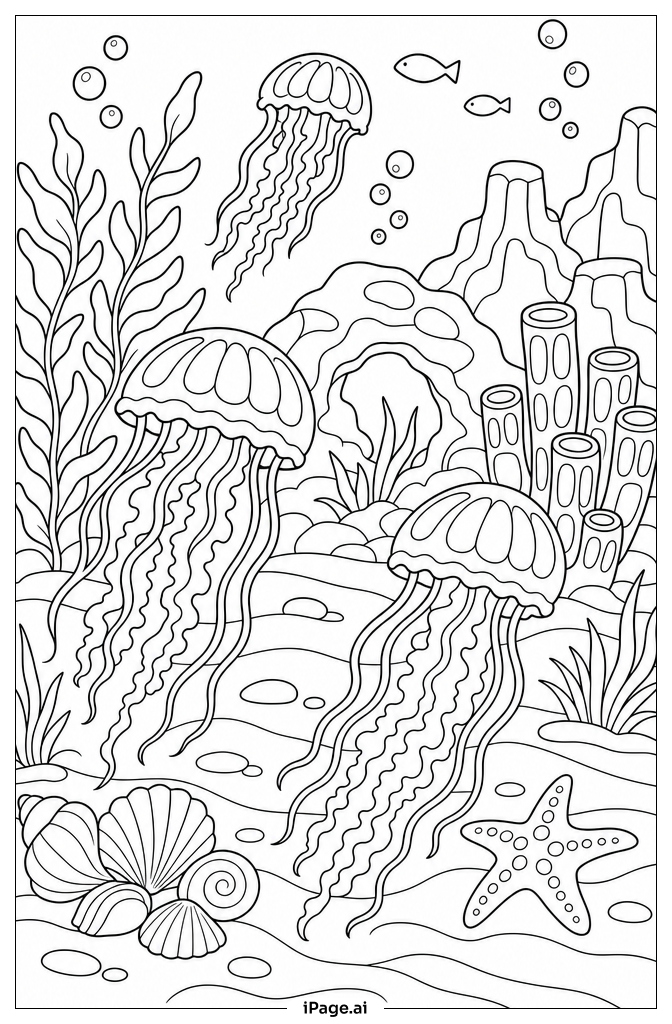
Coloring tips: How to color Jelly Fish Migration coloring page well?
Start with the jellyfish bells using soft, cool colors like light blue, lavender, pale pink, or translucent aqua to capture their dreamy, see-through look. Use slightly darker shades of the same color around the edges of each bell to add a gentle glow effect. For the tentacles, try long, flowing strokes in purple, teal, or soft rose. Color the background ocean in deep blues and teals, leaving lighter areas near the surface to show sunlight filtering through the water. Add small white or yellow dots for bubbles. Try using watercolor pencils or blending two colors together to make the jellyfish look soft and glowing. Kids can also experiment with bright neon colors to make the jellyfish look like they are lighting up the deep sea!
Coloring challenges: Which parts are difficult to color and need attention for Jelly Fish Migration coloring page?
Coloring this jellyfish migration scene comes with several fun but tricky challenges:
• **Layering Transparent Bodies:** Jellyfish have see-through, translucent bells. Showing this effect with colored pencils or markers is difficult. You need to use very light pressure and blend colors smoothly so the body looks soft and glowing rather than solid and flat.
• **Blending Multiple Jellyfish Without Confusion:** Since many jellyfish overlap and swim close together, keeping each one looking separate can be hard. Choosing slightly different shades for neighboring jellyfish — such as one in soft blue and the next in pale purple — helps prevent them from blending into one another visually.
• **Coloring Long, Flowing Tentacles:** The tentacles are thin, curvy lines that weave around each other. Staying inside such narrow shapes without going over the lines requires careful control of your coloring tool. Using thin markers or sharpened colored pencils works best here.
• **Creating Ocean Depth:** The background needs to look like deep, moving water. This means smoothly blending dark navy at the bottom with lighter blues and greens near the top. Achieving a gradual gradient without harsh lines takes patience and practice, especially for younger colorists.
• **Balancing the Overall Scene:** With so many jellyfish of different sizes filling the page, deciding which ones to make brighter and which to keep more muted is a creative challenge. Making all of them equally bright can make the image look chaotic, so thoughtful color choices help guide the viewer's eye through the migration.
Benefits of coloring books: Advantages of drawing Jelly Fish Migration coloring page
Coloring this jellyfish migration scene offers wonderful benefits for kids and adults alike.
For children, it builds fine motor skills as they carefully color the delicate tentacles and curved bell shapes. Choosing colors for the jellyfish encourages creative thinking and helps develop a personal sense of style. The ocean setting also sparks curiosity about marine life and the natural world, making learning feel like play.
Focusing on a detailed, flowing scene like this is a great way to practice patience and concentration. Kids learn to slow down, stay within the lines, and make thoughtful decisions — skills that carry over into school and everyday life.
For older children and Adults, this image offers a calming, meditative experience. The gentle, repetitive motion of coloring wave-like shapes and soft curves can reduce stress and bring a sense of peace. It is a simple way to unplug from screens and enjoy a quiet, creative moment.
Completing the full scene also gives a strong sense of achievement. Seeing all the jellyfish come to life in color feels rewarding and boosts confidence. Whether you are coloring alone or with family, this page is a joyful way to connect with your imagination and the beauty of the ocean.