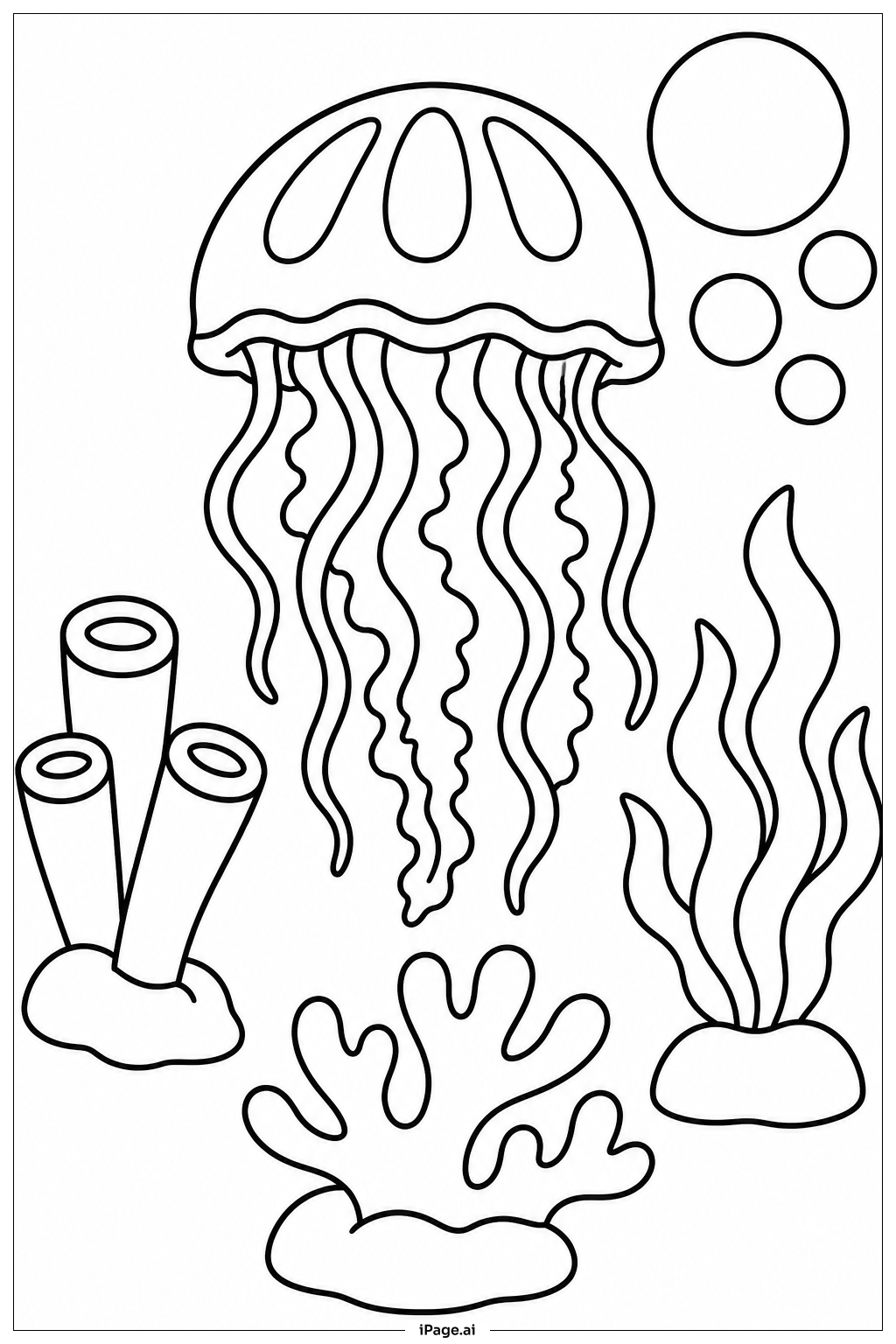
Coloring tips: How to color Jelly Fish With Simple Reef coloring page well?
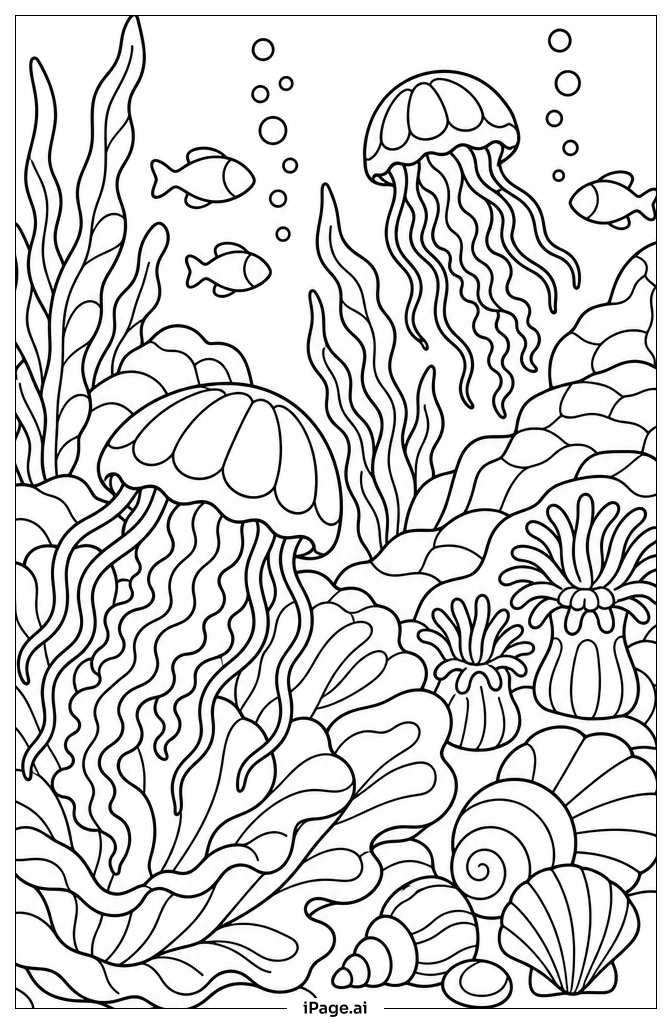
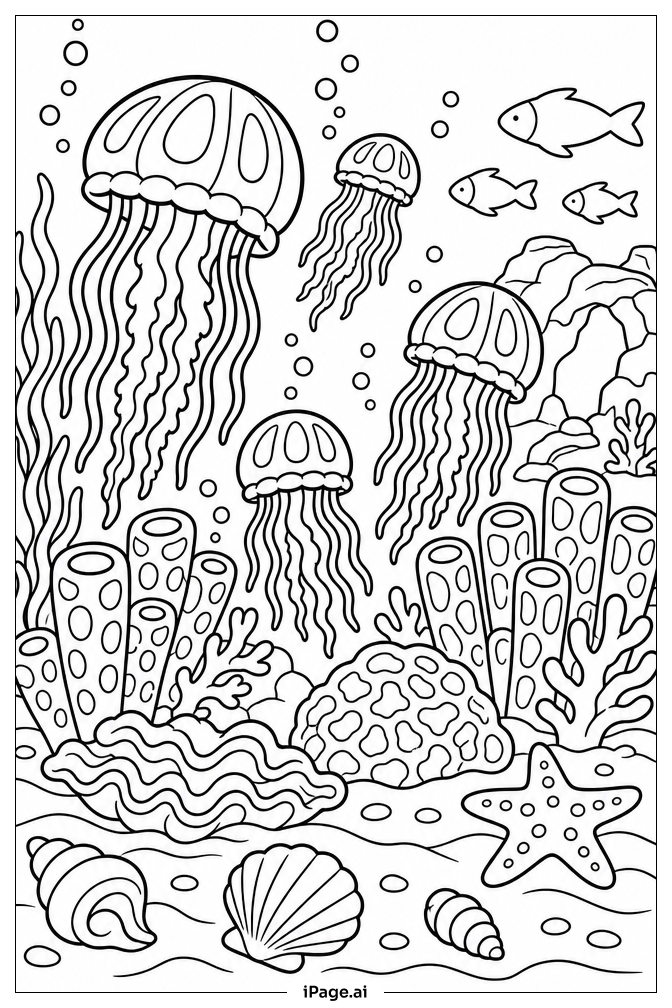
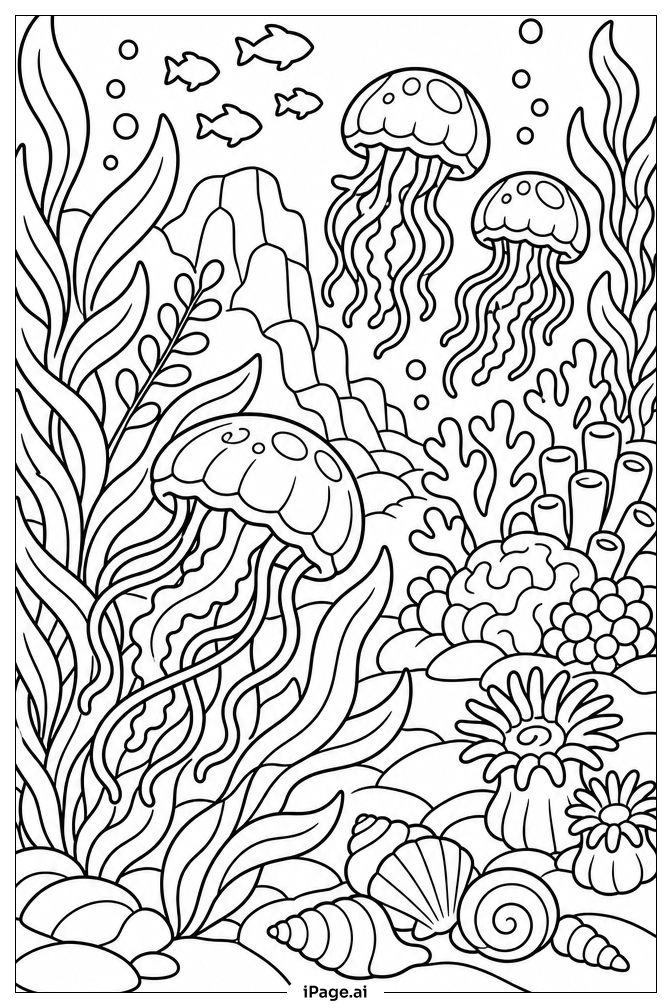
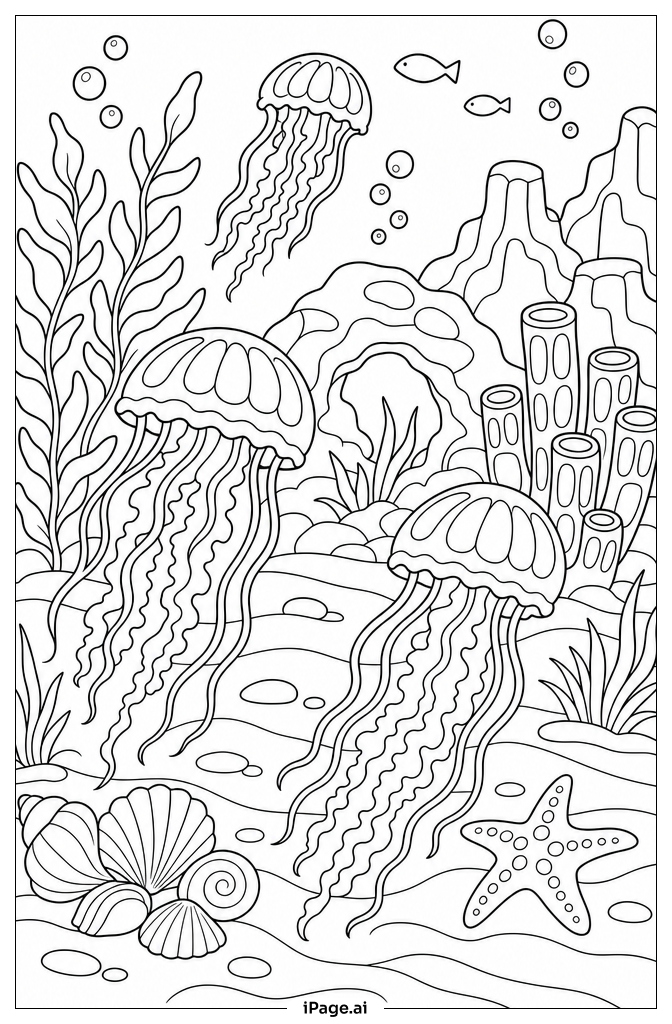
For the jellyfish, consider using soft, translucent colors like light pink, lavender, or pale blue for the bell to capture its delicate nature. The tentacles can be colored with gradient effects, starting darker at the top and fading lighter toward the tips. Try purple, orange, or magenta for a vibrant look. For the reef, use warm browns and tans for rocks, bright greens and teals for seaweeds, and varied coral colors like orange, pink, yellow, or red. Add a light blue or aqua background to suggest water. You can make the jellyfish glow by leaving some areas white or using yellow highlights. Experiment with layering lighter colors over darker ones to create depth and a realistic underwater atmosphere.
Coloring challenges: Which parts are difficult to color and need attention for Jelly Fish With Simple Reef coloring page?
• Tentacle Detail Work: The jellyfish's long, flowing tentacles require patience and steady hand control. Each tentacle needs consistent coloring along its length while maintaining the separation between individual strands. Young colorists may find it challenging to stay within the curved, wavy lines without accidentally crossing into adjacent tentacles. Using colored pencils with fine tips can help achieve precision in these narrow spaces.
• Creating Translucent Effects: Jellyfish are naturally semi-transparent creatures, which presents a unique coloring challenge. Achieving a realistic translucent look requires light pressure and strategic color blending. Children need to resist the urge to press hard and instead build up color gradually with gentle strokes. Learning to leave some areas lighter or partially uncolored to simulate transparency is an advanced technique that takes practice.
• Reef Texture Variety: The simple reef contains multiple elements with different textures—smooth rocks, bumpy corals, and spiky plants. Each element requires a different coloring approach to convey its unique surface quality. Colorists must switch between techniques like stippling for coral, smooth strokes for rocks, and short directional marks for plants, which demands versatility and planning.
• Maintaining Visual Balance: With both the jellyfish and reef competing for attention, colorists must make thoughtful choices about color intensity and contrast. Making one element too bright might overshadow the other, while using similar colors throughout can make the image look flat. Finding the right balance requires understanding color relationships and making deliberate choices about where to use bold versus subtle colors.
Benefits of coloring books: Advantages of drawing Jelly Fish With Simple Reef coloring page
Coloring this jellyfish and reef scene offers wonderful developmental benefits for children. The intricate tentacles help improve fine motor skills and hand-eye coordination as young artists carefully navigate the curved lines. The variety of shapes and textures encourages creative thinking about color choices and techniques. Children learn about marine life and ocean ecosystems while expressing themselves artistically. The meditative quality of coloring the flowing tentacles promotes relaxation and stress relief. Working with the translucent nature of jellyfish introduces concepts of light and transparency, expanding artistic understanding. The combination of a central focal point and background elements teaches composition and spatial awareness. Completing this detailed page builds patience, concentration, and confidence, giving children a beautiful finished piece they can proudly display.