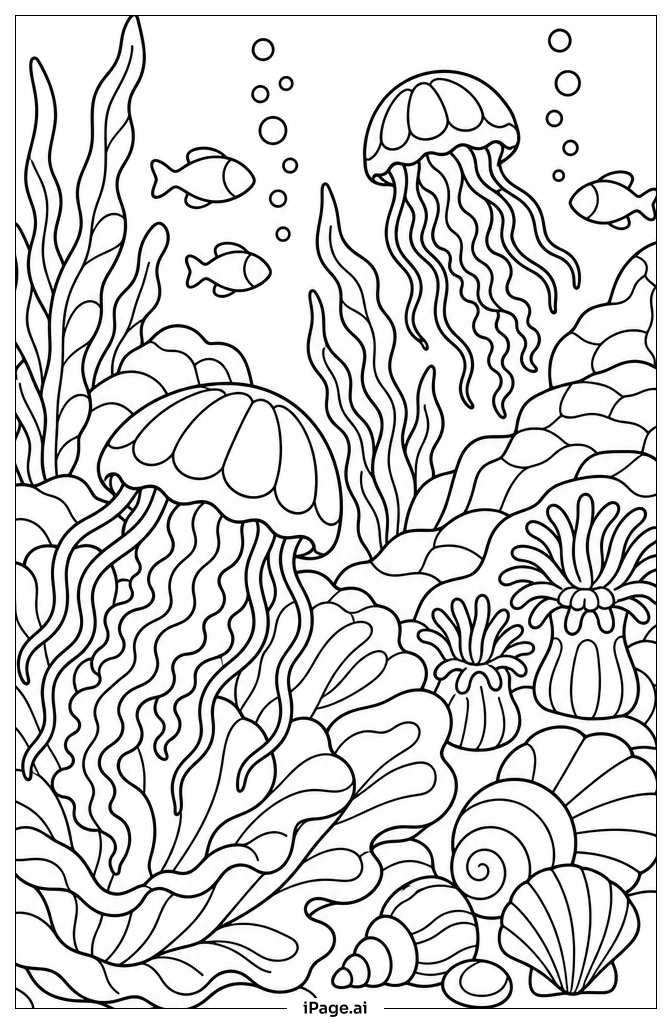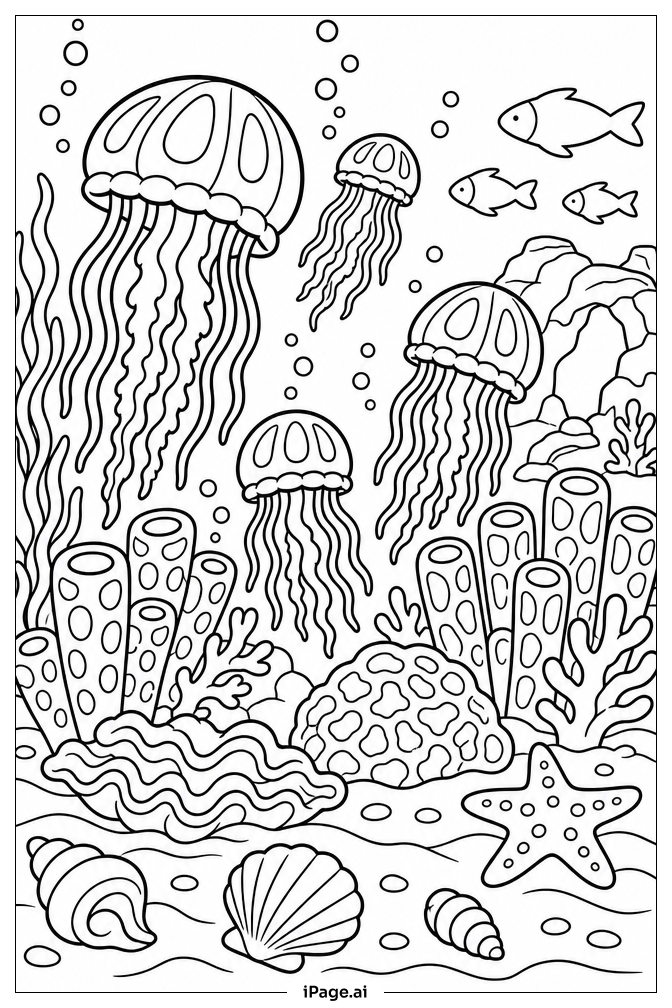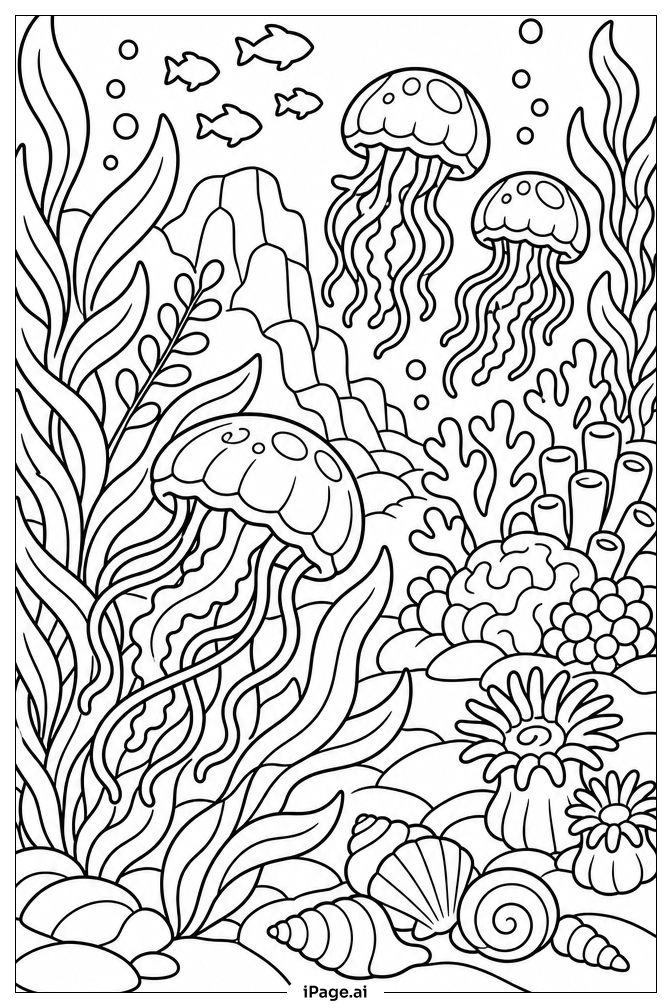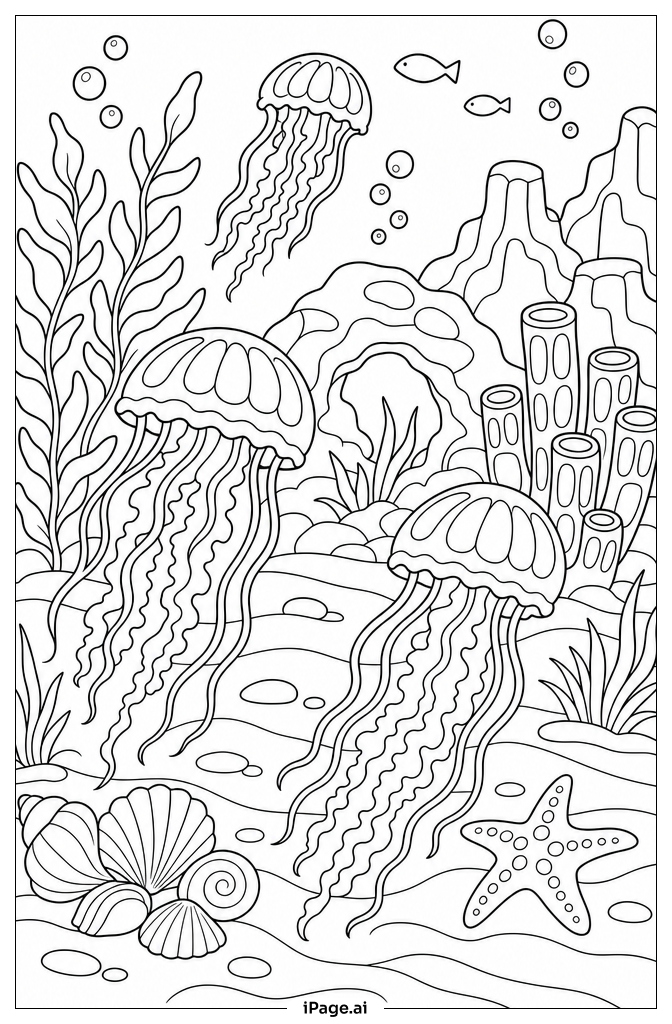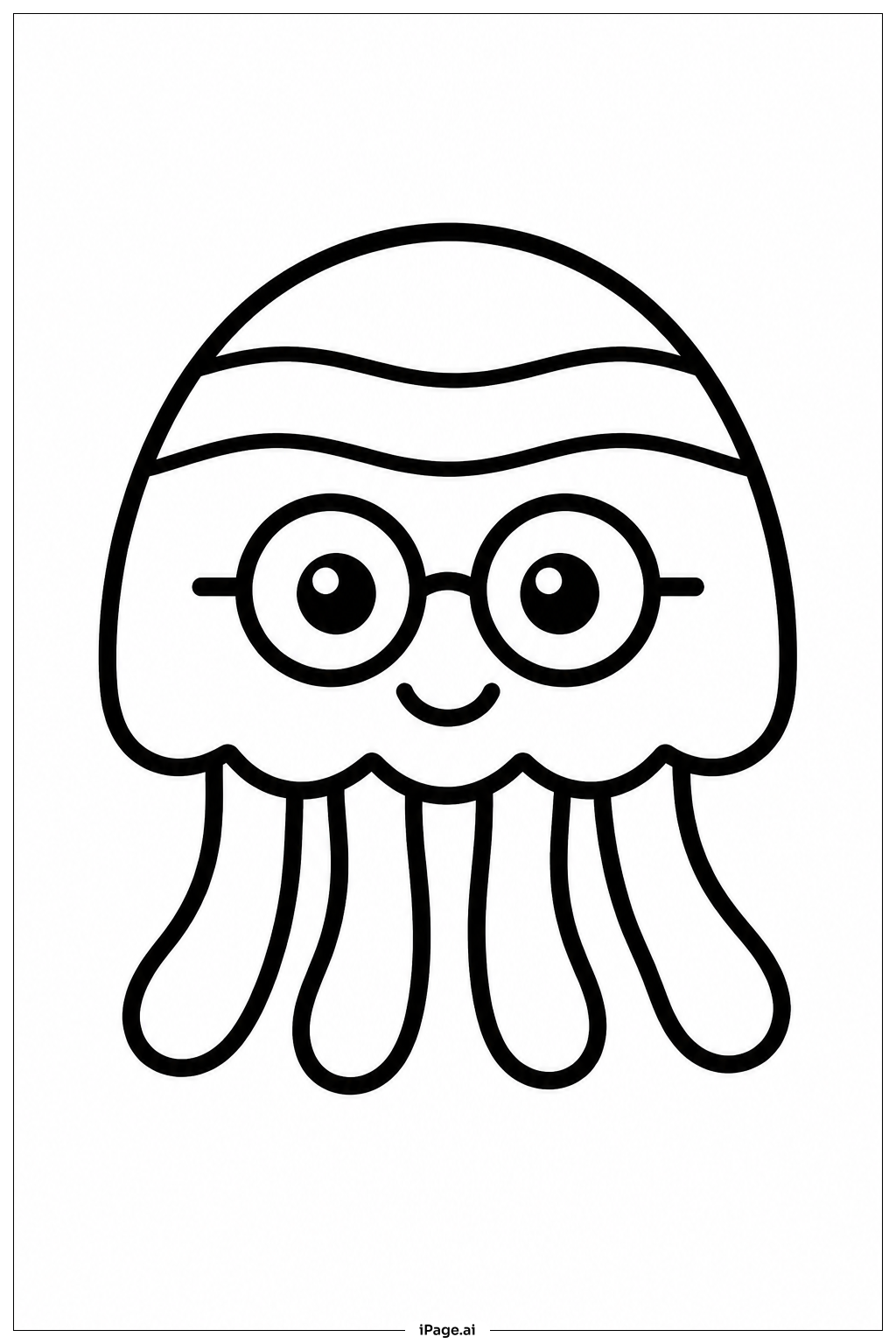
Coloring tips: How to color Jelly Fish With Glasses coloring page well?
Start with the jellyfish's bell using soft, translucent-looking colors like light blue, lavender, or pale pink to capture that glowing underwater feel. You can add a slightly darker shade around the edges of the bell to give it a rounded, three-dimensional look. For the tentacles, try using wavy gradient colors — starting with one color at the top and blending into another at the tips. Bright aqua, purple, or coral shades work beautifully. Color the glasses with a bold, fun color like gold, red, or bright orange to make them stand out. The lenses can be left very light or tinted pale blue to look like glass. Use a warm yellow or peach for the jellyfish's cheerful face. Don't forget to add some sparkle details inside the bell using white or light yellow dots to suggest a glowing, magical underwater glow. Let your creativity shine and mix colors freely!
Coloring challenges: Which parts are difficult to color and need attention for Jelly Fish With Glasses coloring page?
• Bell Dome Shading: The large rounded bell of the jellyfish can be tricky to shade evenly. To make it look smooth and glowing, you need to blend colors carefully from light in the center to darker tones near the edges. Rushing through this area may result in a flat, unnatural look rather than a soft, bubbly shape.
• Swirling Patterns Inside the Bell: The decorative swirls and patterns on the bell require a steady hand and patience. These small curved lines are close together, so using a fine-tipped coloring tool is recommended. Coloring outside the lines in this area can make the design look messy.
• Tentacle Gradients: The long, flowing tentacles are narrow and curvy, which makes them challenging to fill neatly. Blending two or more colors along their length to create a gradient effect takes practice. Younger children may find it easier to use a single color for each tentacle instead.
• Glasses Details: The small round glasses are one of the most detailed parts of the image. The frames, lenses, and nose bridge are very close together and require careful coloring with a fine tool. Choosing a color that contrasts well with the jellyfish body will help the glasses stand out clearly.
• Facial Expression Features: The eyes and smile of the jellyfish are small but full of character. Coloring these tiny features neatly is a challenge, especially for younger children. Using a very fine marker or colored pencil tip will help keep the face looking expressive and clean without smudging nearby areas.
Benefits of coloring books: Advantages of drawing Jelly Fish With Glasses coloring page
Coloring this fun Jelly Fish With Glasses page offers many wonderful benefits for kids of all ages. The detailed patterns on the bell and the flowing tentacles help children practice fine motor skills and hand control as they carefully stay within the lines. Choosing colors for the jellyfish encourages creative thinking and self-expression — there is no wrong answer when picking shades for an underwater creature! The playful design sparks imagination and can inspire kids to learn more about ocean life and sea animals. Focusing on smaller details like the glasses and facial features also helps build concentration and patience, which are valuable skills both in and out of the classroom. For younger children, this page introduces basic concepts like shapes and patterns in a fun, hands-on way. For older kids and teens, the shading and blending challenges make it a satisfying artistic exercise. Coloring is also a calming, screen-free activity that can help reduce stress and anxiety. Completing the page gives children a sense of pride and accomplishment, boosting their confidence. Whether coloring alone or with friends and family, this delightful jellyfish page makes for a joyful and enriching creative experience.