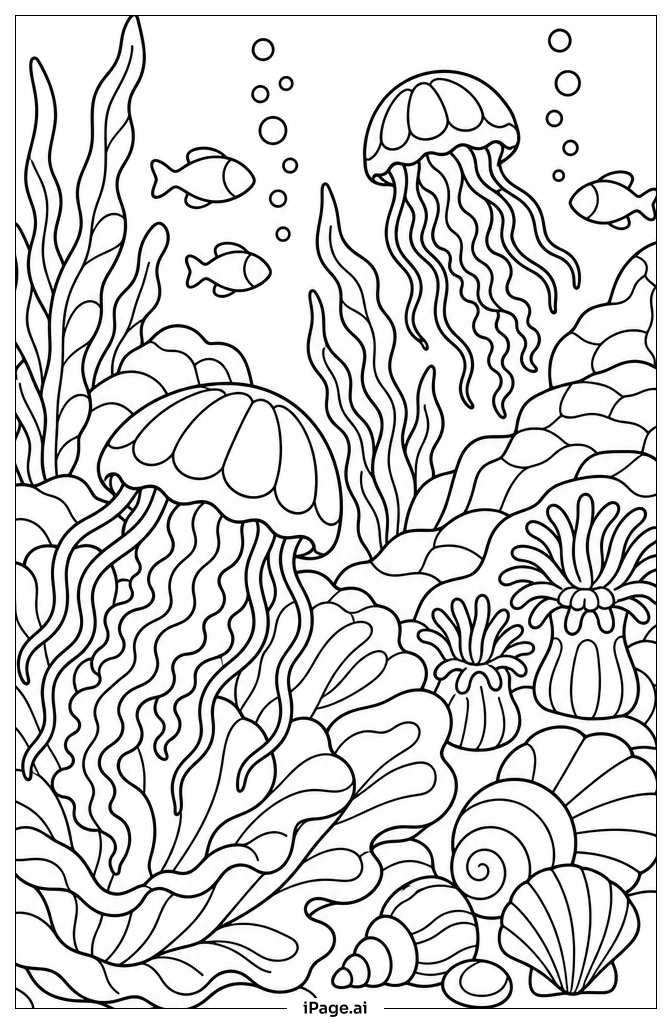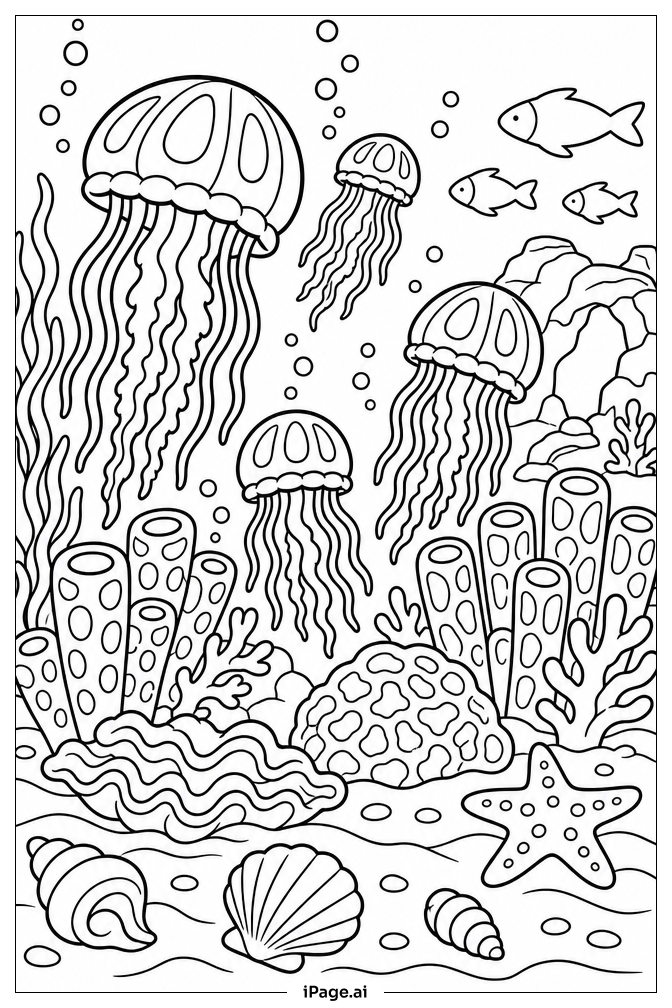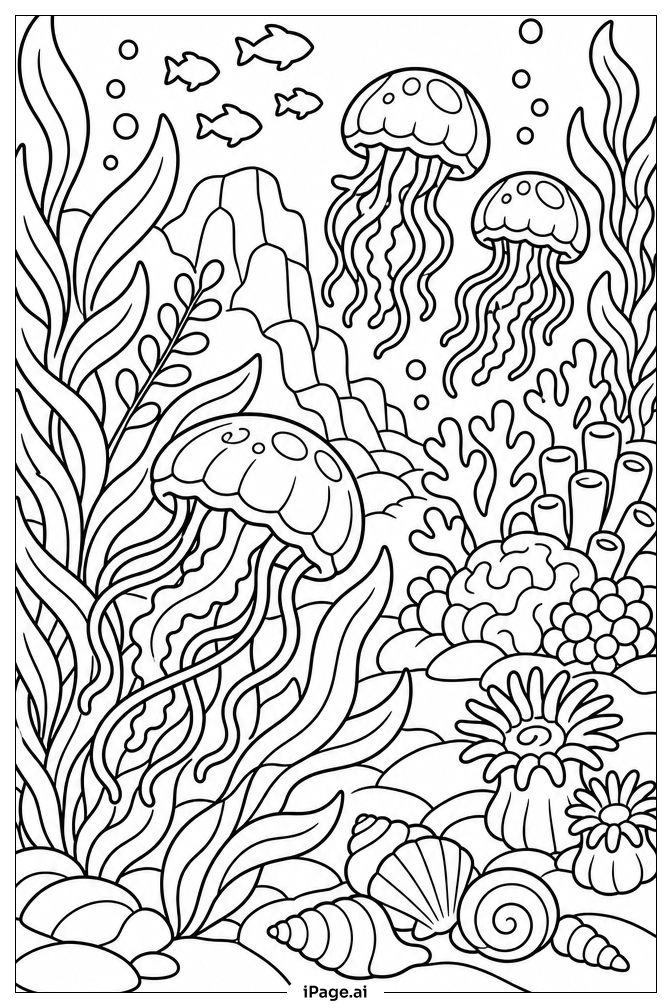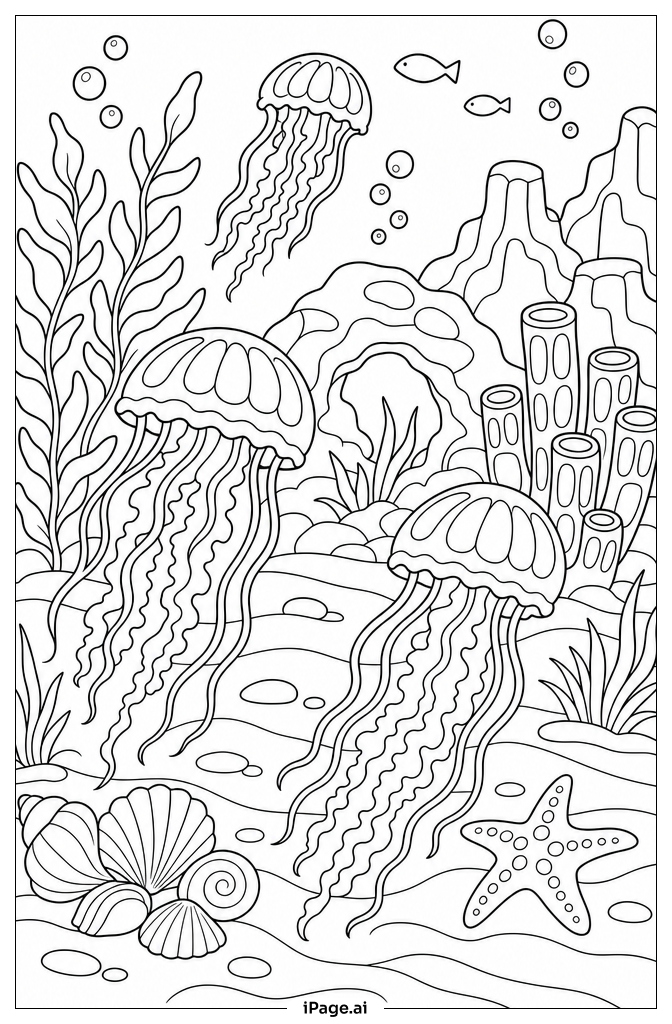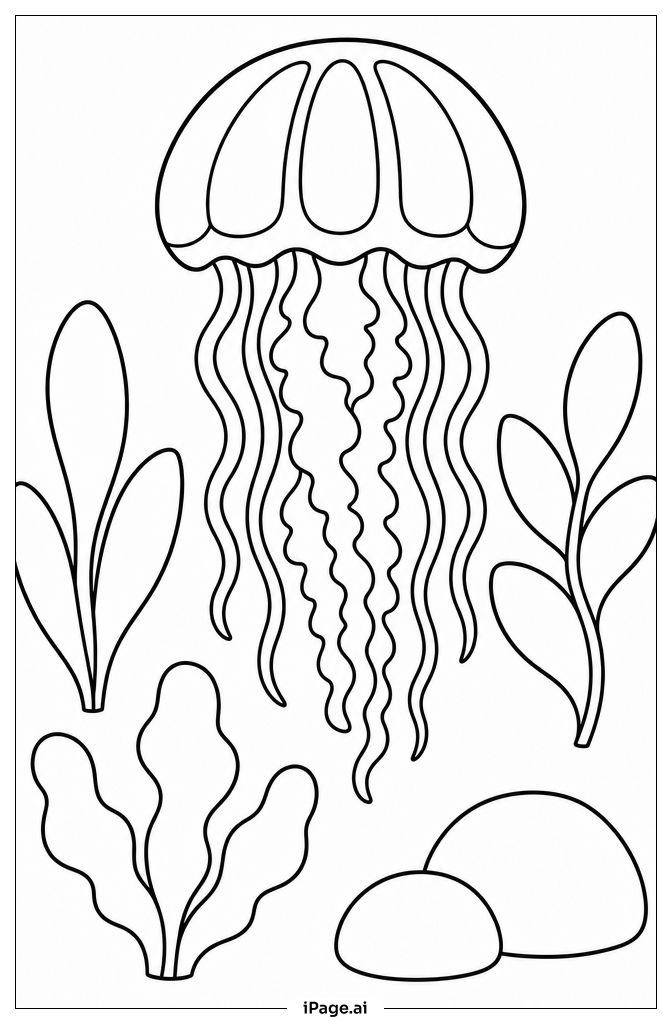
Coloring tips: How to color Jelly Fish With Floating Plants coloring page well?
Start with the jellyfish bell using soft, translucent colors like pale pink, lavender, or light blue to give it a glowing, see-through look. Add a slightly darker shade around the edges to create depth. Color the tentacles with long, flowing strokes using shades of purple, teal, or coral. For the floating plants, try different shades of green — dark green for larger leaves and lime green for smaller fronds. Mix in hints of teal or blue-green to keep everything feeling like it belongs underwater. Use a deep blue or soft aqua for the background water. Add light yellow or white dots for the bubbles to make the scene feel alive. Feel free to use your favorite ocean colors — there are no wrong choices here!
Coloring challenges: Which parts are difficult to color and need attention for Jelly Fish With Floating Plants coloring page?
Coloring this jellyfish scene is a rewarding challenge, but a few areas may need extra care and patience:
• **Jellyfish bell shading:** The dome of the jellyfish needs soft, blended tones to look translucent and glowing. Applying color too heavily in one spot can make it look flat. Try using light circular strokes and gradually building up color from the center outward to create a natural, rounded effect.
• **Flowing tentacles:** The tentacles are long, thin, and wavy, making them tricky to color neatly without going outside the lines. Use a fine-tipped marker or a sharpened colored pencil and follow the curve of each tentacle with slow, steady strokes. Keeping a consistent color flow along each strand helps them look graceful and fluid.
• **Layered floating plants:** The aquatic plants overlap in several places, creating a layered composition. It can be difficult to decide which plant sits in front and which is behind. Use lighter shades for plants in the background and deeper, richer greens for plants in the foreground to create a convincing sense of depth.
• **Small details and patterns:** The jellyfish bell features tiny decorative patterns and dots. These small elements require a fine tool and a steady hand. Rushing through these sections can cause colors to bleed together and lose definition. Take your time with these details — they make the finished piece truly stand out.
• **Background water blending:** Filling in the water background evenly without disturbing already-colored elements can be tricky. Work around the main figures carefully, and consider leaving soft white or pale areas to suggest light filtering through the water.
Benefits of coloring books: Advantages of drawing Jelly Fish With Floating Plants coloring page
Coloring this jellyfish and floating plants scene offers a wide range of wonderful benefits for kids and young artists:
**Builds focus and patience.** The detailed patterns on the jellyfish bell and the layered plants encourage children to slow down, concentrate, and work carefully — skills that carry over into school and everyday life.
**Develops fine motor skills.** Coloring within the flowing curves of the tentacles and the edges of the plant leaves helps strengthen hand-eye coordination and the precise muscle control needed for writing and drawing.
**Sparks creativity.** There is no single "correct" way to color this scene. Children are free to choose any colors they love, which builds creative confidence and imaginative thinking.
**Teaches color theory.** Experimenting with shading the jellyfish bell or layering greens on the plants gives young colorists a natural introduction to concepts like light, shadow, and color mixing.
**Promotes calm and relaxation.** The gentle, flowing shapes of the underwater scene create a soothing coloring experience that helps reduce stress and anxiety, making it a great quiet-time activity.
**Grows ocean awareness.** Engaging with jellyfish and aquatic plant imagery sparks curiosity about marine life and the natural world, planting early seeds of environmental appreciation.