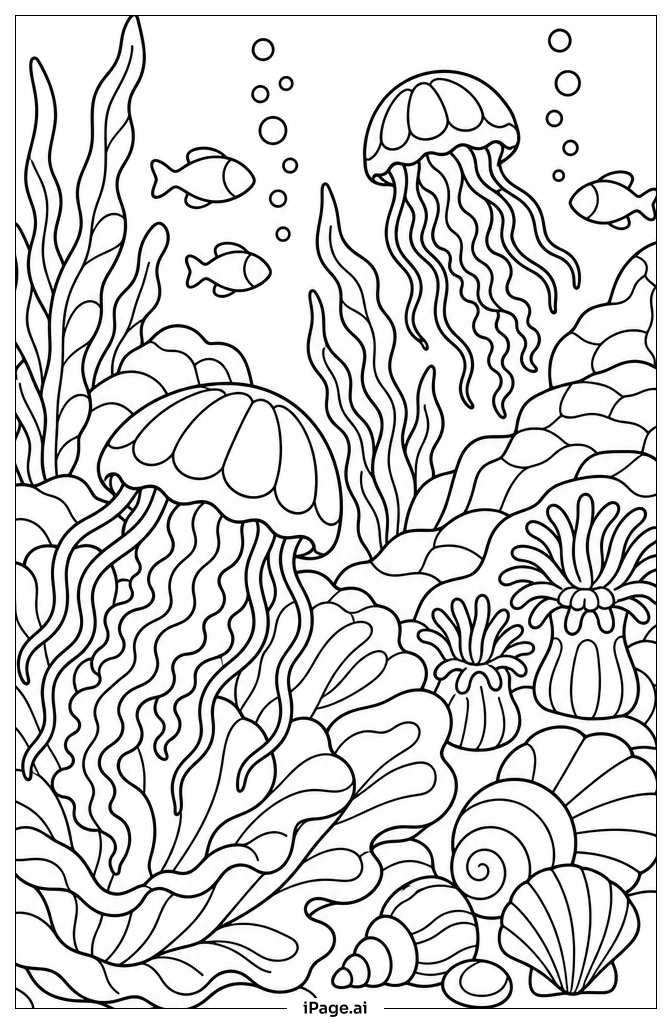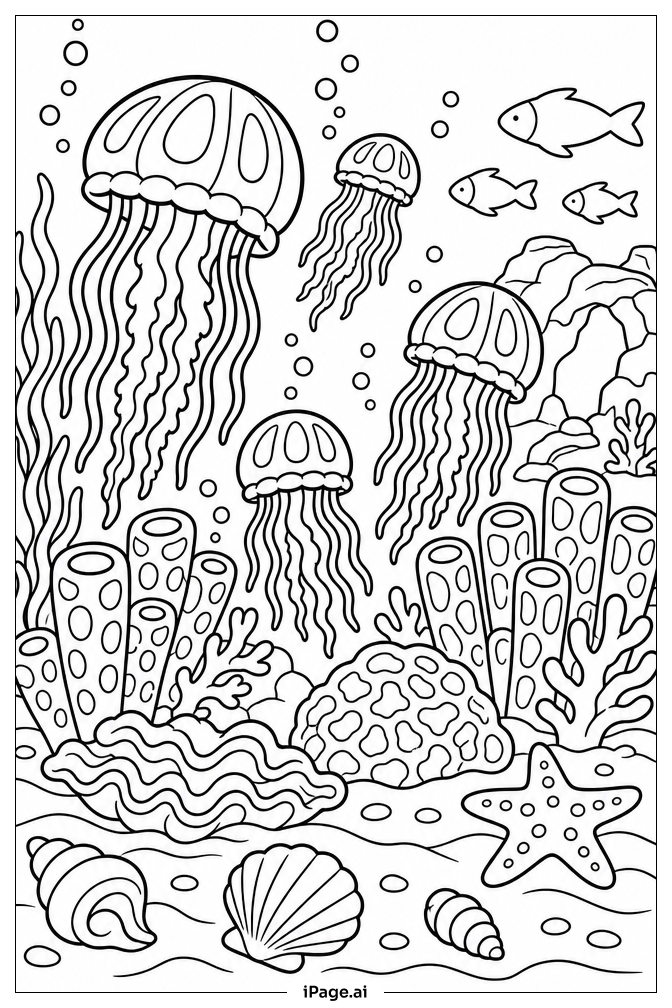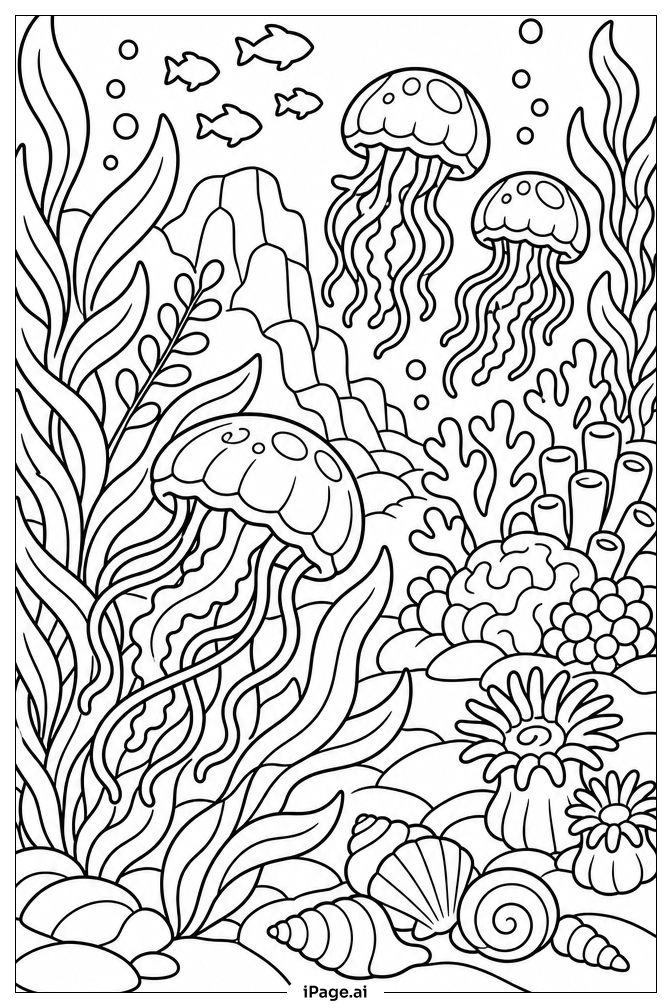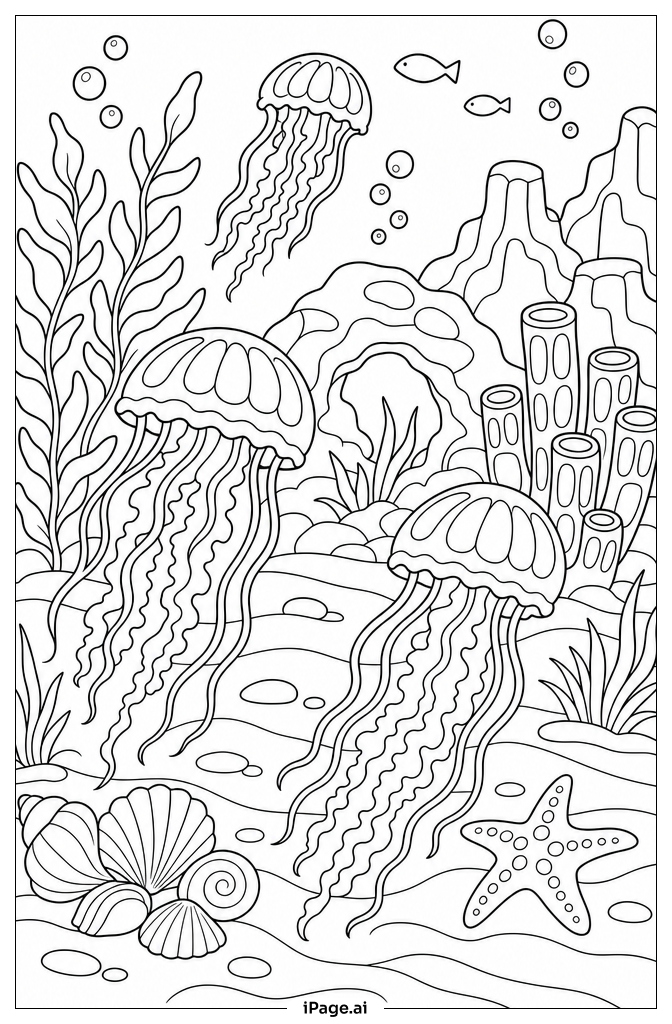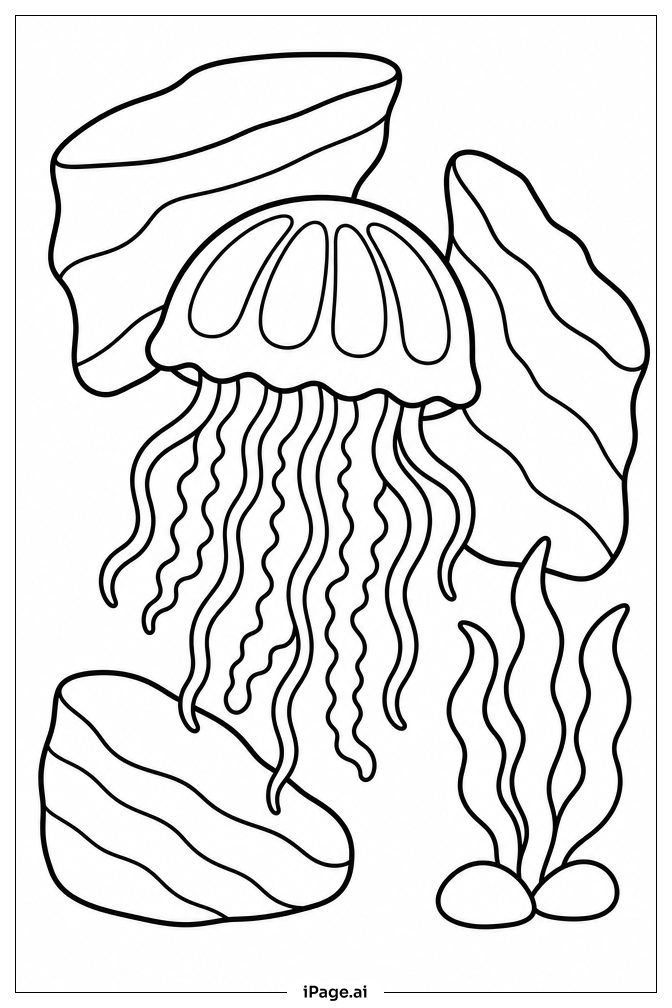
Coloring tips: How to color Jelly Fish With Driftwood coloring page well?
Start with the jellyfish bell using soft, translucent colors like light pink, pale lavender, or soft sky blue to give it a glowing, see-through look. Use a slightly darker shade of the same color along the edges to add depth and dimension. For the tentacles, try long, flowing strokes of purple, teal, or coral to make them look elegant and graceful. The driftwood looks great in warm tan, sandy beige, or light brown tones. Add darker brown shading in the grooves and knots to bring out the wood texture. Color the water background in soft blues and greens. Use white or very light blue for the bubbles — leave them mostly uncolored for a realistic effect. Blend colors gently wherever shapes overlap to create a smooth, harmonious underwater atmosphere.
Coloring challenges: Which parts are difficult to color and need attention for Jelly Fish With Driftwood coloring page?
Coloring this image comes with several interesting challenges that will test your skill and patience:
• **Jellyfish Bell Transparency:** The rounded dome of the jellyfish is meant to look soft and semi-transparent. Achieving this effect requires careful layering of light colors and gentle shading along the edges. Using too dark or too opaque a color can make it look solid and heavy instead of delicate and glowing.
• **Flowing Tentacles:** The long, ribbon-like tentacles twist and curl across the page, creating thin, overlapping lines. Staying within these narrow shapes without smudging into the background or neighboring tentacles requires a fine-tipped tool and a steady hand. Younger colorists may find this particularly tricky.
• **Driftwood Texture Detail:** The driftwood is covered in swirling grain lines, knots, and rough surface details. Coloring each groove individually with varied shades of brown takes time and care. Blending darker tones into the crevices while keeping the raised areas lighter is key to making the wood look realistic and three-dimensional.
• **Balancing Two Focal Elements:** The jellyfish and the driftwood are very different in texture and color — one is smooth and translucent, the other is rough and earthy. Choosing colors that contrast well without clashing, and making both elements stand out while still looking like they belong in the same underwater scene, is a creative challenge that requires planning ahead.
• **Background Water:** Filling the background with soft, even color without overwhelming the main subjects is harder than it looks. Gentle, graduated shading helps suggest depth and movement in the water.
Benefits of coloring books: Advantages of drawing Jelly Fish With Driftwood coloring page
Coloring this jellyfish and driftwood scene offers wonderful benefits for kids and young artists of all ages.
Working on the soft curves of the jellyfish helps children practice smooth, controlled strokes, which builds fine motor skills and hand-eye coordination. Choosing colors for the translucent bell and flowing tentacles encourages creative thinking and color exploration.
The detailed wood grain on the driftwood is great for developing patience and focus. Kids learn to slow down, work carefully in small areas, and pay attention to detail — skills that carry over into reading, writing, and problem-solving.
This ocean-themed image also sparks curiosity about marine life. Children may become interested in learning more about jellyfish, ocean ecosystems, and the natural journey of driftwood through the sea.
The peaceful, flowing shapes of this underwater scene make it naturally calming to color. Spending quiet time with this page can help children relax, reduce stress, and enjoy a screen-free creative activity.
Finally, completing a detailed image like this builds confidence. When kids finish and see their own colorful version of this beautiful undersea scene, they feel proud of what they've created — and that sense of accomplishment encourages them to keep exploring their artistic abilities.