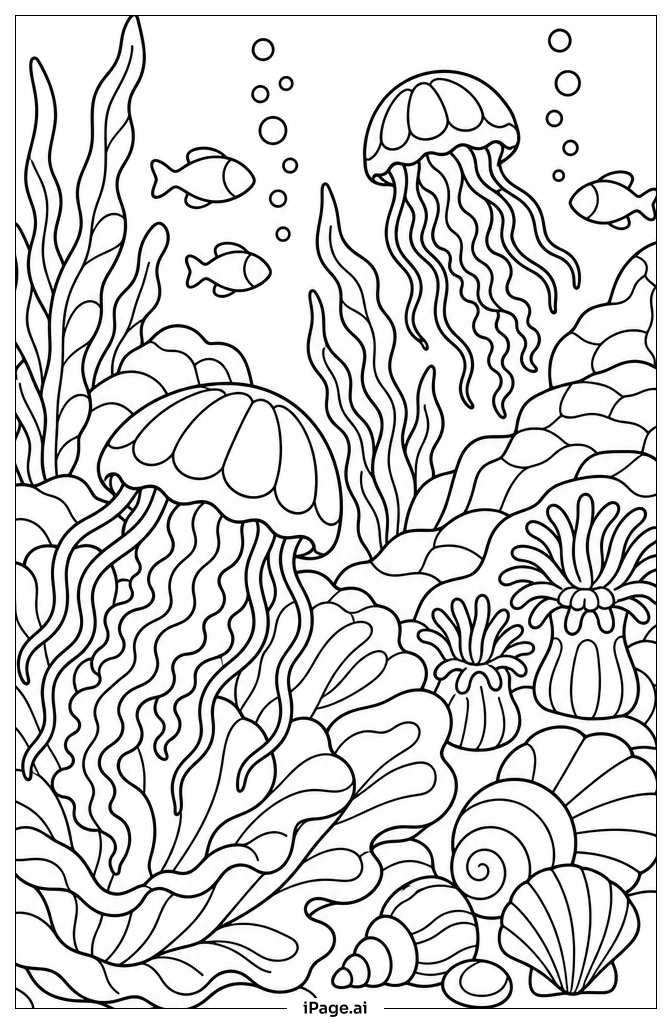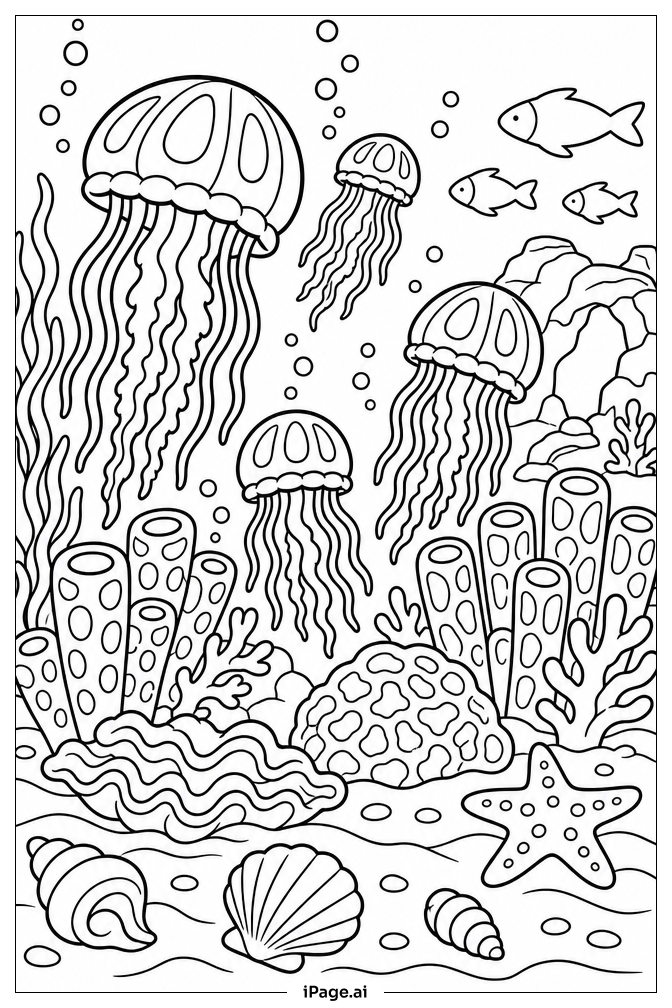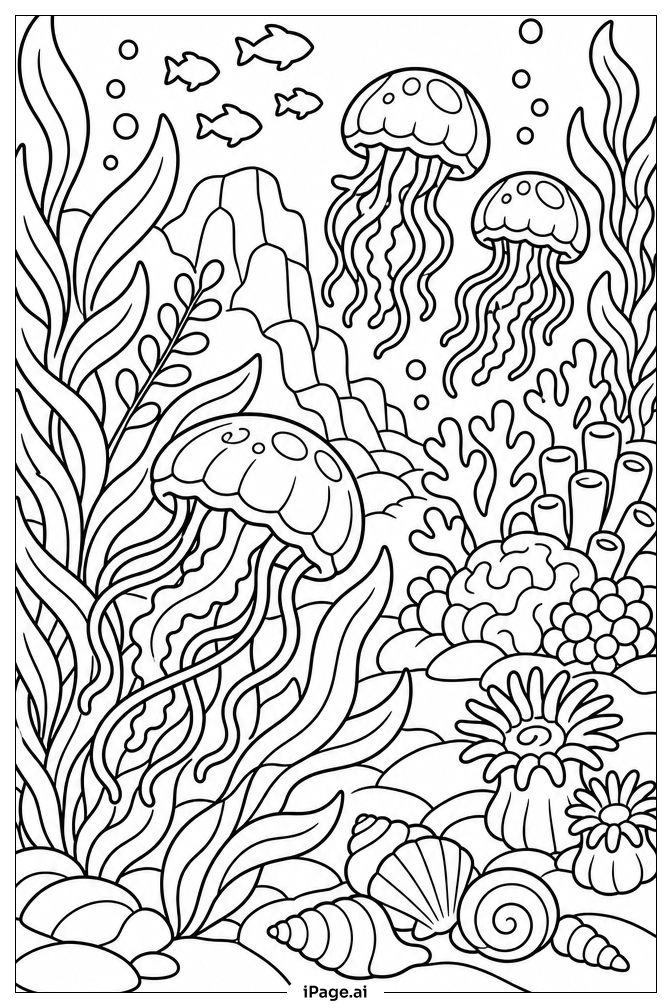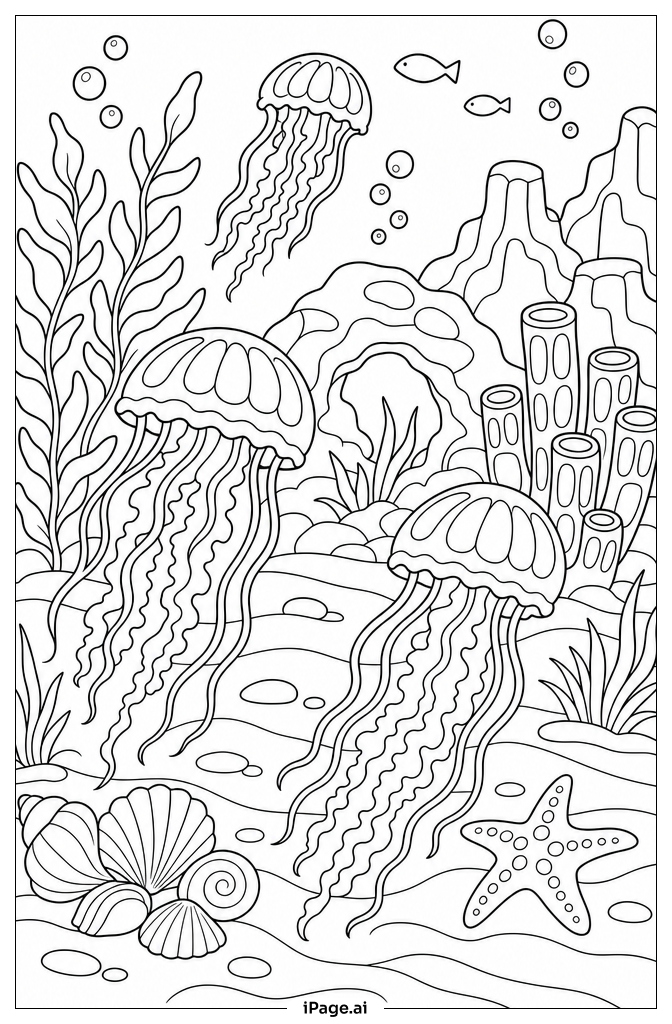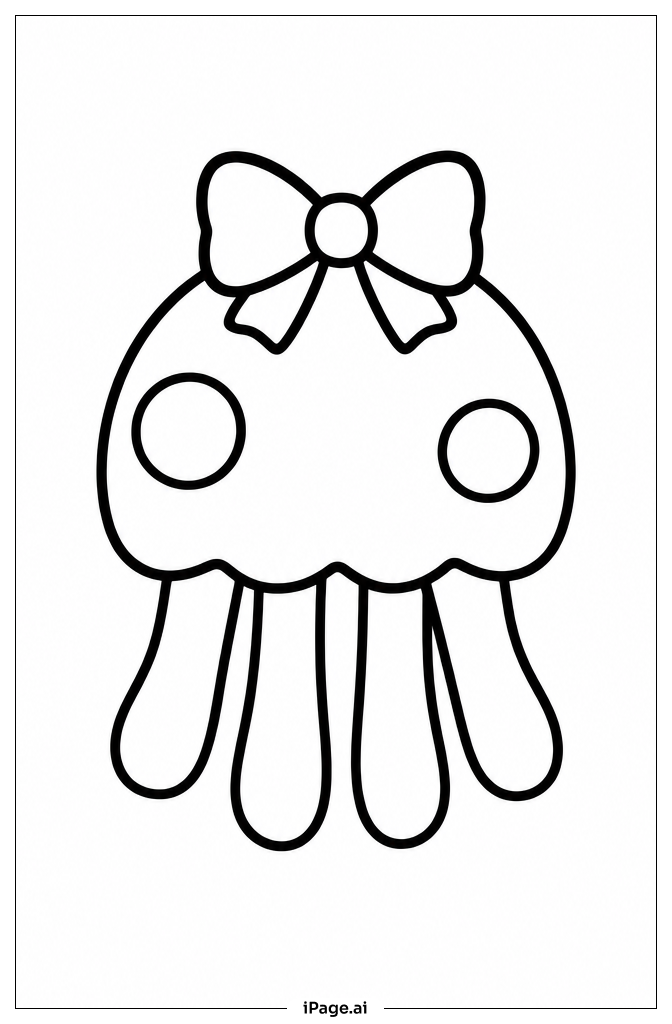
Coloring tips: How to color Jelly Fish With Bow coloring page well?
Start with the jellyfish bell using soft, light colors. Pale pink, lavender, or sky blue all work beautifully for the dome. Add a slightly deeper shade around the edges to give it a rounded, glowing look.
For the bow, try a bold and fun color like red, hot pink, or bright purple to make it stand out. You can add small dots or stripes to the bow for extra detail.
Color the tentacles in a lighter version of the bell color, or try a complementary shade like peach or mint green. Use long, smooth strokes to follow the wavy shapes naturally.
For the face, use a warm peach or soft yellow for the skin, and bright colors for the eyes to make the expression pop.
Fill the background with deep ocean blue or teal. Add touches of white or pale yellow for the bubbles to make them look shiny. You can also add a soft gradient — darker blue at the top fading to lighter at the bottom — to give the scene depth and an underwater atmosphere.
Coloring challenges: Which parts are difficult to color and need attention for Jelly Fish With Bow coloring page?
• Bow Details: The bow on top of the jellyfish has multiple layered sections including loops, a center knot, and ribbon tails. Keeping each section a distinct color or shade without the colors bleeding into each other takes careful attention. Using a fine-tipped colored pencil or marker will help you stay within the small, curved lines of each bow section.
• Tentacle Curves: The tentacles flow downward in long, wavy lines that overlap and intertwine. Coloring along these curves smoothly without going outside the lines can be tricky, especially where tentacles cross each other. It helps to color one tentacle fully before moving to the next, and to use light pressure to build up color gradually.
• Bell Shading and Glow Effect: The rounded dome of the jellyfish looks best when it has a soft glow or gradient effect, brighter in the center and deeper toward the edges. Blending two close shades smoothly across a curved surface is a real challenge, especially for younger colorists. Try layering a lighter base color first, then gently adding a darker tone around the outer rim.
• Facial Features: The jellyfish has small, expressive eyes and a tiny smile. These features are very small compared to the rest of the image. Coloring neatly inside such tiny shapes requires a very sharp pencil or a fine-point marker to avoid smudging or covering the outlines.
• Background Balance: Choosing a background color that complements the jellyfish without overpowering it can be difficult. A color that is too dark may hide the tentacle details, while a color that is too light may make the whole image look flat. Picking a medium ocean blue and leaving bubble areas lighter helps keep the balance right.
Benefits of coloring books: Advantages of drawing Jelly Fish With Bow coloring page
Coloring this jellyfish page offers a wide range of wonderful benefits for kids and beginners alike.
First, it builds fine motor skills. Following the curved lines of the tentacles and the small details of the bow trains hand control and pencil grip, skills that are helpful in writing and drawing too.
Second, it encourages creativity. Choosing colors for the bell, bow, and background lets children experiment freely. There is no single right answer, so every child can make a unique piece of art they are proud of.
Third, it teaches color blending and shading. The rounded bell shape is a great surface for practicing gradients, helping young colorists understand how light and shadow work in a fun, low-pressure way.
Fourth, coloring is calming. The gentle, flowing shapes of the jellyfish and its tentacles create a soothing rhythm as you work through the page. It helps reduce stress and supports focus, making it a great quiet-time activity.
Finally, it sparks curiosity about ocean life. The playful design invites children to learn more about jellyfish and the underwater world, connecting art with nature and science in a joyful way.