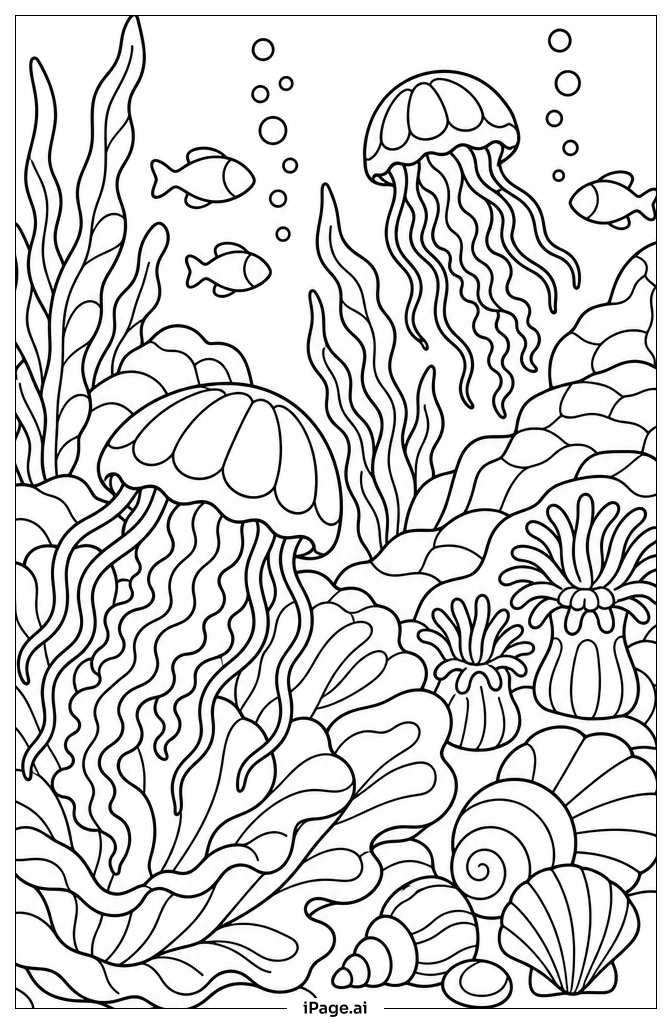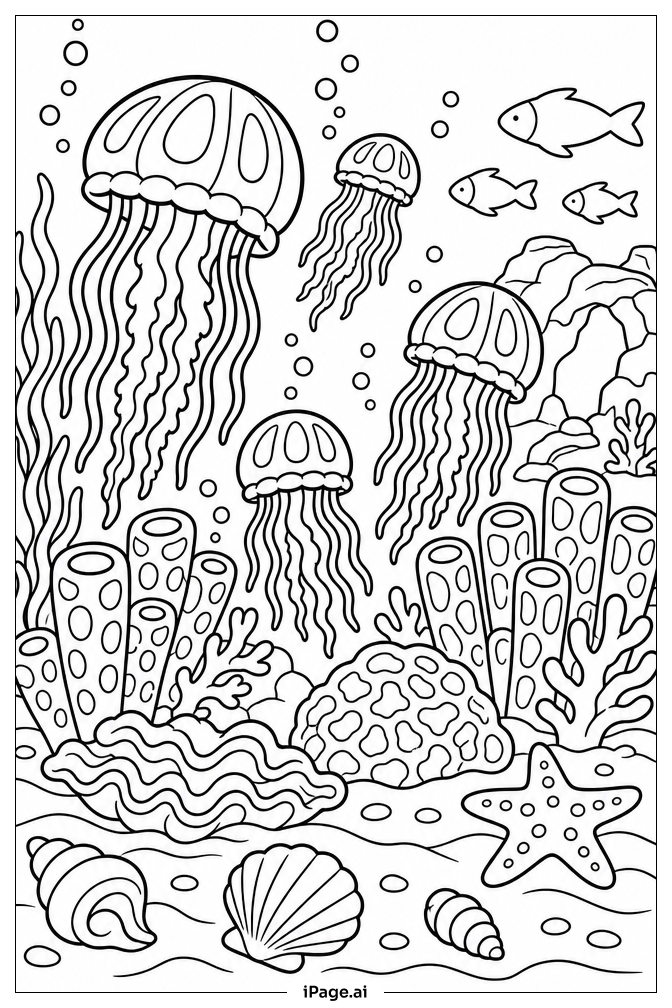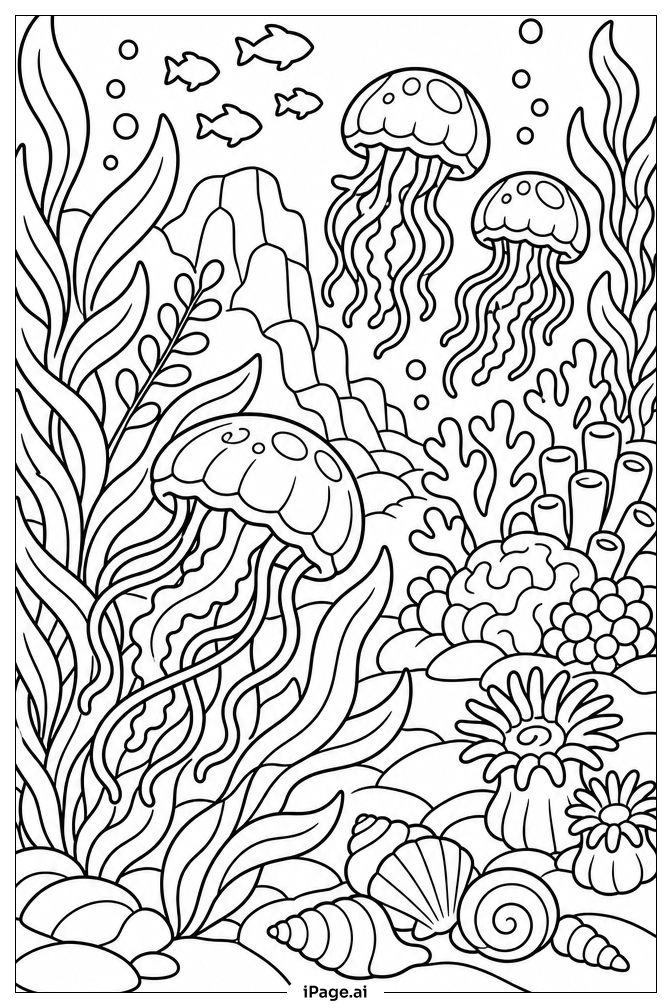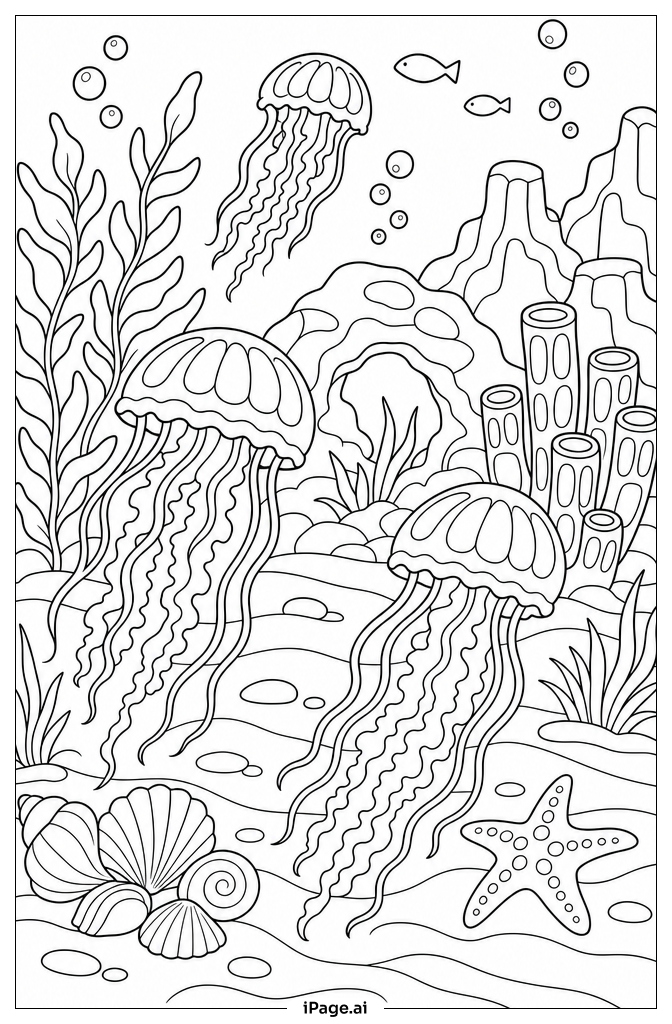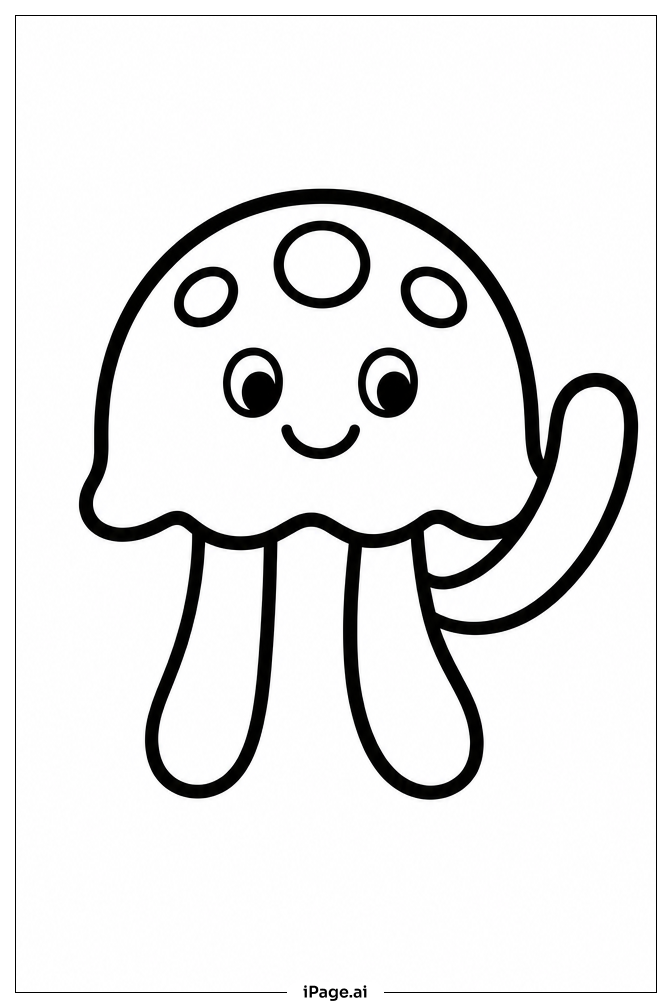
Coloring tips: How to color Jelly Fish Waving Tentacle coloring page well?
Start with the bell at the top. Try soft, glowing colors like light blue, lavender, or pale pink to give the jellyfish a dreamy ocean feel. You can add a slightly darker shade around the edges of the bell to create a gentle rounded shape.
For the tentacles, use colors that are a shade deeper than the bell, such as medium blue, violet, or coral. This helps them stand out. Try blending two colors on the wider, ruffled tentacles to make them look soft and wavy.
Add small details using bright colors. Color the circular dots on the bell with white or light yellow to make them glow. A soft turquoise or sea-green background can make the whole jellyfish pop and feel like it is truly floating underwater.
Do not be afraid to experiment. Jellyfish can be almost any color in real life, so feel free to use your favorite colors and make this jellyfish uniquely yours!
Coloring challenges: Which parts are difficult to color and need attention for Jelly Fish Waving Tentacle coloring page?
• Bell Surface Patterns: The bell of the jellyfish is covered with swirling lines, curves, and small circular dot details. Coloring within these fine patterns without going outside the lines requires steady hands and careful control, especially for younger children. Using a sharpened colored pencil or a fine-tip marker is recommended for these areas.
• Tentacle Variation and Layering: The tentacles differ in shape and size — some are thin and flowing while others are wide with ruffled, wavy edges. Keeping each tentacle visually distinct while maintaining a harmonious overall color scheme can be tricky. Deciding which tentacles get lighter or darker shades requires planning before you begin.
• Blending and Gradients: To capture the translucent, glowing quality of a real jellyfish, smooth color blending is ideal. Achieving a natural gradient — for example, moving from light pink at the center of the bell to deeper purple at the rim — is a skill that takes patience and practice, particularly with crayons or standard colored pencils.
• Overlapping Tentacle Areas: Some tentacles cross over or overlap each other near the base of the bell. Coloring these overlapping sections while keeping each tentacle looking separate and clear is a spatial challenge. Using slightly different tones for each overlapping piece helps maintain clarity.
• Background Integration: Choosing and coloring a background that complements the jellyfish without overpowering it is an often-overlooked challenge. Too dark a background can swallow the delicate tentacle details, while too light a background may make the jellyfish blend in and lose its visual impact.
Benefits of coloring books: Advantages of drawing Jelly Fish Waving Tentacle coloring page
Coloring this jellyfish page offers a wide range of benefits for kids and beginners alike.
First, it builds fine motor skills. Carefully coloring the swirling patterns on the bell and the thin, flowing tentacles helps children develop hand strength, pencil control, and coordination — all skills that support handwriting and everyday tasks.
Second, it sparks creativity. Since jellyfish come in countless real-world colors — from deep blue to bright orange — there is no single right answer. Children are free to choose any colors they love, which encourages imaginative thinking and builds confidence in their creative choices.
Third, it teaches focus and patience. Staying within detailed lines and planning a color scheme for different parts of the image requires concentration. Completing the page gives children a satisfying sense of accomplishment.
Fourth, it introduces ocean awareness. As children engage with the image, they naturally become curious about jellyfish and marine life. This can open conversations about ocean ecosystems, sea creatures, and the importance of protecting our oceans.
Finally, coloring is a calming activity. The gentle, flowing shapes of the jellyfish create a relaxing coloring experience that can help reduce stress and anxiety, making it a wonderful quiet-time activity for children and adults alike.