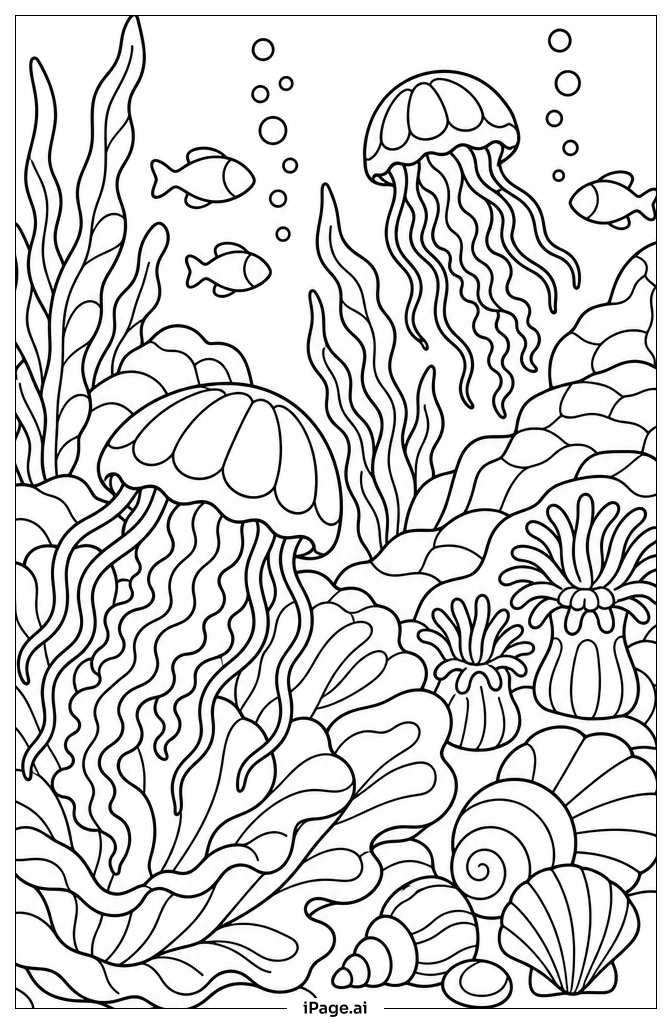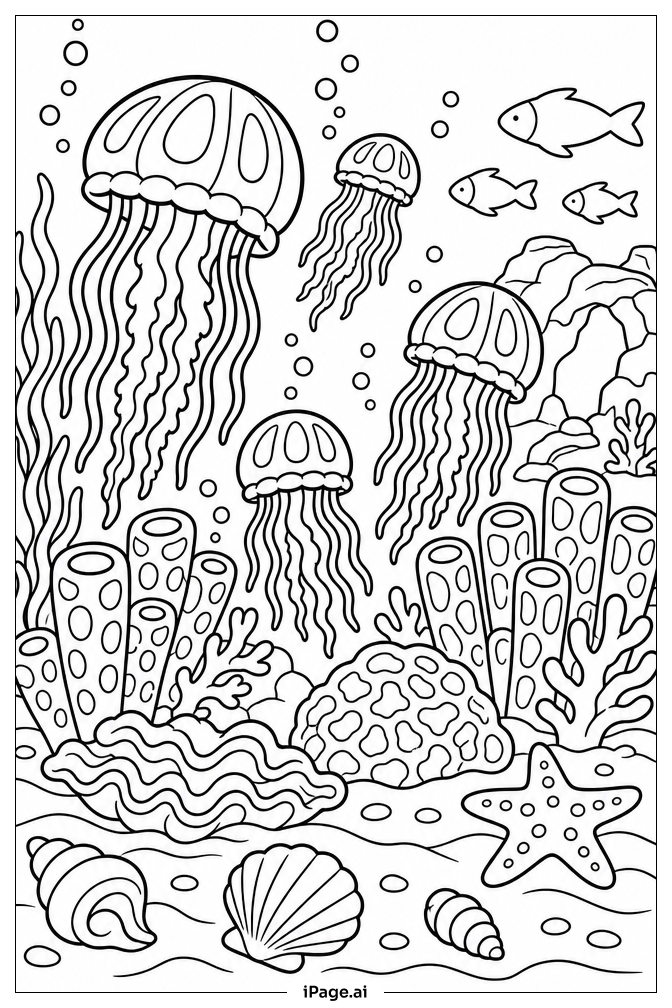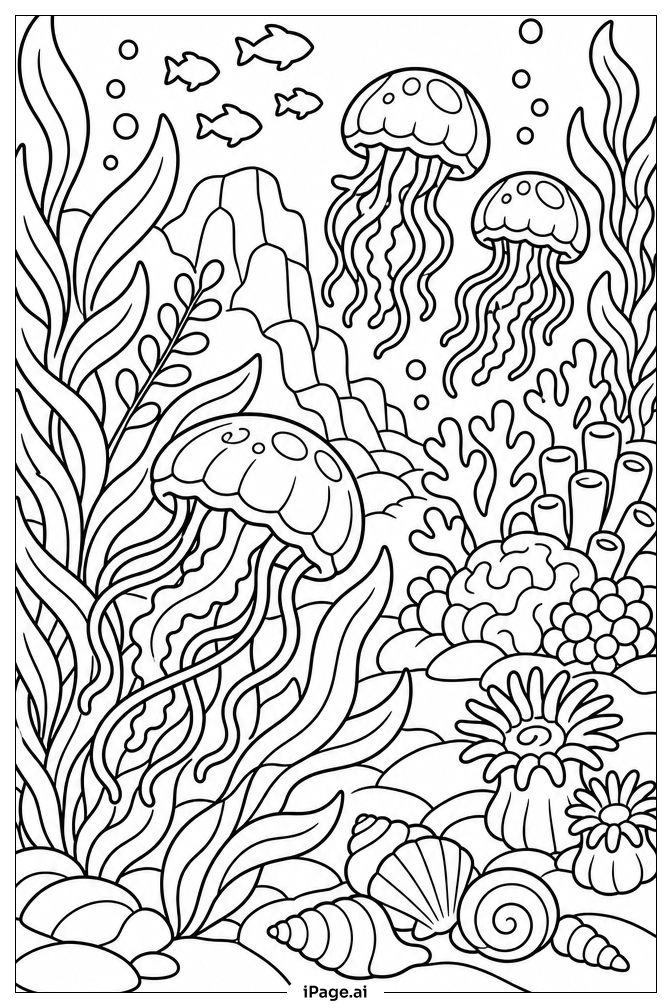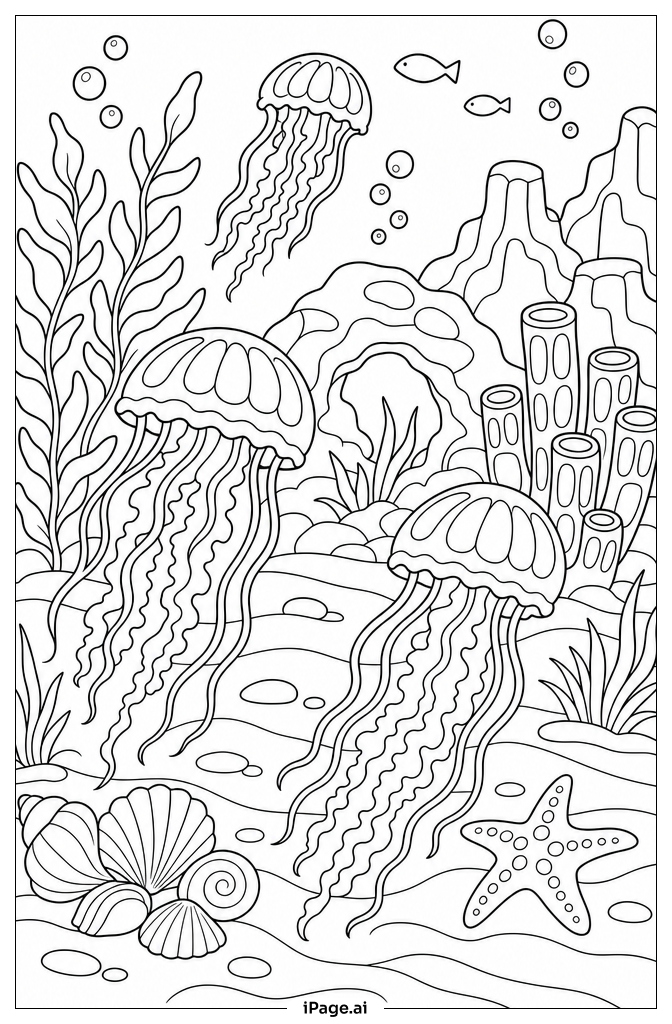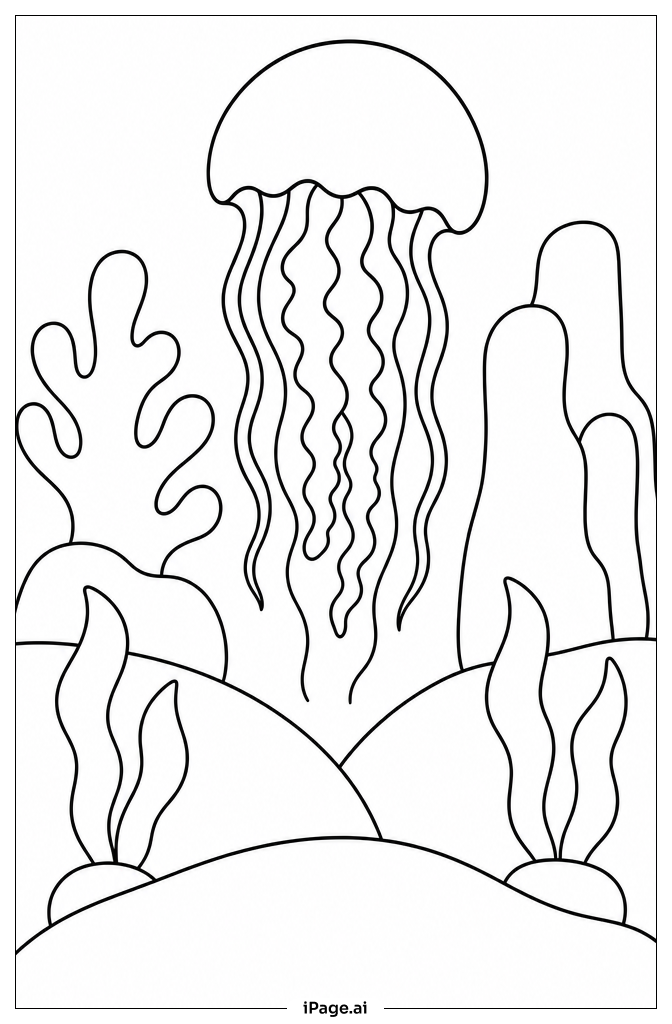
Coloring tips: How to color Jelly Fish On Sandy Ridge coloring page well?
Start with the jellyfish bell. Use soft, translucent colors like pale pink, light blue, or lavender to give it a glowing, see-through look. Add a slightly deeper shade around the edges to show the dome shape.
For the tentacles, try long, flowing strokes in purple, pink, or ocean blue. You can blend two colors together to make them look wavy and alive.
Color the sandy ridge in warm shades like tan, beige, or golden yellow. Add a bit of light brown in the deeper spots to show shadow and texture. The small shells and pebbles can be colored in cream, white, or soft orange.
For any coral or sea plants nearby, go with bright colors like coral red, green, or teal to make them pop against the sandy background.
If you want the scene to feel like it is underwater, try adding a soft blue wash over the whole background. This makes everything look like it is glowing beneath the sea. Take your time with the details — it is a fun and relaxing image to color!
Coloring challenges: Which parts are difficult to color and need attention for Jelly Fish On Sandy Ridge coloring page?
• Jellyfish Bell Transparency: The dome-shaped bell of the jellyfish is meant to look soft and see-through, like real jellyfish in the ocean. Achieving this effect with colored pencils or markers can be tricky. You need to apply color very lightly and evenly, leaving the center brighter than the edges. Blending two similar shades smoothly takes practice and patience.
• Tentacle Detail and Flow: The jellyfish tentacles are long, thin, and curving in many directions. Staying inside the lines while coloring each one carefully is a real challenge, especially for younger colorists. Using a fine-tipped marker or a sharpened colored pencil will help keep the tentacles neat and distinct from one another.
• Sandy Texture Realism: The sandy ridge at the bottom of the image has small pebbles, shells, and ripple marks. Coloring all these tiny details without muddying the colors together requires a steady hand and careful color selection. Using at least two or three shades of tan and brown helps bring the sand to life.
• Depth and Shadow: Creating a sense of depth in the scene — making the foreground look closer and the background farther away — involves shading. Darker tones should be added in shadowed areas like under the jellyfish bell and around the base of the ridge. This technique can be challenging for beginners who are just learning about light and shadow.
• Background Cohesion: Blending the overall underwater background so it looks natural without overpowering the main jellyfish figure requires careful color balance. The background should feel soft and atmospheric, not too bold or distracting.
Benefits of coloring books: Advantages of drawing Jelly Fish On Sandy Ridge coloring page
Coloring this jellyfish scene offers a wide range of wonderful benefits for children and adults alike.
For younger kids, carefully coloring the flowing tentacles and tiny shell details helps build fine motor skills and improves hand-eye coordination. Staying focused on the small elements of the image also strengthens concentration and attention span.
Choosing colors for the jellyfish, sand, and sea creatures encourages creative thinking and imagination. Kids get to make their own color choices, which builds confidence and a sense of personal expression.
For older children and adults, this image offers a calming, meditative experience. The gentle curves and organic shapes of the jellyfish and sandy ridge are naturally soothing to color. Spending time on this kind of detailed artwork is a great way to relax and reduce stress after a busy day.
The ocean theme also sparks curiosity about marine life. As colorists work through the image, they may become interested in learning more about jellyfish, ocean ecosystems, and sea creatures, making this a fun gateway to science and nature education.
Overall, coloring this page is a joyful, rewarding activity that nurtures creativity, focus, and a love for the natural world — all at the same time.