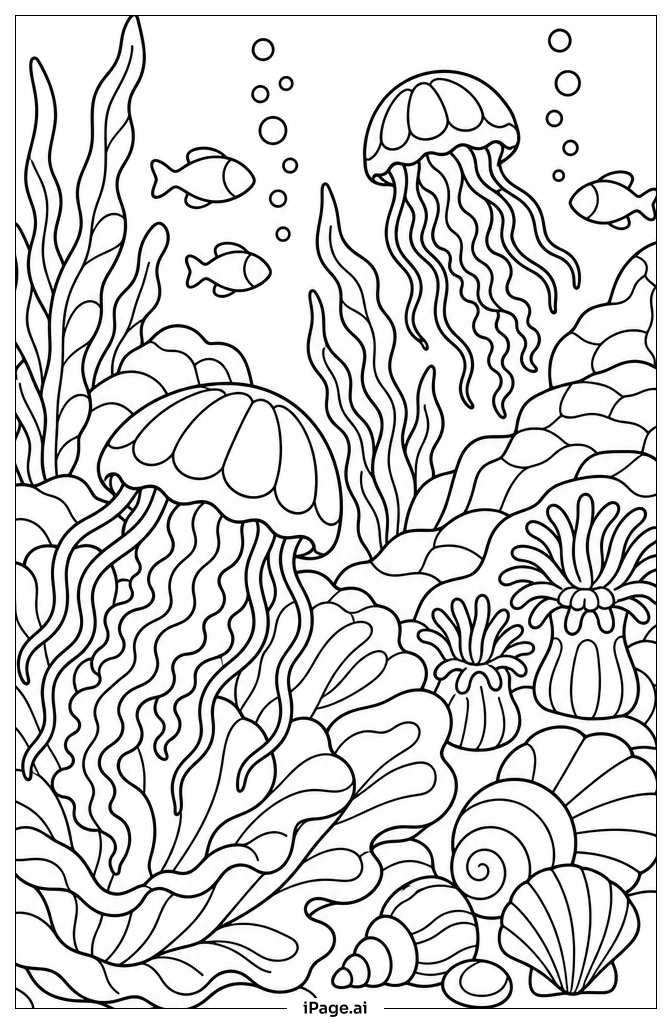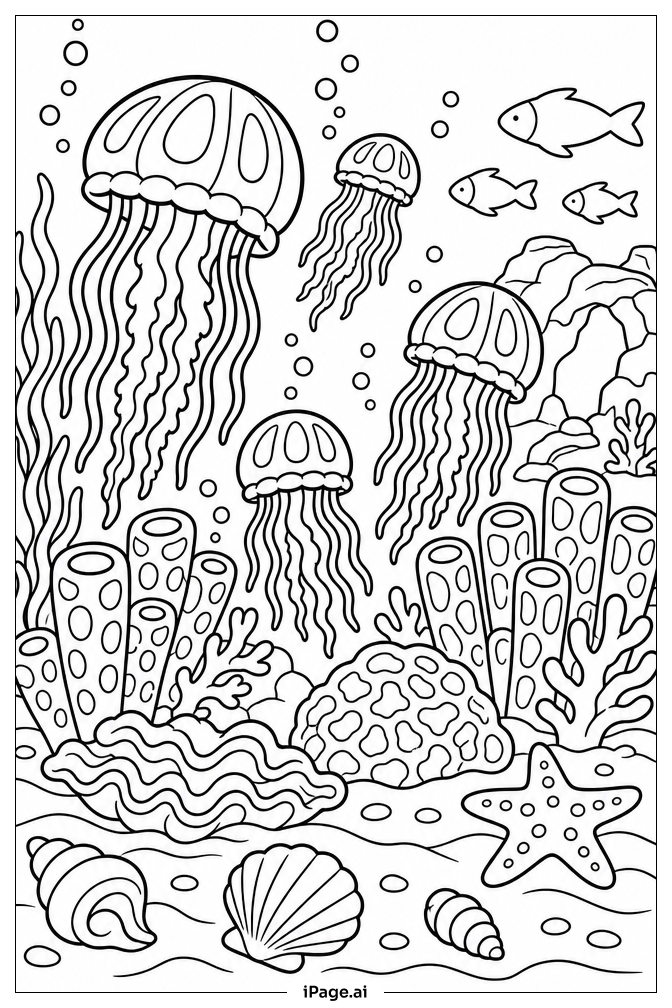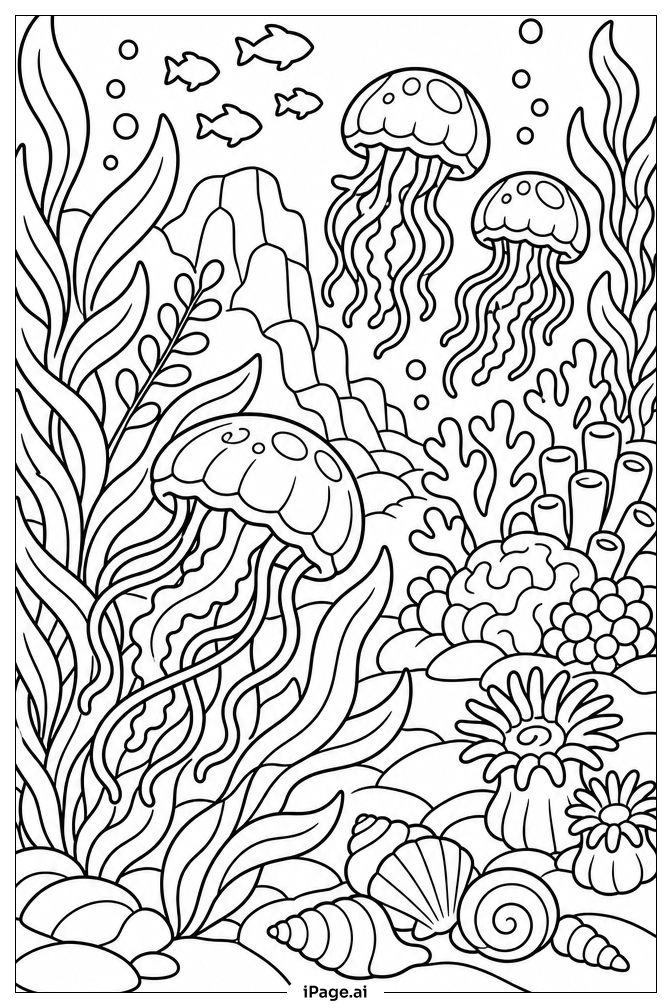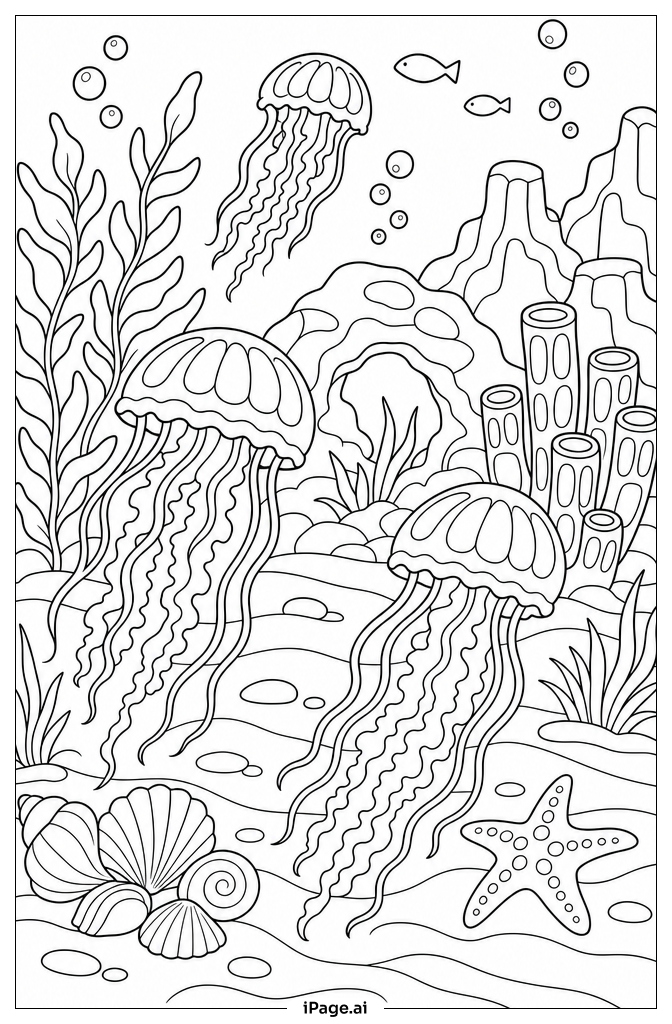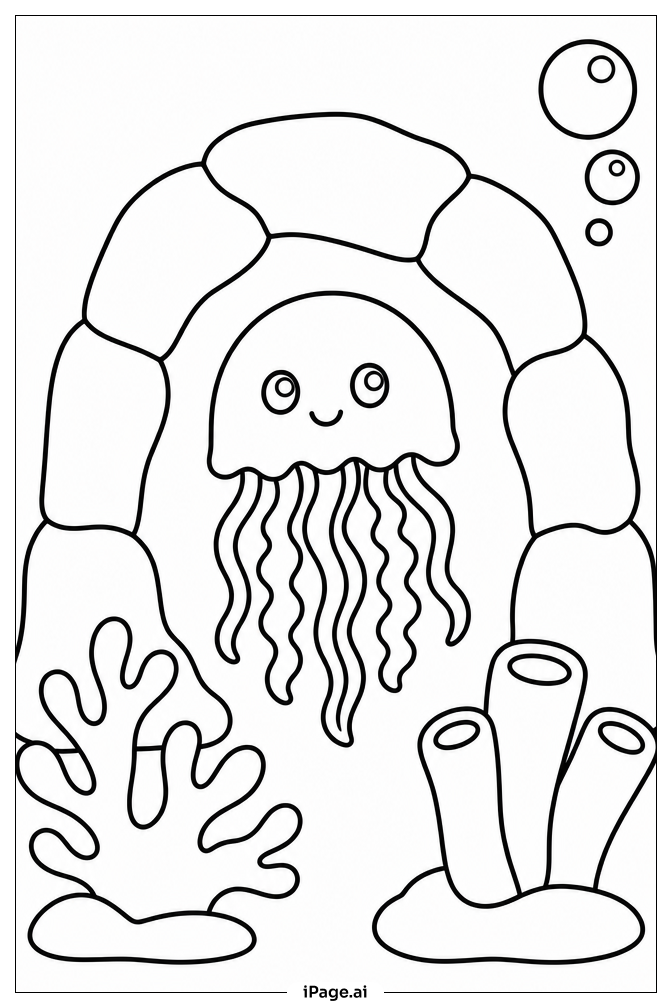
Coloring tips: How to color Jelly Fish Near Rock Arch coloring page well?
Start with the jellyfish bell using soft, translucent colors like pale pink, light purple, or sky blue to give it a glowing, see-through look. Use a slightly darker shade around the edges to add depth. Color the tentacles with long, flowing strokes in coral, lavender, or soft orange. For the rock arch, use earthy tones like brown, gray, and tan, then add green and dark teal for the moss and seaweed growing on the rocks. Fill the water background with shades of blue and teal, blending lighter tones near the surface and deeper blues toward the bottom. Add small pops of bright color to the tiny fish and sea creatures to make them stand out. Use white or very light yellow for the bubbles to keep them airy and light.
Coloring challenges: Which parts are difficult to color and need attention for Jelly Fish Near Rock Arch coloring page?
• **Jellyfish Bell Transparency:** The dome-shaped bell of the jellyfish is meant to look soft and see-through. Achieving this translucent effect with colored pencils or markers can be tricky. You need to layer light colors carefully and leave some areas lighter than others to suggest a glowing, gel-like texture without making it look flat or solid.
• **Flowing Tentacles:** The long, ribbon-like tentacles curve and overlap in multiple directions. Coloring them evenly while keeping the flowing movement intact requires patience. It is easy to accidentally color outside the lines or lose the sense of motion if you press too hard or use colors that are too dark.
• **Rock Arch Texture:** The rock arch has a rough, layered surface with coral, barnacles, and sea plants attached to it. Capturing this uneven, natural texture means using multiple shades of the same color and applying short, varied strokes. Blending gray, brown, and green tones smoothly in a small space is a real challenge.
• **Background Water Depth:** The water behind the scene needs to feel deep and vast. Smoothly transitioning from lighter blues near the surface to deeper, darker blues and teals toward the edges requires controlled blending. Streaks or sudden color changes can break the peaceful underwater feeling.
• **Small Details:** Tiny fish, bubbles, and sea plants are scattered throughout the scene. These small elements have limited space, making precise coloring difficult, especially for younger children. Using fine-tipped tools helps, but staying within the small outlines still demands steady hands and focus.
Benefits of coloring books: Advantages of drawing Jelly Fish Near Rock Arch coloring page
Coloring this jellyfish scene offers a wonderful mix of fun and learning. As you fill in the flowing tentacles and dome-shaped bell, you practice fine motor skills and hand control, which helps with writing and everyday tasks. Choosing colors for the ocean and sea creatures sparks creativity and encourages kids to think about color combinations in a playful way. The peaceful underwater setting makes this a calming activity, helping children and adults alike reduce stress and focus their minds. Learning about jellyfish, rock formations, and ocean life while coloring quietly builds natural curiosity about the world beneath the waves. For younger children, staying within the lines and completing the full picture builds patience and a sense of achievement. Older kids can challenge themselves to blend colors and add shading, developing more advanced artistic skills. Overall, this coloring page is a relaxing, educational, and creatively rewarding experience for anyone who picks up a crayon or colored pencil.