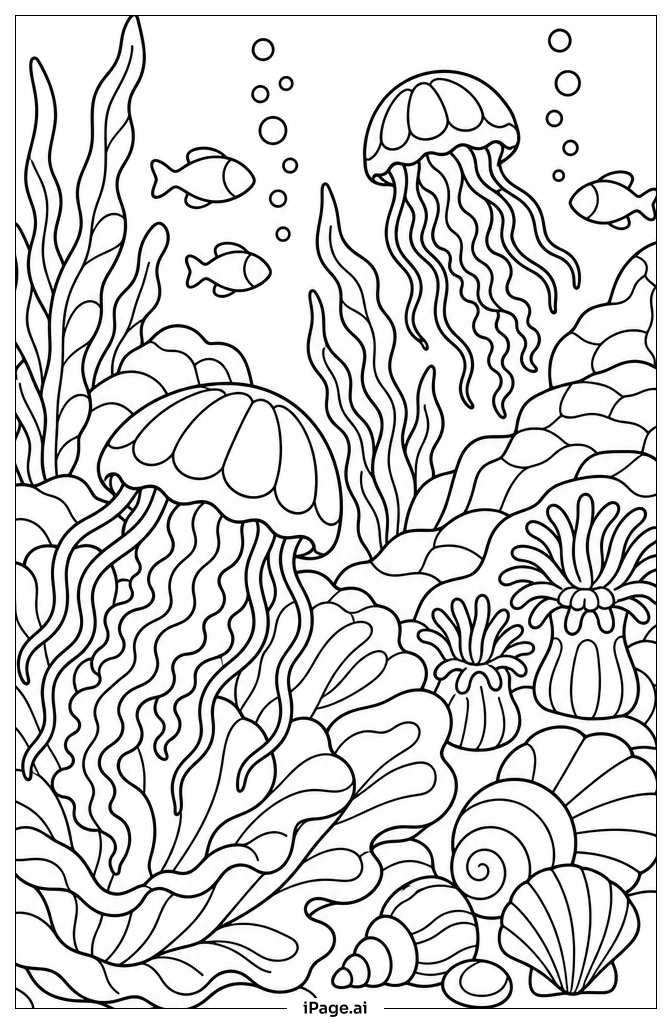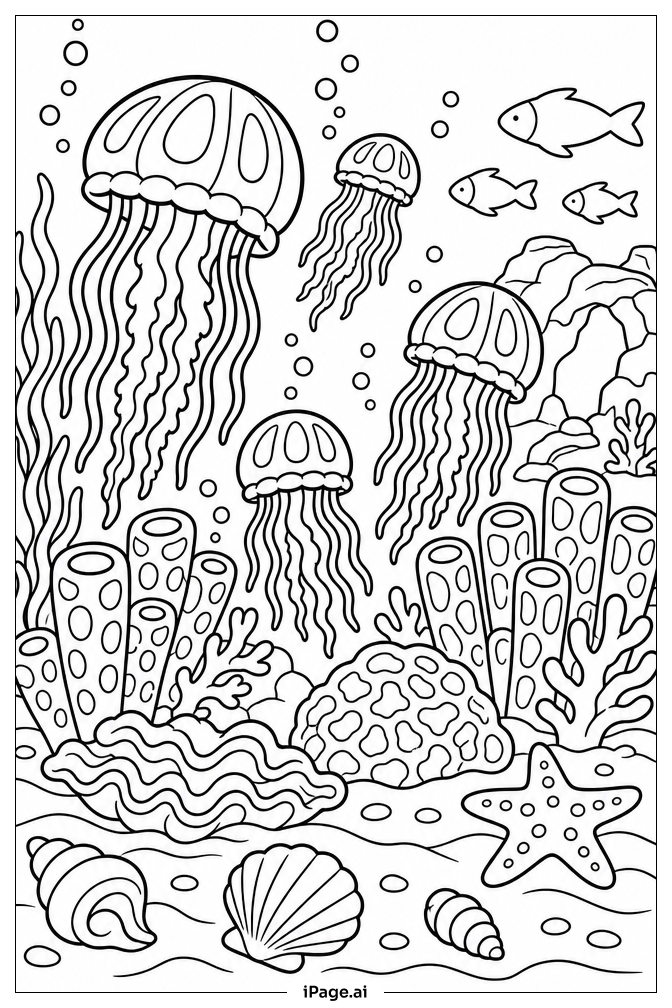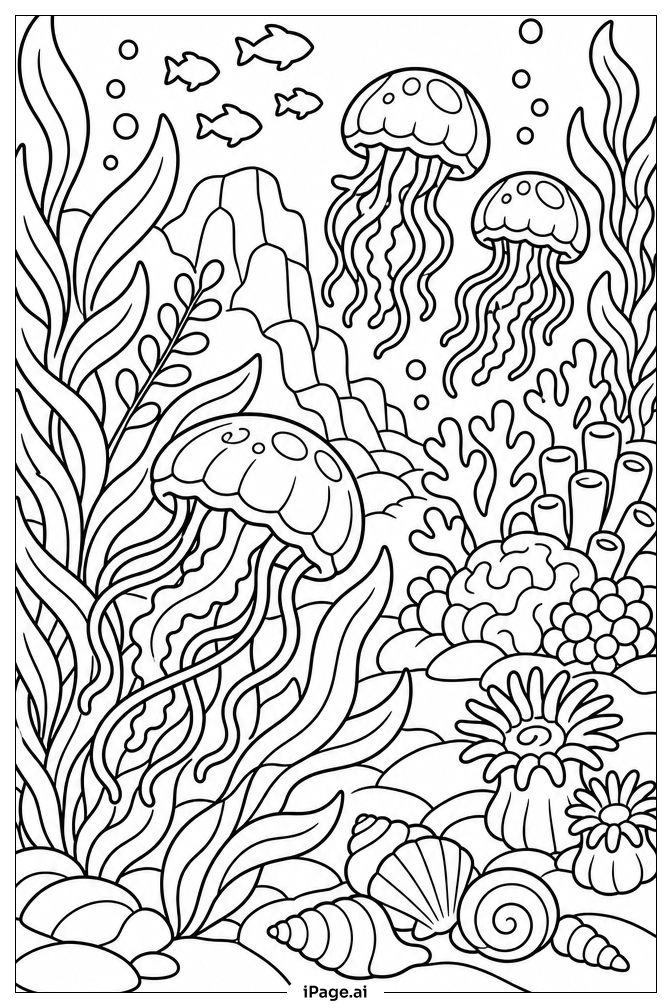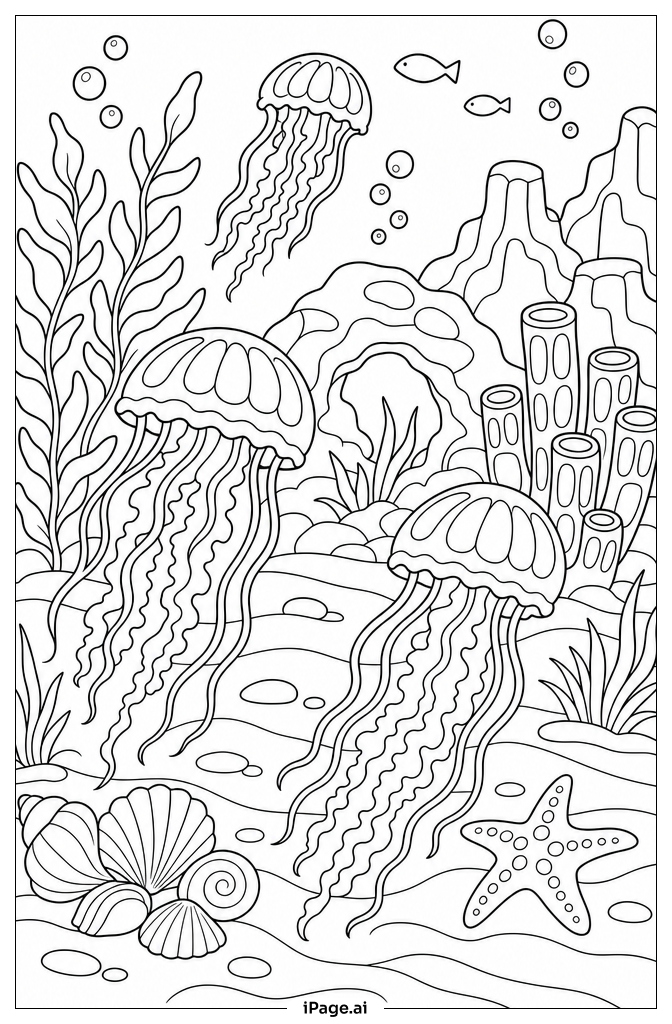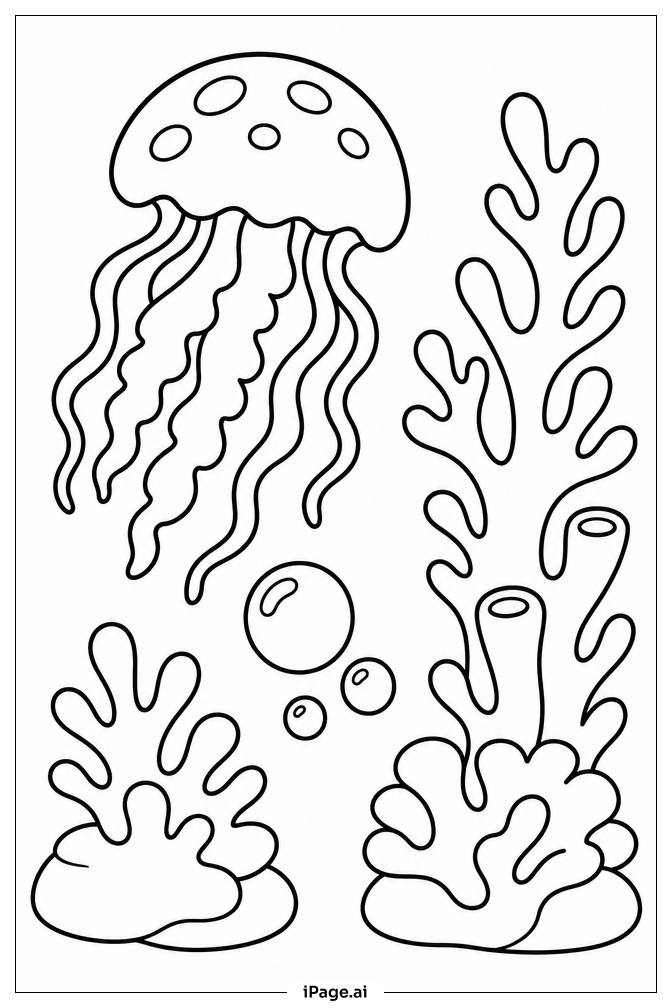
Coloring tips: How to color Jelly Fish By Coral Tower coloring page well?
Start with the jellyfish bell using soft, glowing colors like light pink, lavender, or pale blue to give it a translucent, magical look. Use a slightly deeper shade of the same color around the edges to add depth. For the tentacles, try long, flowing strokes in complementary shades — coral, soft orange, or light purple work beautifully. Color the coral tower in warm tones like orange, red, or pink to make it stand out against the cool ocean background. Fill the background water with light blues and teals, adding gentle gradients to suggest depth. Use yellow or white for the bubbles to keep them light and airy. Small details like patterns on the jellyfish and textures on the coral can be highlighted with a slightly darker shade of the base color. Don't be afraid to mix colors and experiment — ocean scenes are perfect for creative, colorful expression!
Coloring challenges: Which parts are difficult to color and need attention for Jelly Fish By Coral Tower coloring page?
Coloring this underwater scene is a rewarding challenge, but there are a few tricky areas to keep in mind:
• **Jellyfish transparency effect:** Jellyfish are naturally see-through, so capturing that glowing, translucent look can be difficult. To achieve this, use lighter colors in the center of the bell and gradually deepen the shade toward the edges. Blending two close colors smoothly is key, and this requires a steady, patient hand.
• **Flowing tentacles:** The long, curving tentacles of the jellyfish are thin and detailed. Staying within these narrow lines while keeping the color smooth and consistent is a fine motor challenge, especially for younger colorists. Using colored pencils with a sharp tip can help with precision.
• **Coral tower texture:** The coral tower is covered in bumpy, branching textures. Coloring each section while honoring the intricate surface details — without making the tower look flat — takes time and attention. Shading along the raised edges helps bring out the three-dimensional feel.
• **Balancing warm and cool colors:** This scene naturally calls for warm coral tones and cool ocean blues. Finding the right balance so that neither color overwhelms the other is a visual challenge. Colorists need to think carefully about where to place each hue to keep the composition harmonious.
• **Background depth:** Creating a sense of deep ocean water in the background — going from lighter near the surface to darker deeper down — requires smooth color gradation, which can be tricky without blending tools or a wide range of blue and teal shades.
Benefits of coloring books: Advantages of drawing Jelly Fish By Coral Tower coloring page
Coloring this jellyfish and coral scene offers a wide range of wonderful benefits for kids and beginners alike. First, it helps improve fine motor skills. Carefully coloring the thin tentacles and detailed coral textures trains hand muscles and builds precision — skills that are useful in writing and everyday tasks. Second, it encourages creativity. Choosing colors for an underwater world lets colorists use their imagination freely, boosting confidence and self-expression. There are no wrong choices — every color combination tells a unique story. Third, it teaches color theory in a fun, hands-on way. Balancing warm coral tones against cool ocean blues helps young colorists develop an instinct for color harmony. Fourth, it promotes focus and calm. The repetitive, gentle motion of coloring is relaxing and helps reduce stress. Spending time on a detailed page like this builds patience and the ability to concentrate. Finally, finishing this page gives a real sense of accomplishment. Completing a detailed, beautiful scene is motivating and builds pride in creative work. It's a fun way to explore the wonders of the ocean!