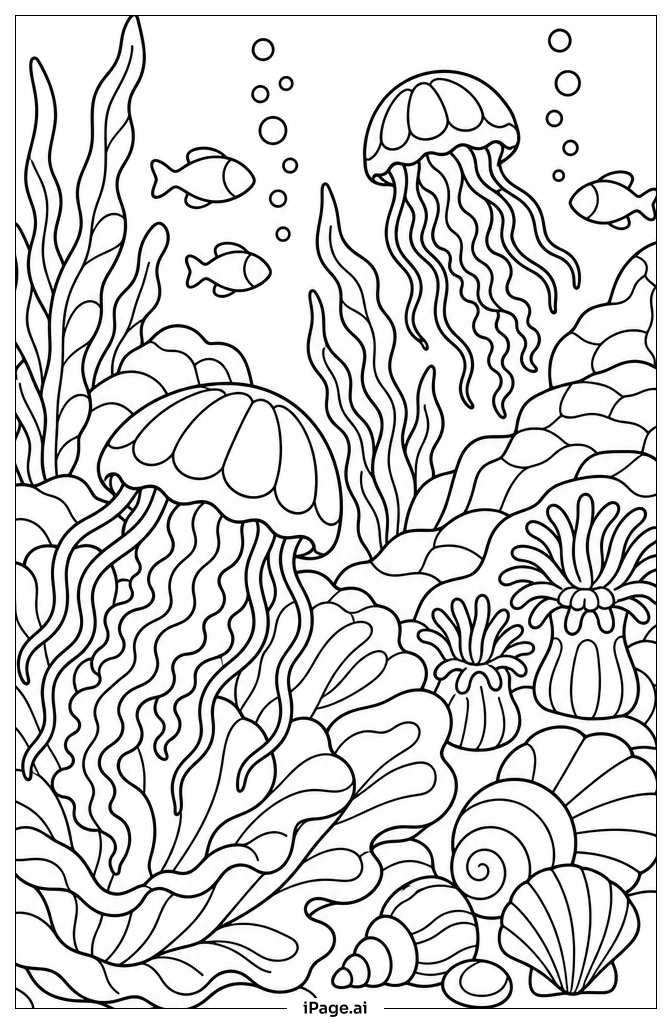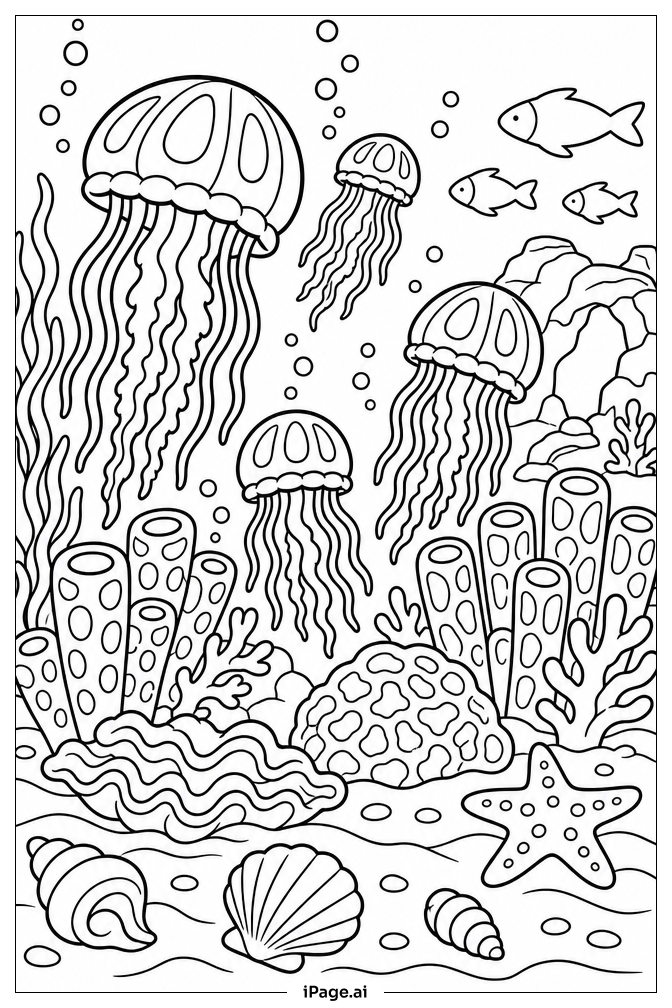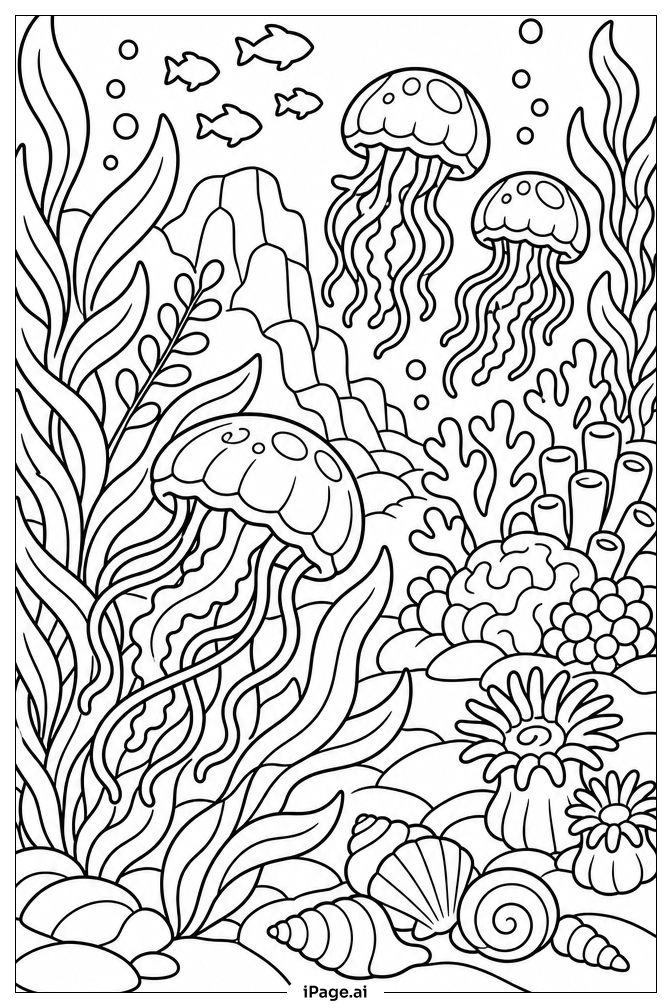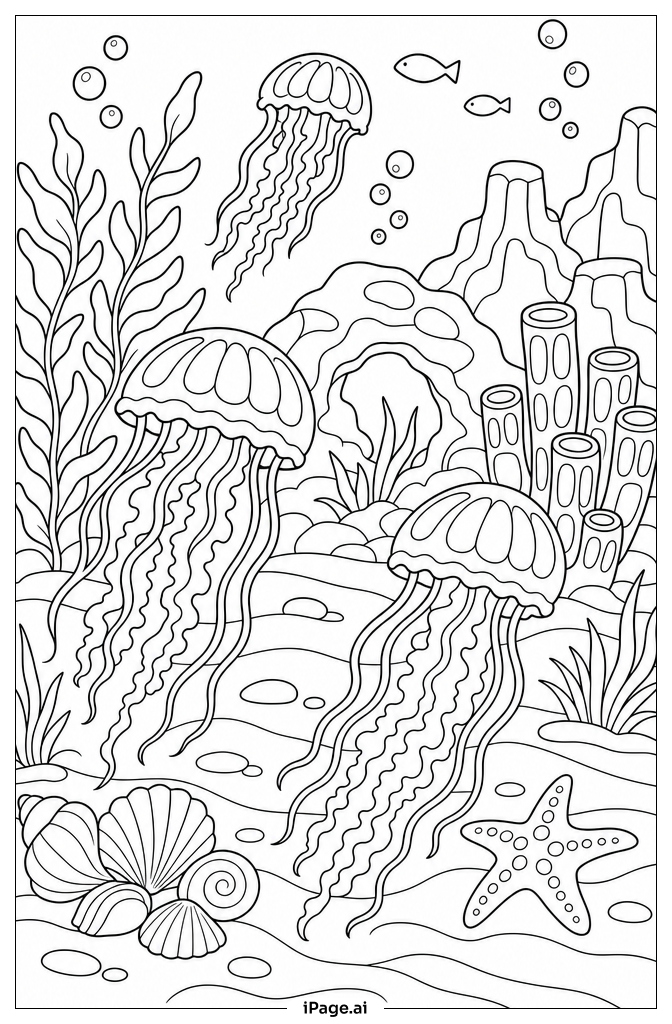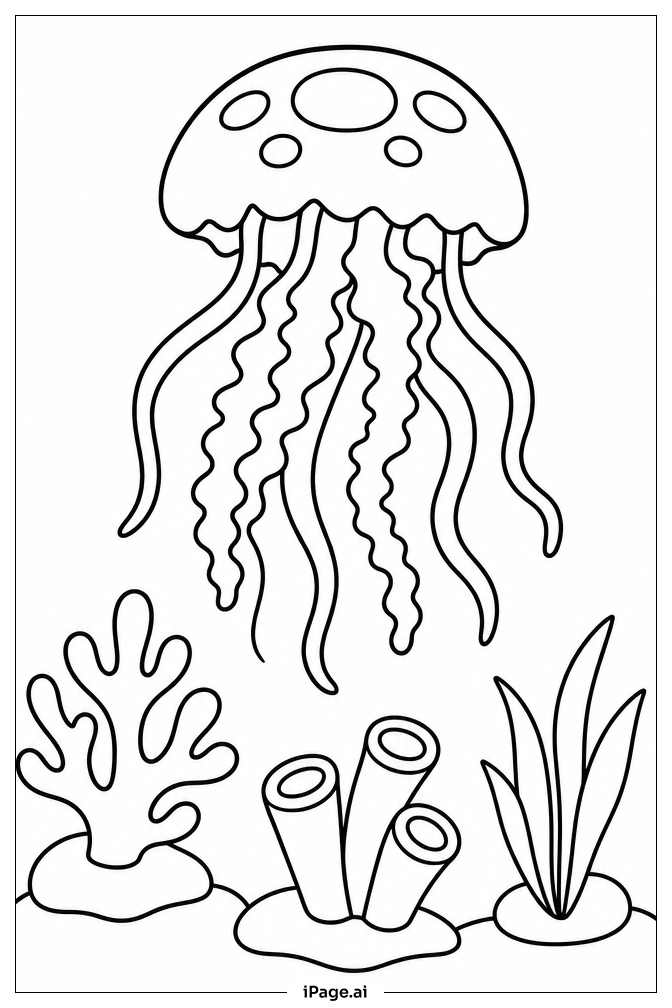
Coloring tips: How to color Jelly Fish At Shallow Reef coloring page well?
Start with the jellyfish bell. Use soft, translucent colors like pale pink, light purple, or sky blue. These colors make the jellyfish look like it's glowing in the water. Add a slightly deeper shade around the edges to show its rounded shape. For the tentacles, try long streaks of lavender, coral pink, or soft teal. The reef corals can be bright and bold — orange, red, yellow, and purple all work great. Color the small fish in vivid hues like orange with white stripes or bright yellow. Use deep blue and aqua tones for the water background. Add lighter streaks near the top to show sunlight filtering through. Keep the sea plants in different shades of green. Mixing light and dark greens adds a natural, layered feel to the ocean floor.
Coloring challenges: Which parts are difficult to color and need attention for Jelly Fish At Shallow Reef coloring page?
Coloring this jellyfish reef scene offers a rewarding challenge for young artists. Here are some areas to watch:
• **Jellyfish transparency:** The hardest part is making the jellyfish look see-through and glowing. Real jellyfish are translucent, meaning light passes through them. To capture this effect, use very light, soft colors for the bell and leave some areas barely colored. Pressing too hard with dark colors can make it look solid and heavy instead of delicate.
• **Tentacle flow and blending:** The long, wispy tentacles need smooth, flowing lines. It can be tricky to color thin, curving shapes without going outside the lines or making them look stiff. Using colored pencils and following the curve of each tentacle helps keep them looking fluid and natural.
• **Reef detail and variety:** The coral and sea plants in the background have many small, intricate shapes packed close together. Coloring each one a different color without them blending into a muddy mess requires patience and careful tool selection. Fine-tipped markers or sharp colored pencils are best here.
• **Water depth and lighting:** Showing the effect of sunlight streaming through water is a subtle challenge. The upper portion of the scene should feel brighter and warmer, while deeper areas appear cooler and darker. Smoothly transitioning between these tones requires gentle, layered strokes.
• **Background vs. foreground balance:** Making the jellyfish stand out from the busy reef background without losing detail in either area takes careful color planning. Choosing softer tones for the background and bolder ones for the jellyfish helps create a clear focal point.
Benefits of coloring books: Advantages of drawing Jelly Fish At Shallow Reef coloring page
Coloring this jellyfish reef scene is a wonderful activity for kids and young artists. Here is why it is so good for you:
**Builds focus and patience.** The detailed coral, tentacles, and reef creatures encourage you to slow down and pay close attention. This helps train your concentration skills in a fun way.
**Sparks creativity.** There is no single right way to color a jellyfish. Choosing your own color combinations lets your imagination run free and builds confidence in your own creative choices.
**Teaches color blending.** Working with the soft, layered tones needed for water and jellyfish helps you learn how colors interact. This is a valuable skill for art and design.
**Grows knowledge of ocean life.** As you color the scene, you become more curious about jellyfish, coral reefs, and the creatures that live there. Coloring can be a gentle introduction to science and nature.
**Reduces stress and anxiety.** The calm, flowing shapes of an underwater scene have a naturally soothing quality. Focusing on filling in gentle curves and soft colors is a great way to relax after a busy day.