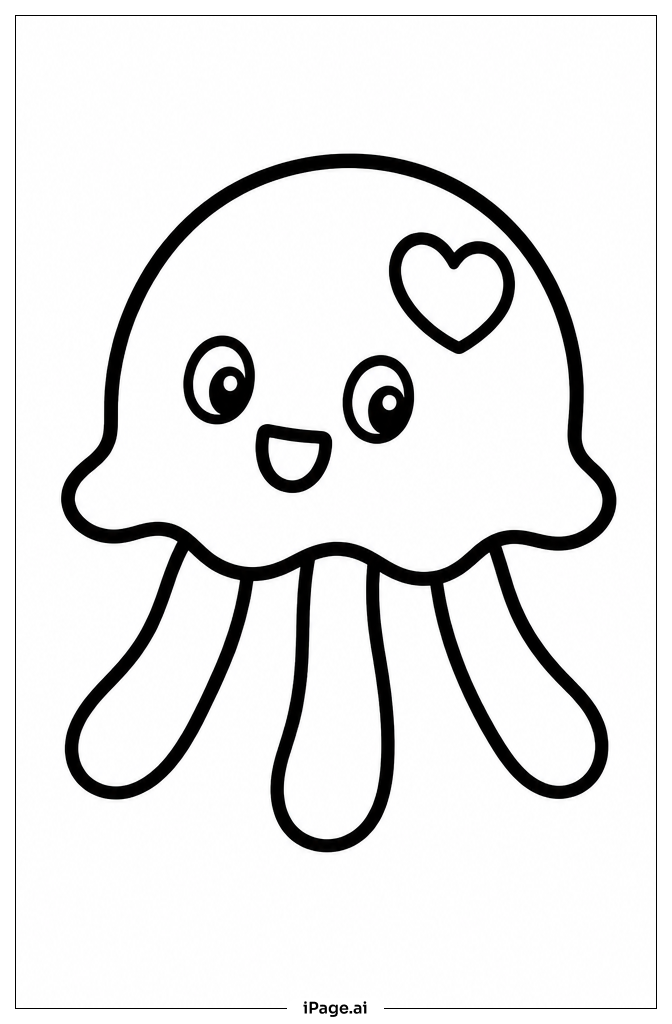
Coloring tips: How to color Happy Jelly Fish Wiggle coloring page well?
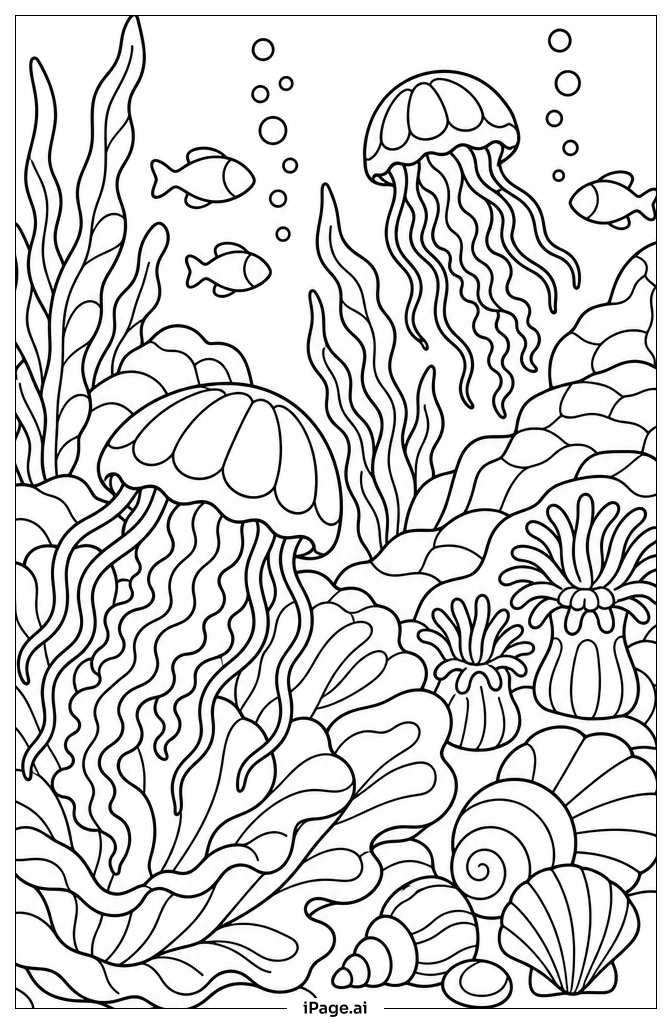
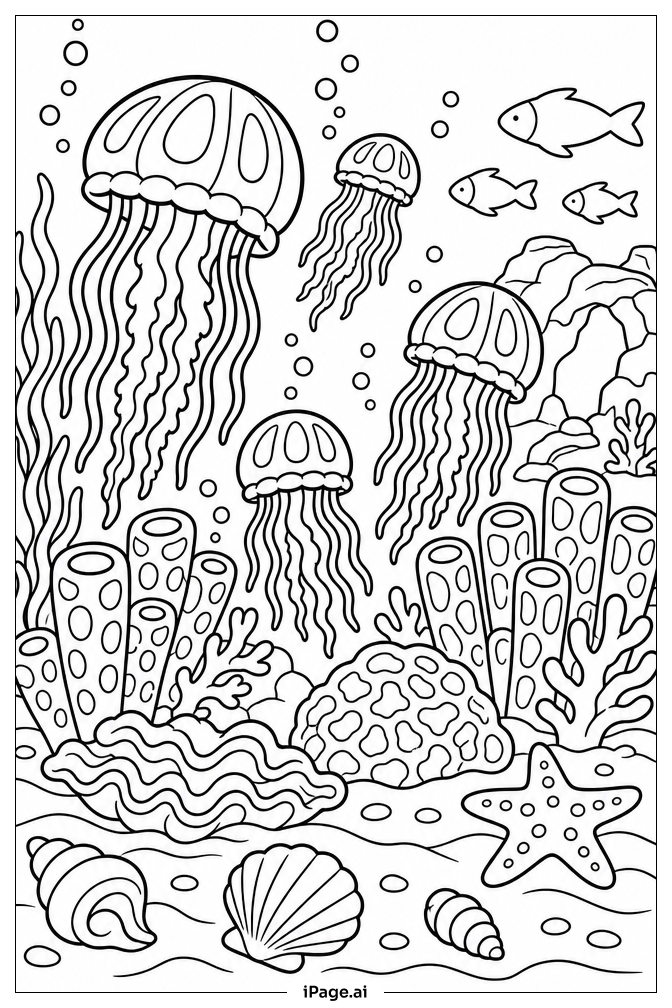
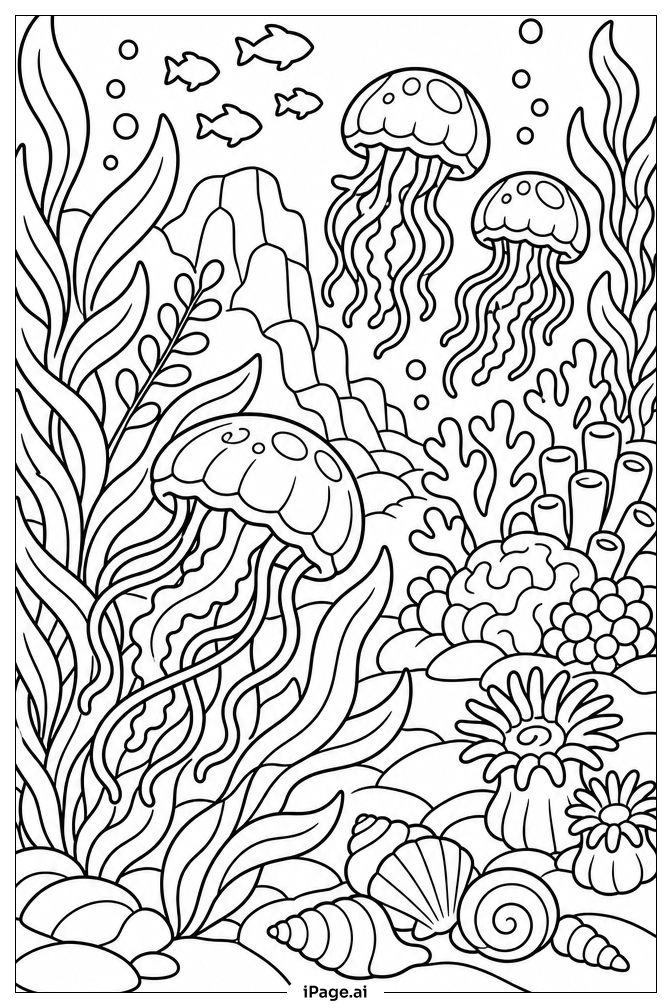
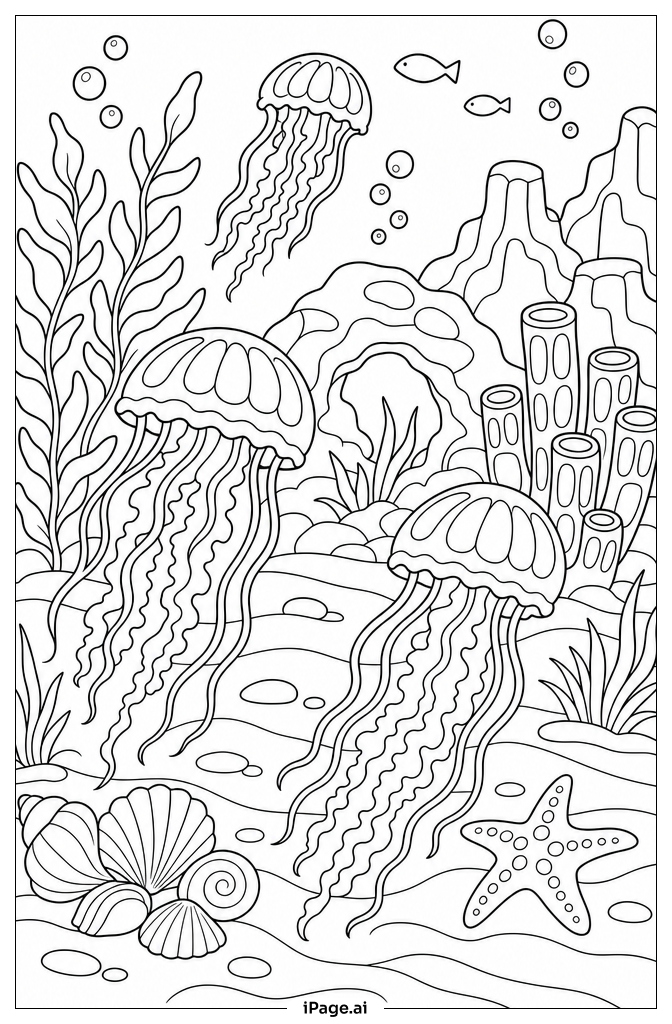
Start with the bell at the top of the jellyfish. Try a soft, glowing color like light blue, lavender, or pale pink to give it a magical underwater feel. You can add a slightly darker shade around the edges to create depth and dimension.
For the tentacles, use long, flowing strokes in colors like teal, purple, or coral. Try blending two colors together to make them look translucent and wavy — just like real jellyfish!
Color the eyes with bright, shiny colors. Add a small white dot to each eye to make them look alive and sparkly.
Use light yellow or white for the smile details to keep the face warm and friendly.
For the bubbles, try soft blues or leave them lightly shaded so they look like real air bubbles rising through the water.
If you want a glowing effect, add a soft yellow or white highlight in the center of the bell. This gives the jellyfish a bioluminescent look — like it is lighting up the deep sea!
Feel free to use any colors you love. There are no rules under the ocean!
Coloring challenges: Which parts are difficult to color and need attention for Happy Jelly Fish Wiggle coloring page?
Coloring this happy jellyfish comes with a few fun challenges to keep in mind:
• **Blending the bell smoothly:** The large, rounded bell of the jellyfish is one of the biggest areas to fill in. Achieving a smooth, even color without streaks or patches can be tricky, especially with crayons or colored pencils. Try using light, circular strokes and build up color gradually. Layering two similar shades from the center outward can create a beautiful glowing effect.
• **Coloring the flowing tentacles:** The long, curvy tentacles require patience and a steady hand. Because they are thin and wavy, it is easy to accidentally color outside the lines. Use a sharpened pencil or a fine-tipped marker to stay within the curves. Blending colors along the length of each tentacle can give them a fluid, lifelike appearance.
• **Keeping the facial details clean:** The jellyfish has small, detailed facial features — eyes, highlights, and a smile. These tiny areas need careful attention. Using fine-tipped tools is strongly recommended here. Avoid pressing too hard, as small details can easily become overcolored and lose their charm.
• **Creating depth and dimension:** A jellyfish naturally looks soft and three-dimensional. Conveying this on a flat page means thinking about light and shadow. Adding slightly darker tones along the outer edges of the bell and lighter tones toward the center helps the shape appear rounded and full.
• **Managing the bubble details:** The small bubbles scattered around the image are easy to overlook but add a lot to the overall underwater atmosphere. Coloring them too darkly can make them look heavy. A light touch with soft blues or a gentle outline is usually the best approach.
Benefits of coloring books: Advantages of drawing Happy Jelly Fish Wiggle coloring page
Coloring this cheerful jellyfish page offers a wonderful range of benefits for kids and beginners alike.
**Builds fine motor skills.** Carefully filling in the tentacles, bubbles, and facial details helps children develop hand control and pencil grip — skills that directly support handwriting and drawing.
**Encourages creativity.** There is no single "right" way to color a jellyfish. Kids are free to choose any colors they like, sparking imagination and building confidence in their own creative choices.
**Teaches color mixing and blending.** The large bell and flowing tentacles are perfect spaces to experiment with layering colors and creating gradients, introducing early lessons in art and color theory.
**Promotes focus and calm.** The repetitive, gentle motion of coloring helps children slow down, concentrate, and enter a relaxed, mindful state. It is a great screen-free activity for winding down.
**Sparks curiosity about ocean life.** A fun, friendly jellyfish image can open up conversations about marine biology, ocean ecosystems, and the amazing creatures that live under the sea.
**Boosts mood and confidence.** Completing a coloring page gives children a real sense of accomplishment. Seeing their finished artwork is a simple but powerful confidence booster.