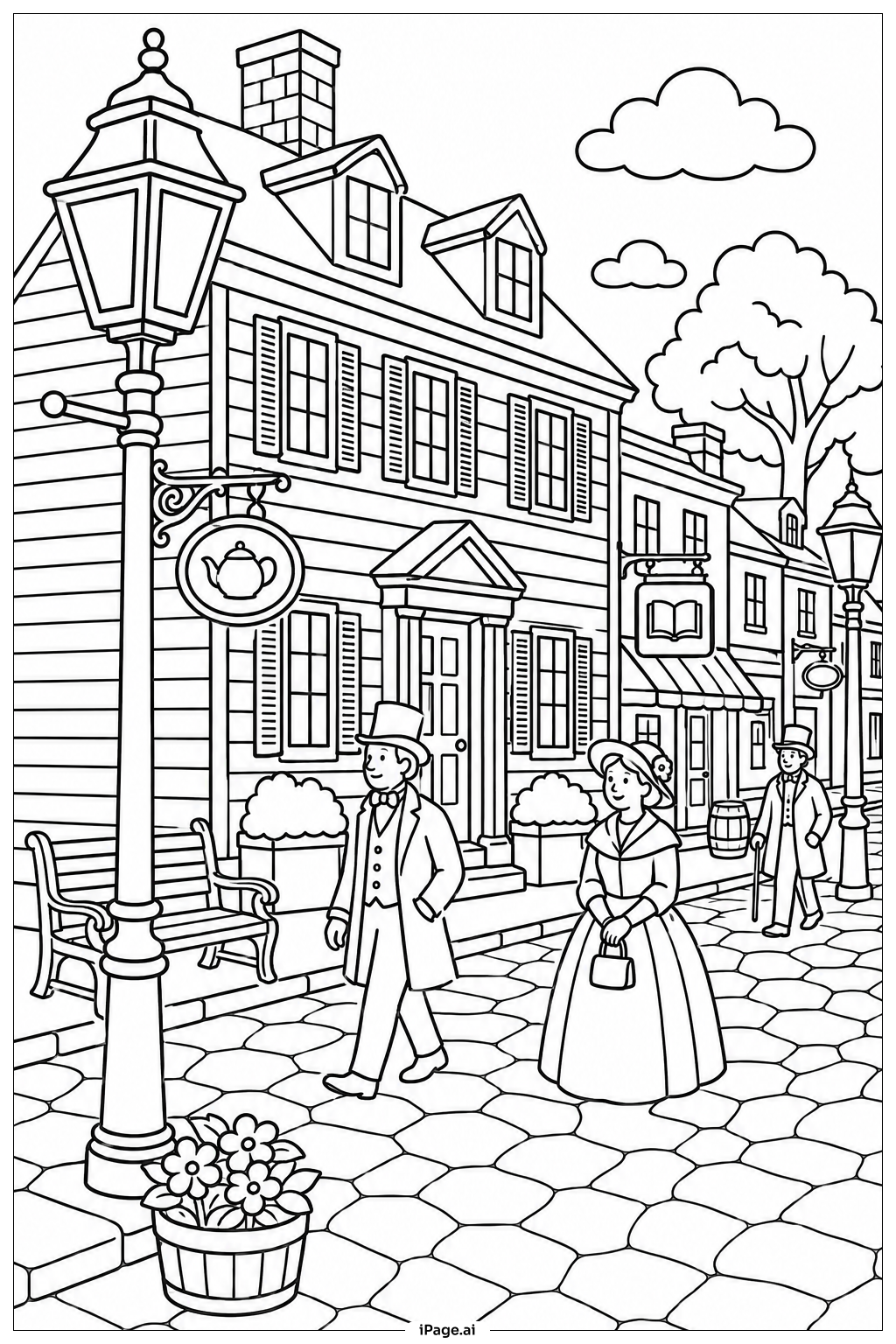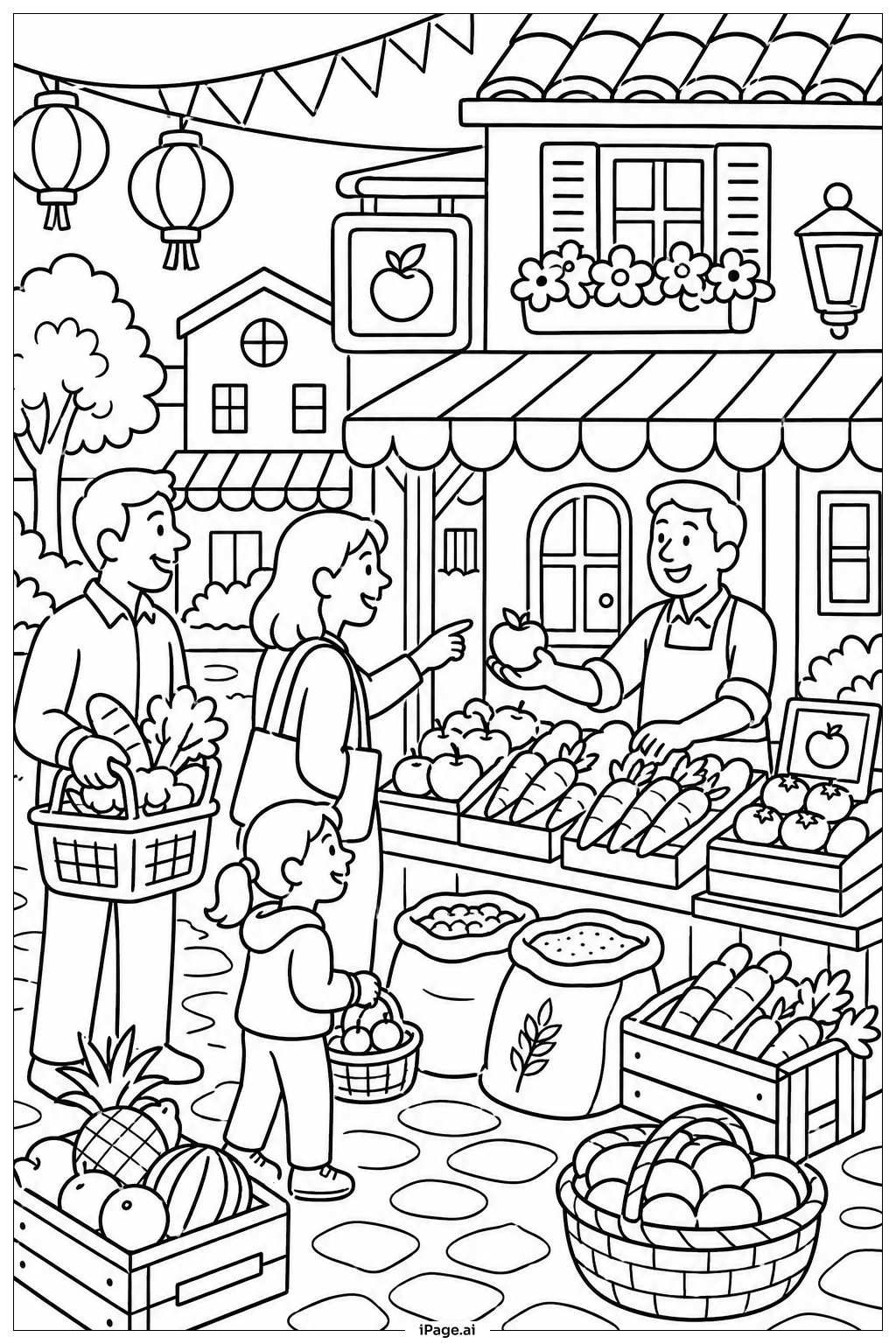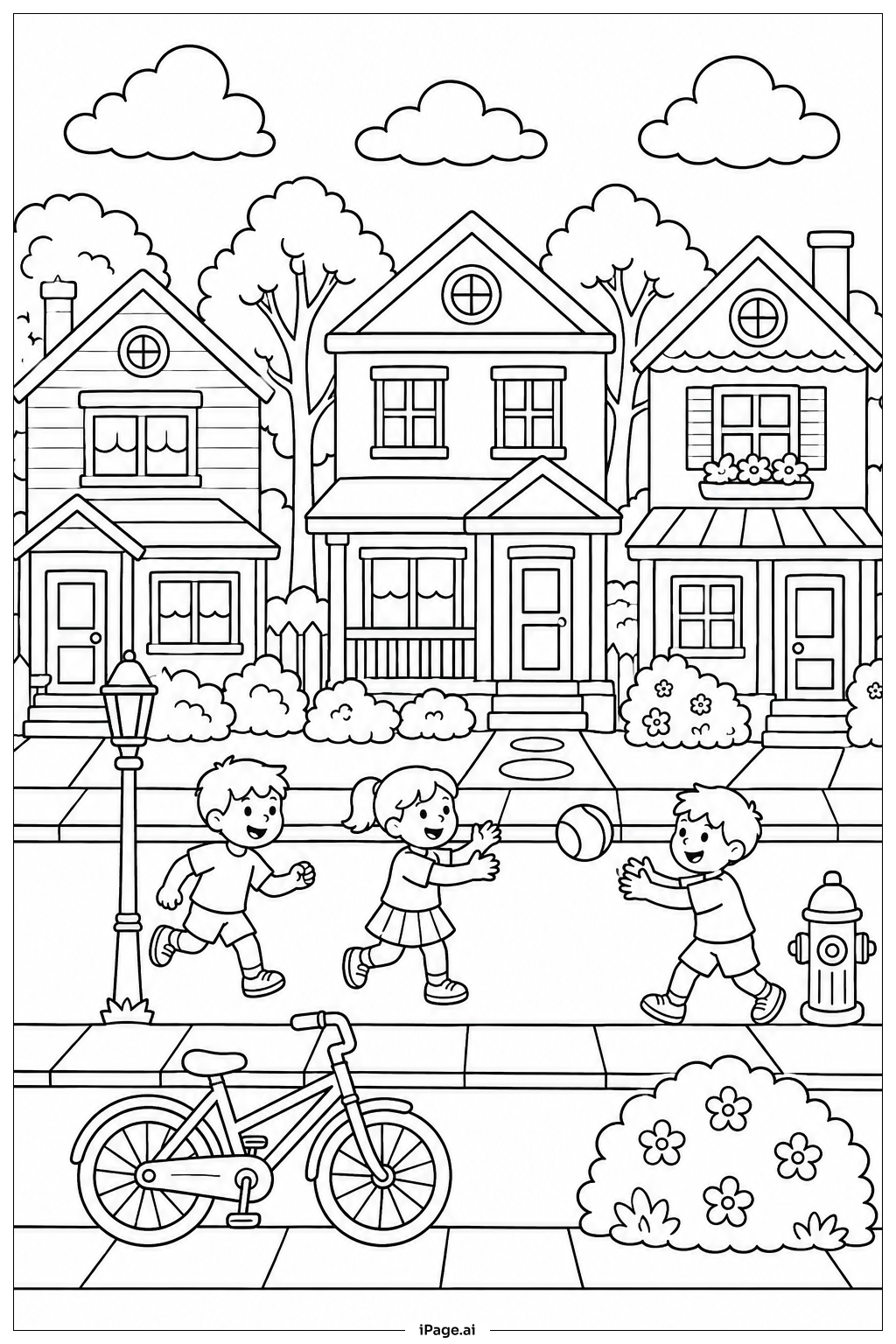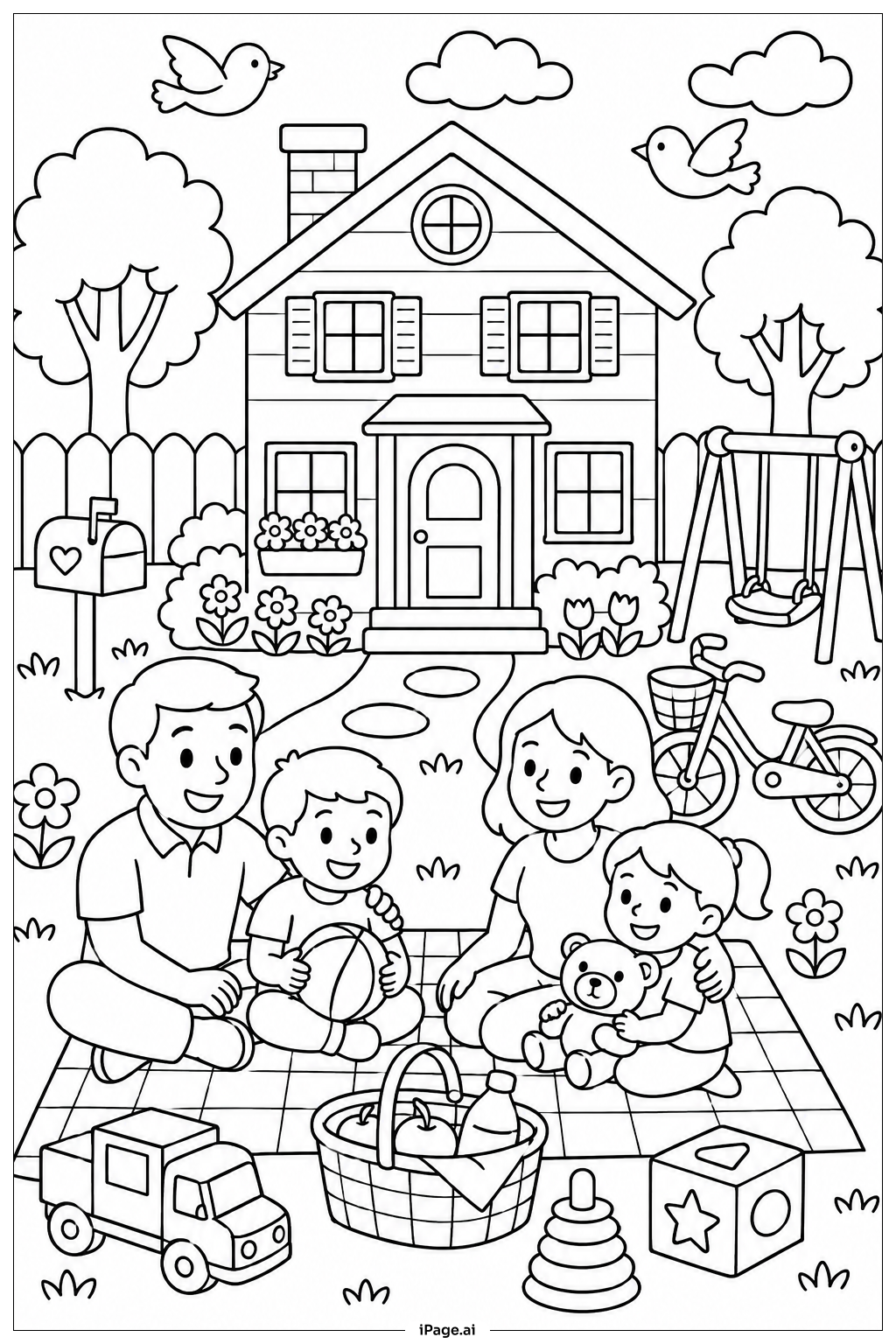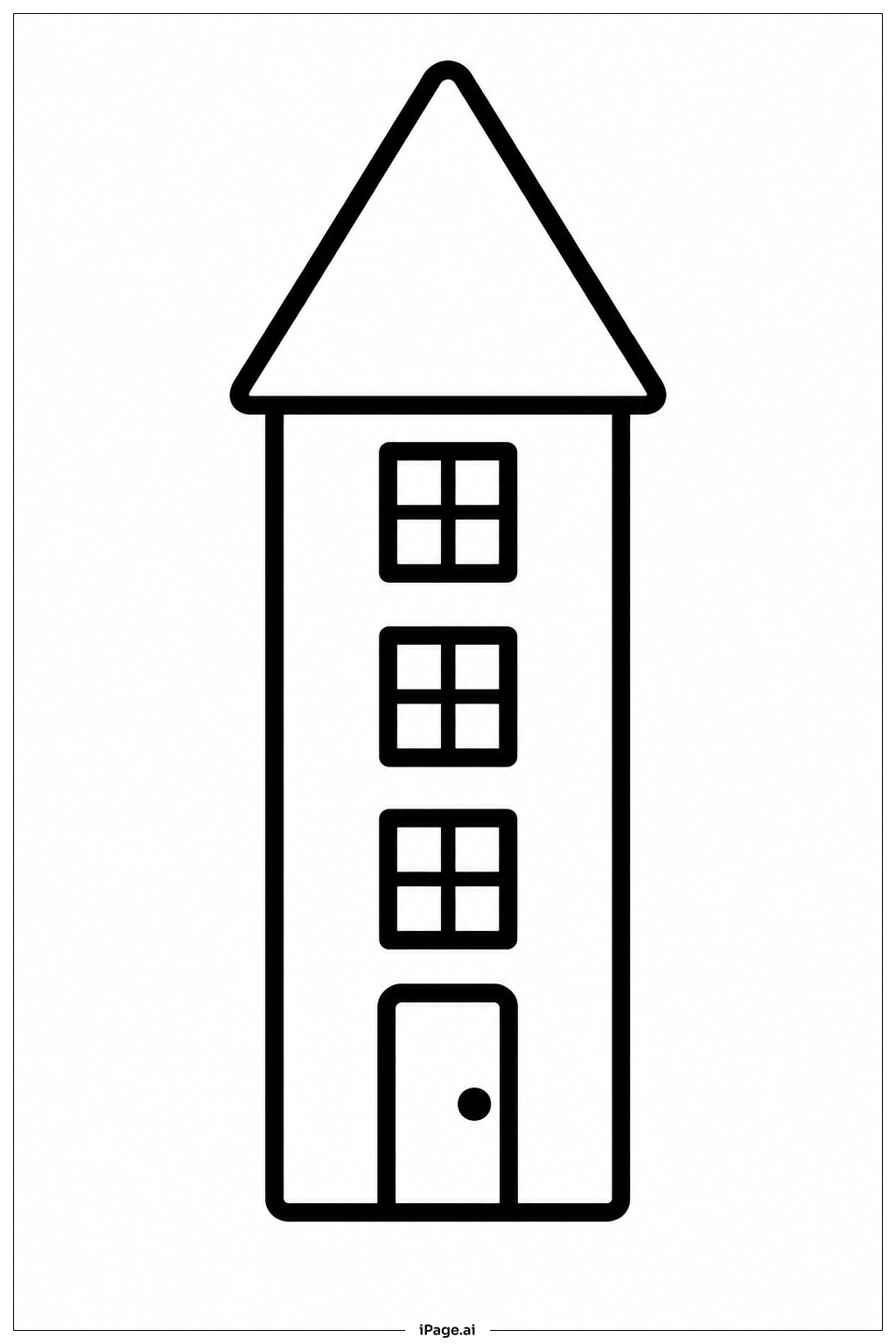
Coloring tips: How to color Tall House coloring page well?
Start from the top and work your way down so your hand does not smudge finished areas. Use a warm brick red or soft tan for the outer walls. Try a deep charcoal or slate blue for the pointed roof and chimney. Paint the shutters and front door in a bold contrasting color like forest green or navy blue to make them stand out. Use light yellow or cream for the window panes to suggest warm light glowing inside. Add a touch of brown for the wooden fence and soft greens for any garden plants or flower boxes. Children can keep the colors simple and bright, while older kids may enjoy blending shades to create depth and shadow on each floor of the tall house.
Coloring challenges: Which parts are difficult to color and need attention for Tall House coloring page?
• Window Repetition and Consistency: The house has multiple windows across several floors. Keeping each window colored in a consistent style takes patience and steady focus. Small panes and window frames are easy to accidentally overlap, so a fine-tipped marker or a sharpened pencil works best for these areas.
• Narrow Wall Sections Between Windows: Because the house is tall and narrow, the strips of wall between windows leave very little room to fill. Getting color into these tight spaces without going over the outlines requires careful control and a pointed tool rather than a broad brush or marker tip.
• Roof and Chimney Details: The pointed roof may include tiles, ridgeline patterns, or trim details that are small and closely spaced. Coloring these without muddying the lines calls for a patient hand and possibly alternating between two similar shades to suggest depth or texture.
• Brick or Siding Texture on Walls: If the walls feature a repeated brick or plank pattern, coloring each individual element uniformly is time-consuming. Rushing through this section often leads to uneven tones. Working row by row and using light, consistent strokes helps maintain a neat appearance across the whole surface.
• Ground-Level Garden Elements: Flower boxes, fencing, and small plants at the base of the house introduce a variety of small shapes that each need their own color. Switching between greens, browns, and bright flower colors in such a compact area can feel busy, so planning the color layout before starting prevents clashing or overcrowding.
Benefits of coloring books: Advantages of drawing Tall House coloring page
Coloring this tall house image offers a wonderful range of benefits for children of all ages. Working through the many floors and repeated architectural details builds focus and patience, as kids learn to slow down and stay within the lines. The variety of textures — bricks, windows, roof tiles, and garden plants — gives young colorists a chance to practice switching between different tools and techniques, strengthening fine motor skills and hand-eye coordination. Planning which colors to use for walls, roof, door, and windows encourages creative thinking and early design sensibility. Children also learn about contrast and color harmony as they decide how to make each part of the house look distinct yet unified. For older children, adding shading and depth to a multi-story structure introduces basic concepts of light and shadow in a fun, low-pressure way. Beyond skills, coloring a cozy tall house can spark imagination and storytelling, inviting kids to invent the family or characters who might live inside. The repetitive, calming nature of filling in detailed sections also provides a gentle focus activity that helps reduce stress and encourages mindfulness in everyday moments.