Coloring tips: How to color Pumpkin House coloring page well?
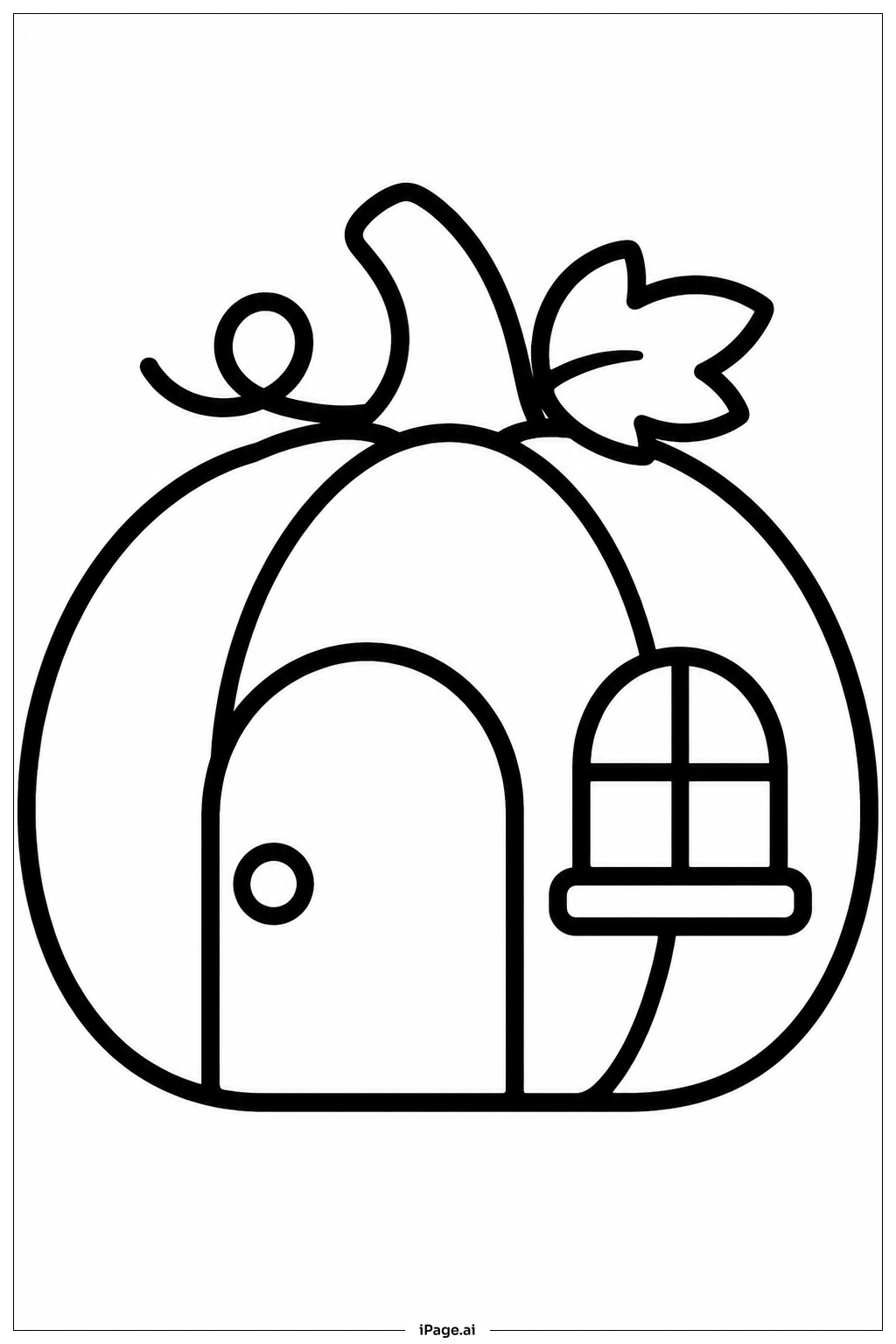
Start with the main pumpkin body and use warm shades of orange. You can go from a bright, vivid orange on the outer sections to a deeper burnt orange in the shadow areas between the ridges. This adds depth and makes the pumpkin look round and full. For the door and window shutters, try a rich brown or dark wood color. The windows can be filled with a warm yellow or soft gold to suggest a glowing light inside. Color the chimney in gray or brick red. The rooftop area near the stem can be dark green or brown. For the ground, use earthy tones like tan and light brown for the path, and green for the bushes. The small pumpkins around the base can match the main pumpkin or be colored in yellow and red for variety. Fallen leaves look great in red, orange, and gold. Feel free to add a light blue or purple sky in the background to make the warm colors pop. Have fun layering colors to bring this cozy pumpkin home to life!
Coloring challenges: Which parts are difficult to color and need attention for Pumpkin House coloring page?
• Pumpkin Ridges and Shading: The most challenging part of this image is the pumpkin's curved ridges. Each ridge catches light differently, so you need to blend colors carefully. Use a lighter orange in the center of each section and a darker orange or brown along the edges where shadows form. This technique requires patience and smooth, gradual blending to avoid harsh lines.
• Small Architectural Details: The door frame, window shutters, and chimney bricks are small and closely spaced. Coloring these neatly without going outside the lines takes a steady hand and a sharpened pencil or a fine-tipped marker. Taking your time on these details will greatly improve the final look.
• Foreground Elements and Ground Texture: The scattered leaves, small pumpkins, and garden path in the foreground have many overlapping shapes. Keeping each element visually separate while maintaining a unified color palette can be tricky. Using slightly different shades for each element helps them stand out from one another.
• Background and Depth: Adding a background like a sky or distant trees requires careful color choices so the background does not overpower the main pumpkin house. Soft, lighter colors work best here to push the background further away and keep the focus on the house.
• Chimney Smoke: The soft, swirling smoke curls coming from the chimney are delicate shapes. Coloring them with very light gray or leaving them mostly white while adding just a hint of shading along their edges can be difficult, especially for younger colorists who may press too hard and lose the soft, airy feeling.
Benefits of coloring books: Advantages of drawing Pumpkin House coloring page
Coloring this Pumpkin House page offers a wonderful range of benefits for children and families alike. First, it builds fine motor skills. Carefully filling in the ridges, small windows, and tiny details helps develop hand control and pencil grip, which are important skills for writing and drawing. Second, it sparks creativity. Choosing colors for a fantasy home encourages children to think imaginatively and make their own artistic decisions, boosting confidence in their creative choices. Third, it teaches color theory in a fun and natural way. Blending light and dark oranges on the pumpkin body gives children hands-on experience with shading and depth without needing a formal lesson. Fourth, it introduces the concept of seasons and harvest through art. The autumn imagery of pumpkins, falling leaves, and warm tones helps children connect visually to the world around them. Fifth, coloring is a calming activity that helps reduce stress and improve focus. Sitting down to color this cozy scene encourages mindfulness and patience. Finally, finishing the page gives children a sense of pride and accomplishment, motivating them to take on new creative challenges. It is a simple, screen-free activity the whole family can enjoy together.