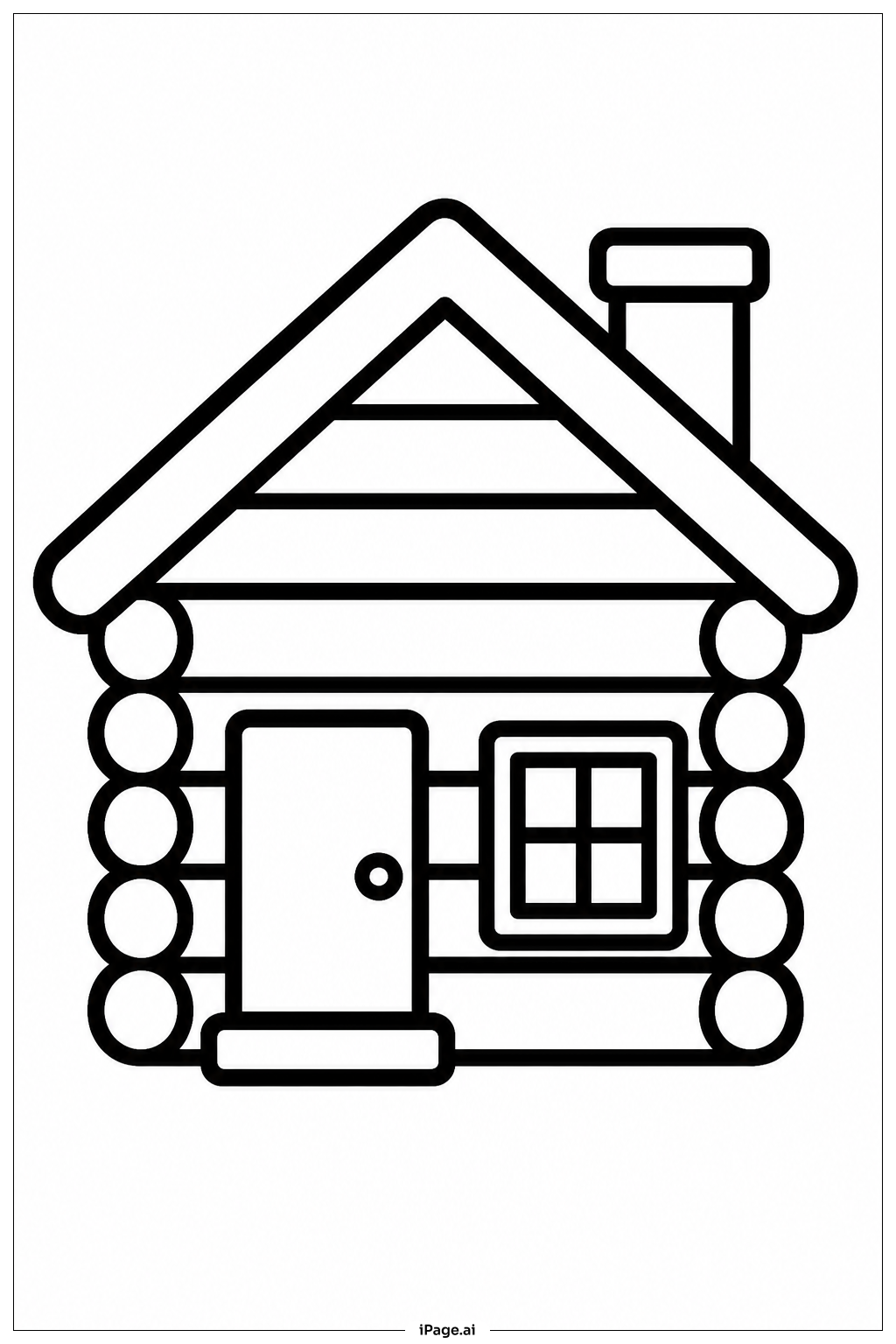
Coloring tips: How to color Log House coloring page well?
Start with the logs that make up the walls. Use warm brown shades like tan, chestnut, or russet. Add darker brown lines along the edges of each log to show depth and shadow. Color the roof with gray or dark brown to suggest aged wooden shingles. Use sandy gray or warm beige for the stone chimney, adding light and dark patches to each stone. Paint the door a deep red or forest green for a classic country feel. Color the window shutters to match. Fill in the pine trees with various shades of green, from deep forest green to bright lime. Use yellow, purple, and white for the wildflowers. Color the stepping stones light gray, and the fence a weathered tan or pale wood tone. Finally, add a light blue sky in the background to bring the whole scene to life.
Coloring challenges: Which parts are difficult to color and need attention for Log House coloring page?
• Log Texture Details: Each log on the walls has a rounded, cylindrical surface with natural wood grain lines. Coloring these realistically requires using multiple shades of brown and carefully blending lighter tones on top of each log and darker tones underneath to create a three-dimensional, rounded look. Rushing through this step can make the wall look flat and uninteresting.
• Stone Chimney Variation: The chimney is composed of many individual stones of slightly different shapes and sizes. Each stone should be colored with subtle variations in gray, beige, and tan to look natural. Keeping each stone distinct without making the overall chimney look too busy is a careful balancing act that requires patience and a steady hand.
• Roof Shingle Layering: The overlapping shingles on the roof need to show depth and shadow. The lower edge of each shingle row should be slightly darker than the upper portion. Achieving this layered effect with colored pencils or markers takes careful attention and light, controlled strokes.
• Dense Tree Foliage: The pine trees surrounding the house have many overlapping branches with dense needle clusters. Filling in these areas evenly while still showing depth between branches requires using at least two or three shades of green and building up color gradually rather than applying it all at once.
• Small Foreground Details: The wildflowers, stepping stones, and fence posts are small and closely spaced. Coloring these tiny elements neatly without accidentally going outside the lines or blending neighboring colors together can be tricky, especially for younger colorists. Using fine-tipped tools and working slowly helps achieve clean, satisfying results.
Benefits of coloring books: Advantages of drawing Log House coloring page
Coloring this log house scene offers a wide range of benefits for kids and beginners alike. The variety of textures — from smooth logs to rough stones to layered shingles — gives colorists a wonderful opportunity to practice blending and shading techniques in a fun, low-pressure way. Working through each section of the image builds focus and patience, skills that are useful in school and everyday life. The natural woodland setting encourages creativity, as there are no strict rules about which shade of green a tree should be or how bright the wildflowers can look. Children can experiment freely and feel proud of the unique scene they create. Coloring structured elements like the log walls and fence also helps develop fine motor control and hand-eye coordination, which supports writing and drawing skills. The cozy, peaceful subject matter makes this page especially calming and enjoyable as a quiet activity after a busy day. Finishing the full scene gives a real sense of accomplishment and boosts confidence, encouraging colorists to try more detailed artwork in the future.