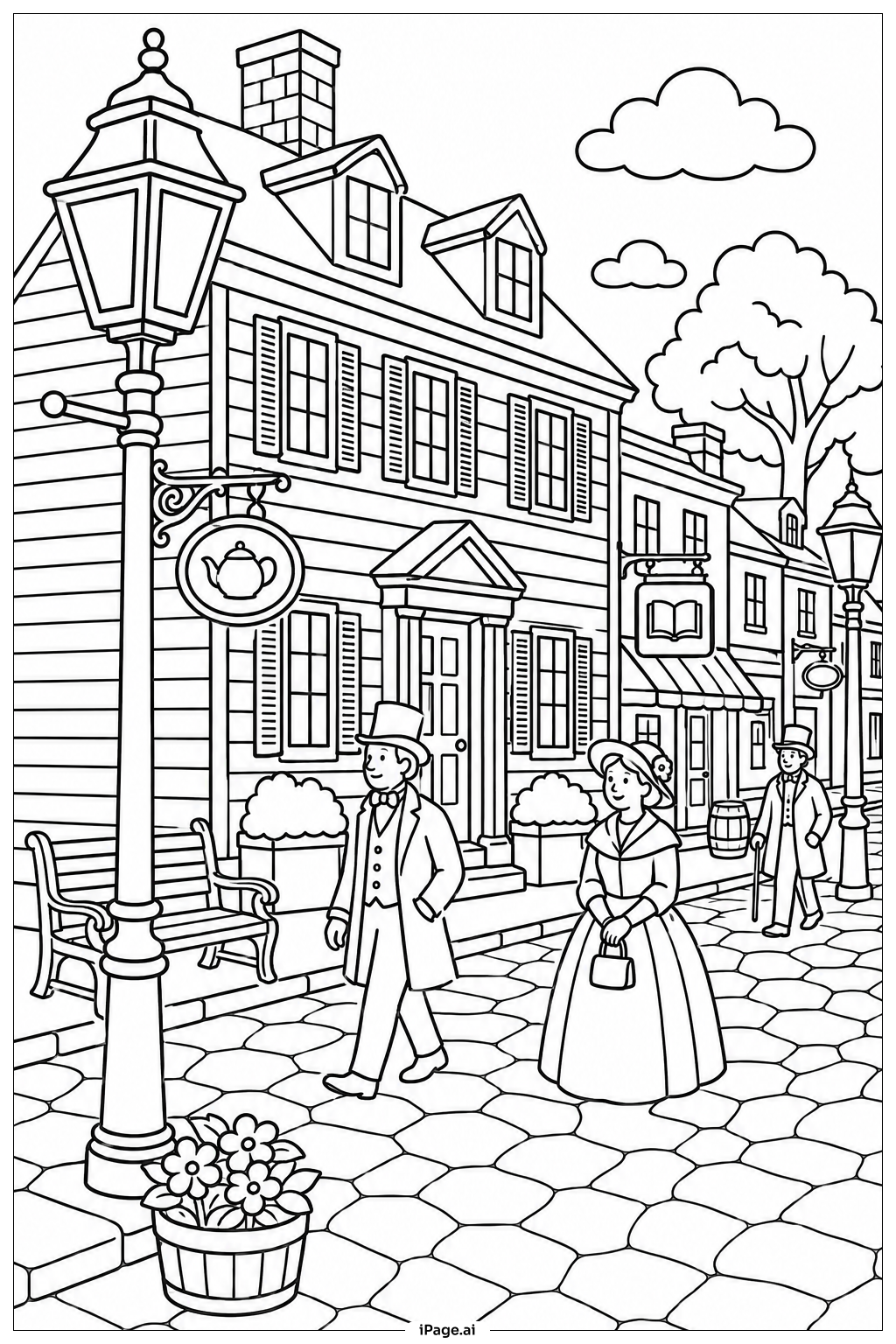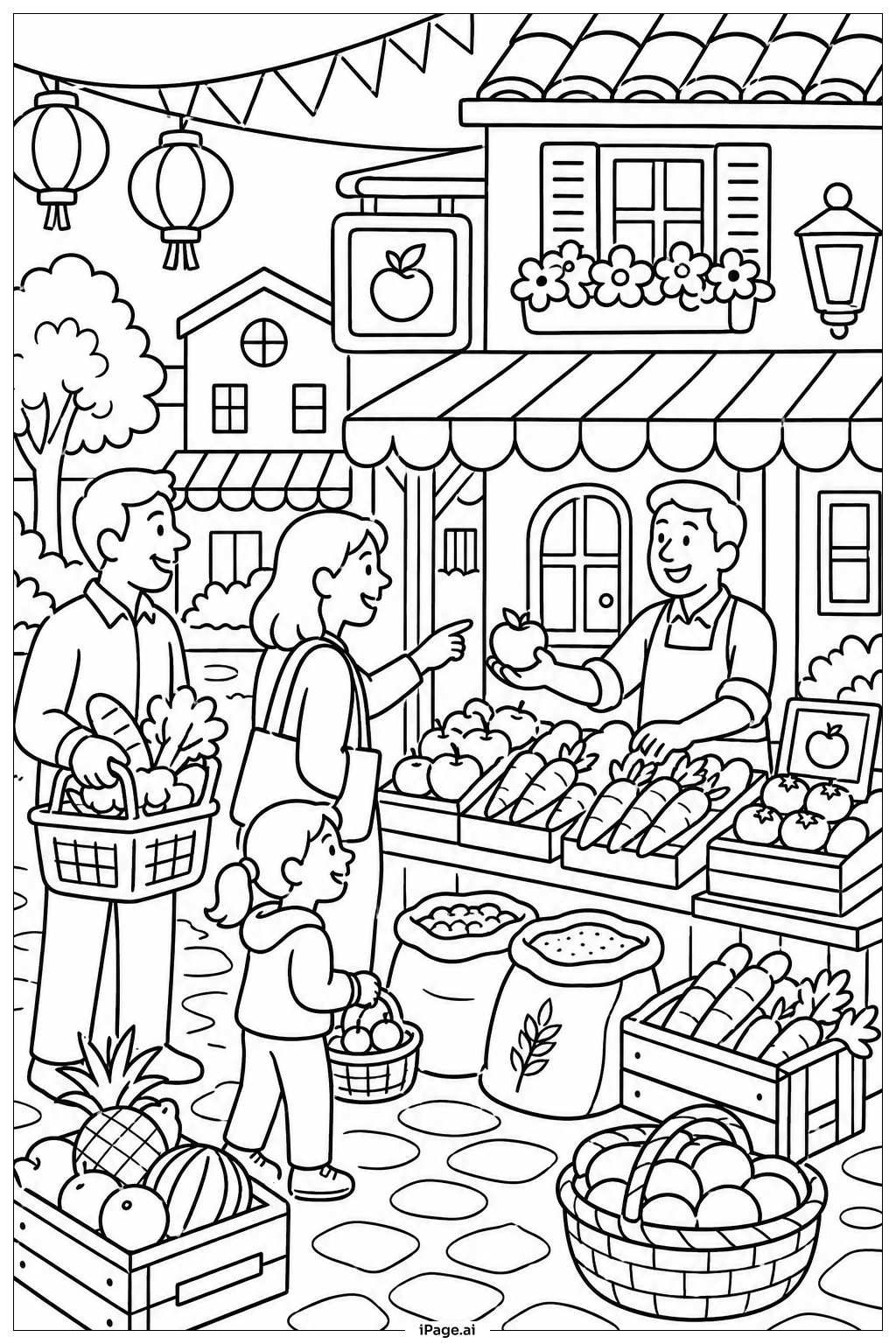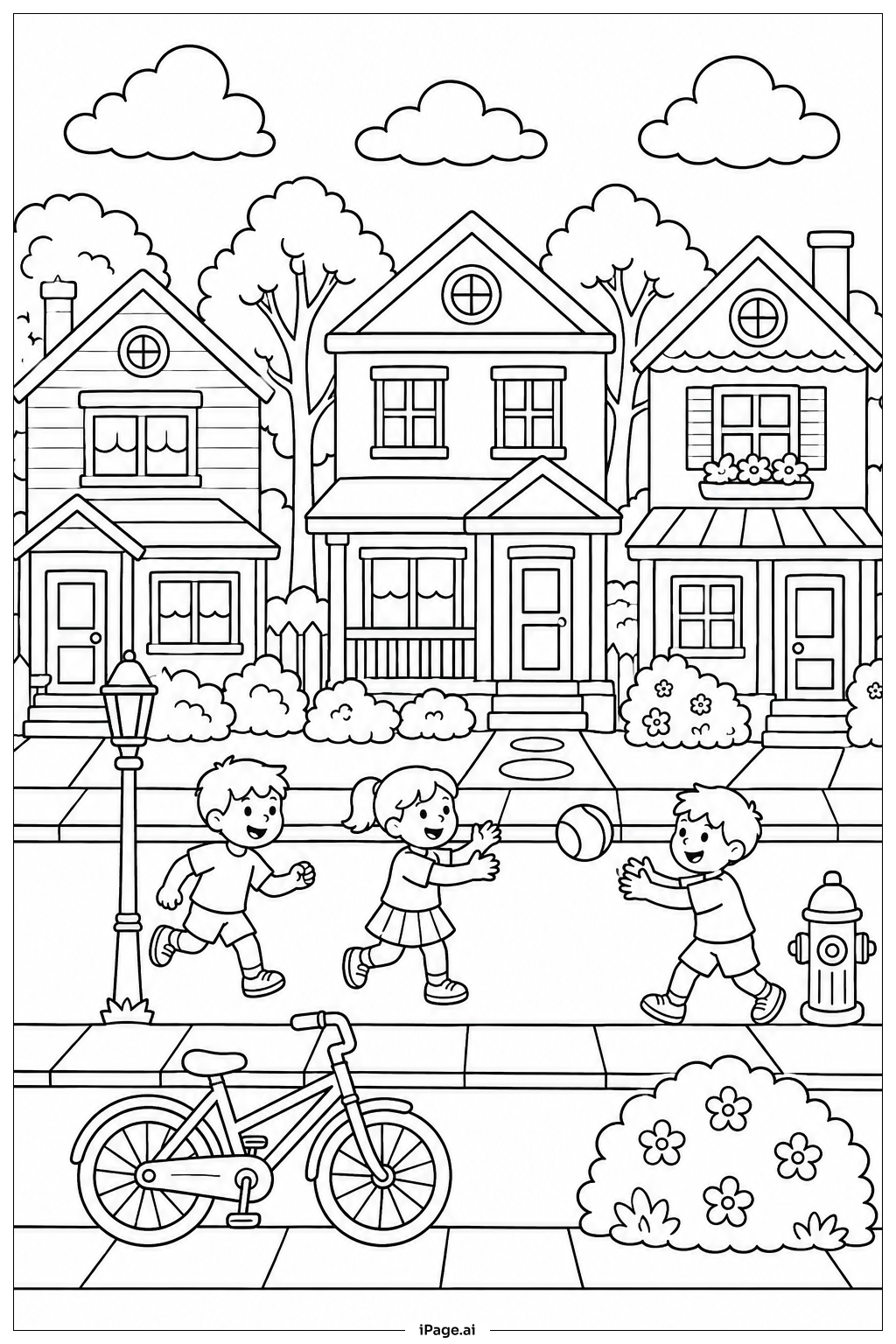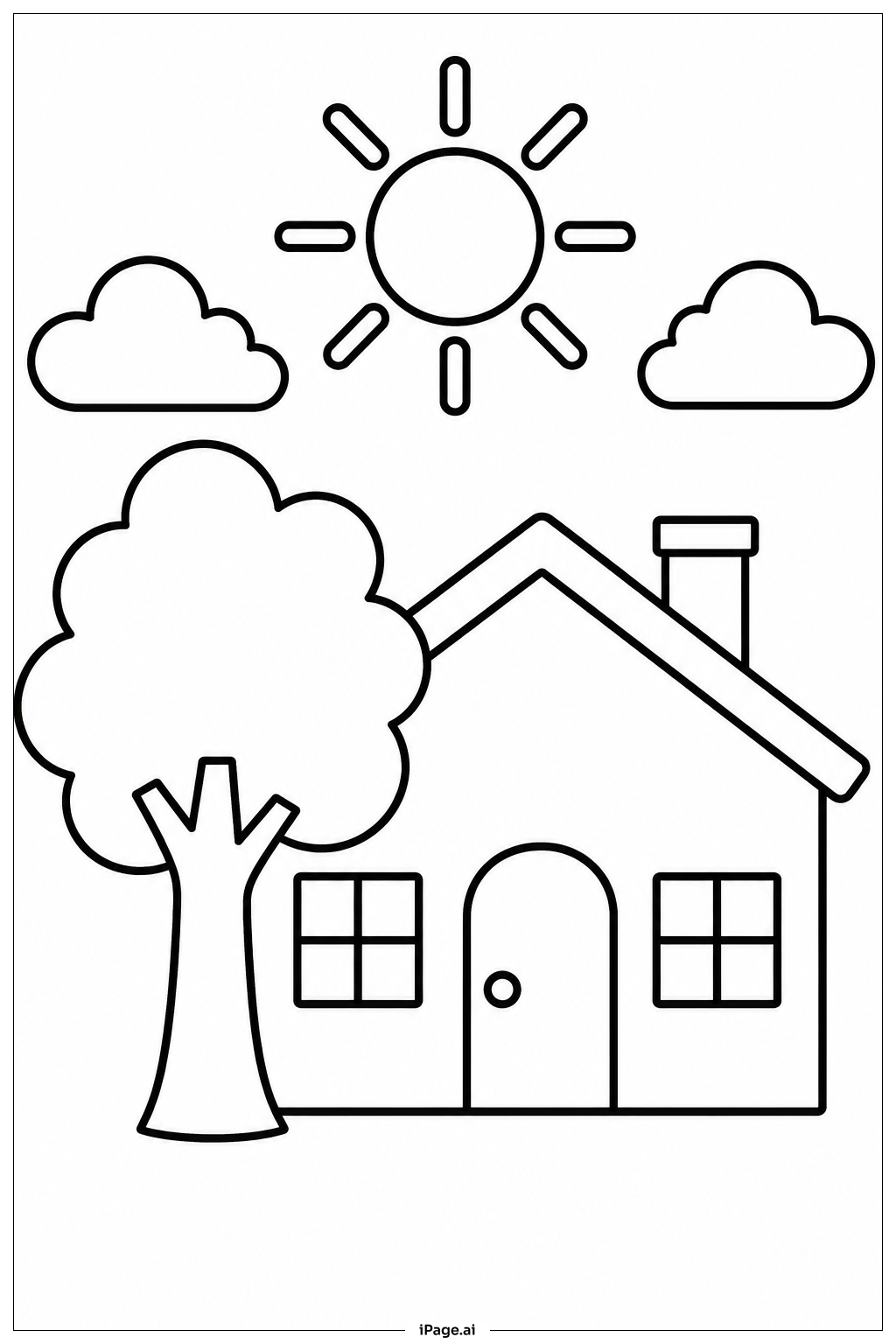
Coloring tips: How to color House With Tree coloring page well?
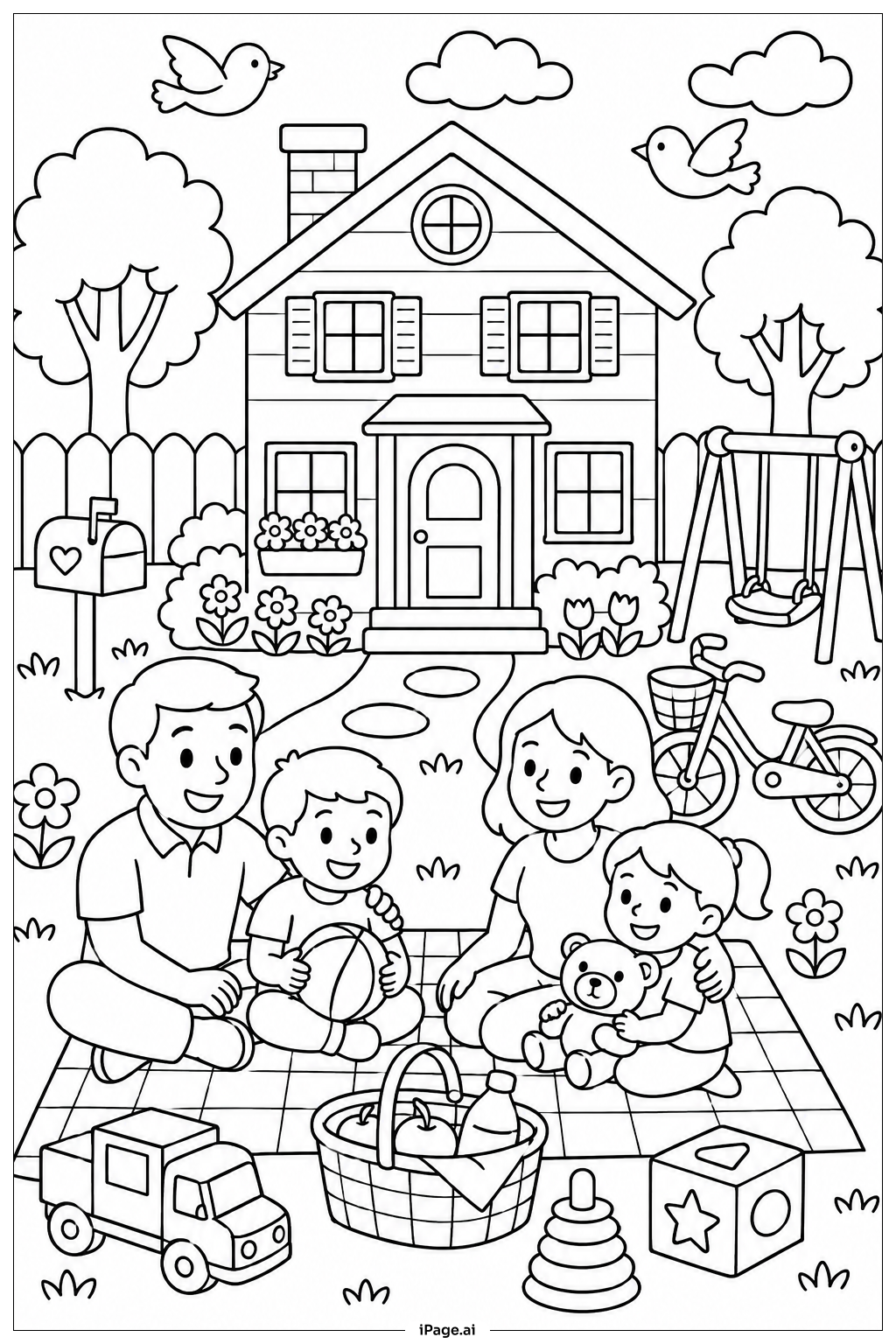
Start with the sky and background. Use light blue for a daytime sky or soft orange and pink for a sunset look. Color the tree trunk brown and the leaves in shades of green. You can mix light and dark green to make the leaves look full and real. For the house, try warm colors like red or orange for the roof and cream or yellow for the walls. Use a bright color like blue or green for the front door to make it stand out. Add gray or brown to the chimney. Color the path with tan or light brown. Use pink, purple, or yellow for any flowers near the house. Try to stay inside the lines as much as possible, but remember there are no rules — pick colors that make you happy and bring this cozy scene to life!
Coloring challenges: Which parts are difficult to color and need attention for House With Tree coloring page?
• Tree Leaves and Branches: The tree has many overlapping leaves and branches that are close together. It can be hard to color each section separately without mixing colors. Take your time and use the tip of your coloring tool to fill small leaf clusters carefully. Using two or three shades of green can help the leaves look more natural and layered.
• House Roof and Walls: The roof and walls have straight edges and geometric shapes that need neat, clean coloring. Staying within the sharp angles of the rooftop can be tricky, especially where the roof meets the walls or the chimney. Using a finer coloring tool for the edges first and then filling in the middle makes this easier.
• Window and Door Details: The windows and door often have small frames, panes, or decorative lines inside them. These tiny sections require a steady hand and a sharp pencil or thin marker. Rushing through these small areas can lead to colors bleeding outside the lines. Patience is key here.
• Path and Ground Area: The winding path and surrounding ground may include grass, pebbles, or small plants. Switching between multiple colors for different ground elements can get confusing. Planning which colors to use for each area before starting can help keep things organized and looking clean.
• Chimney and Rooftop Connection: The area where the chimney meets the roof is a small, tight space. Coloring the chimney a different shade from the roof without overlapping takes careful attention. Use a thin tool and short, controlled strokes to handle this tricky junction neatly.
Benefits of coloring books: Advantages of drawing House With Tree coloring page
Coloring this House With Tree scene offers many wonderful benefits for kids and beginners alike. First, it helps build focus and concentration. Staying inside the lines and choosing colors for each part of the image trains the brain to pay attention to detail. Second, it encourages creativity. There is no single right way to color a house or a tree, so children get to express their own ideas and personality through color choices. Third, it improves fine motor skills. Holding a crayon or colored pencil and making careful strokes helps strengthen the small muscles in the hands and fingers, which is important for writing and other daily tasks. Fourth, it teaches color recognition and mixing. Trying different shades of green for the leaves or experimenting with warm and cool tones for the house helps children understand how colors work together. Fifth, coloring is relaxing and calming. It gives children a quiet activity that reduces stress and brings a sense of peace and accomplishment. Finishing the page and seeing the colorful result also builds confidence and pride in creative work.