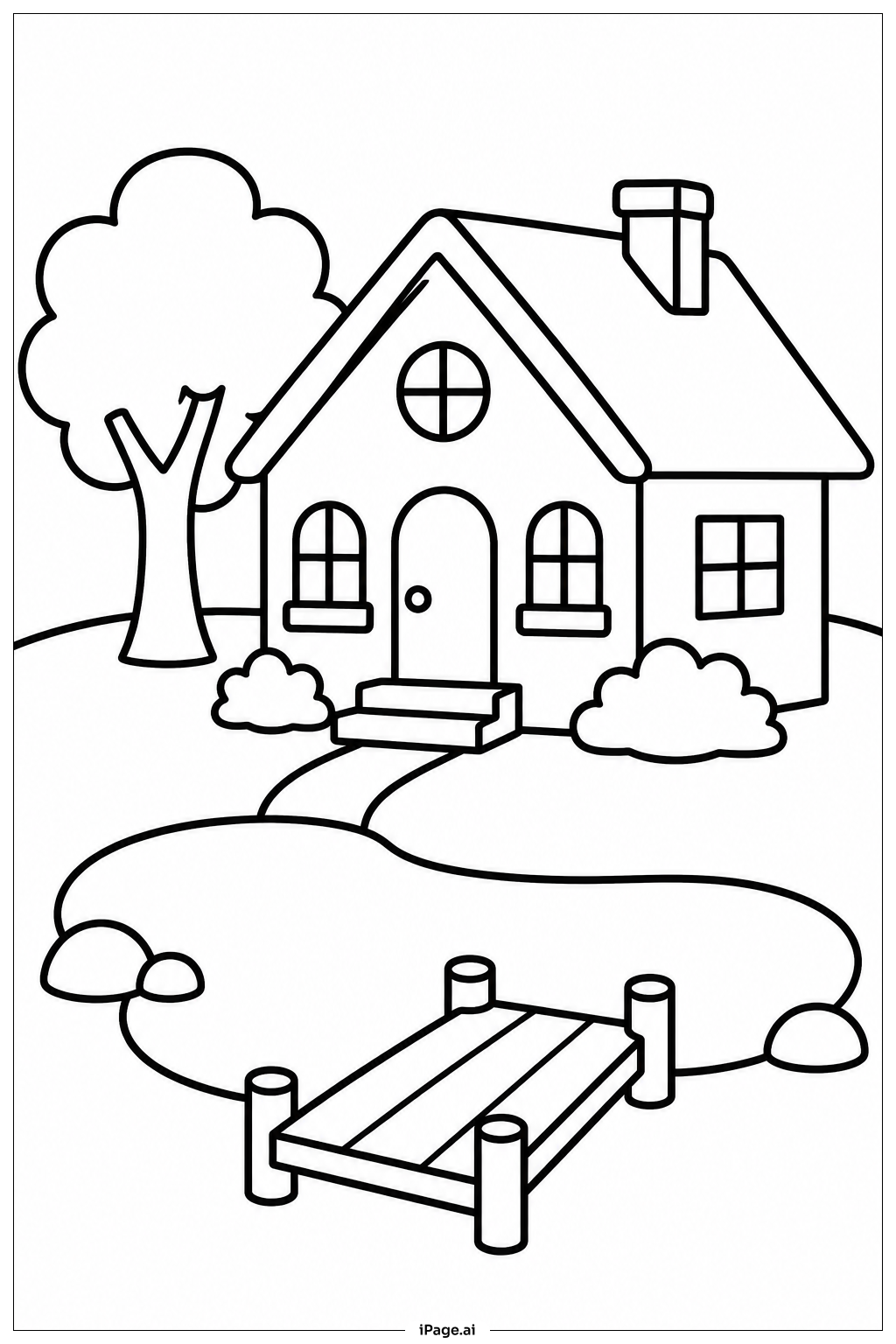
Coloring tips: How to color House With Pond coloring page well?
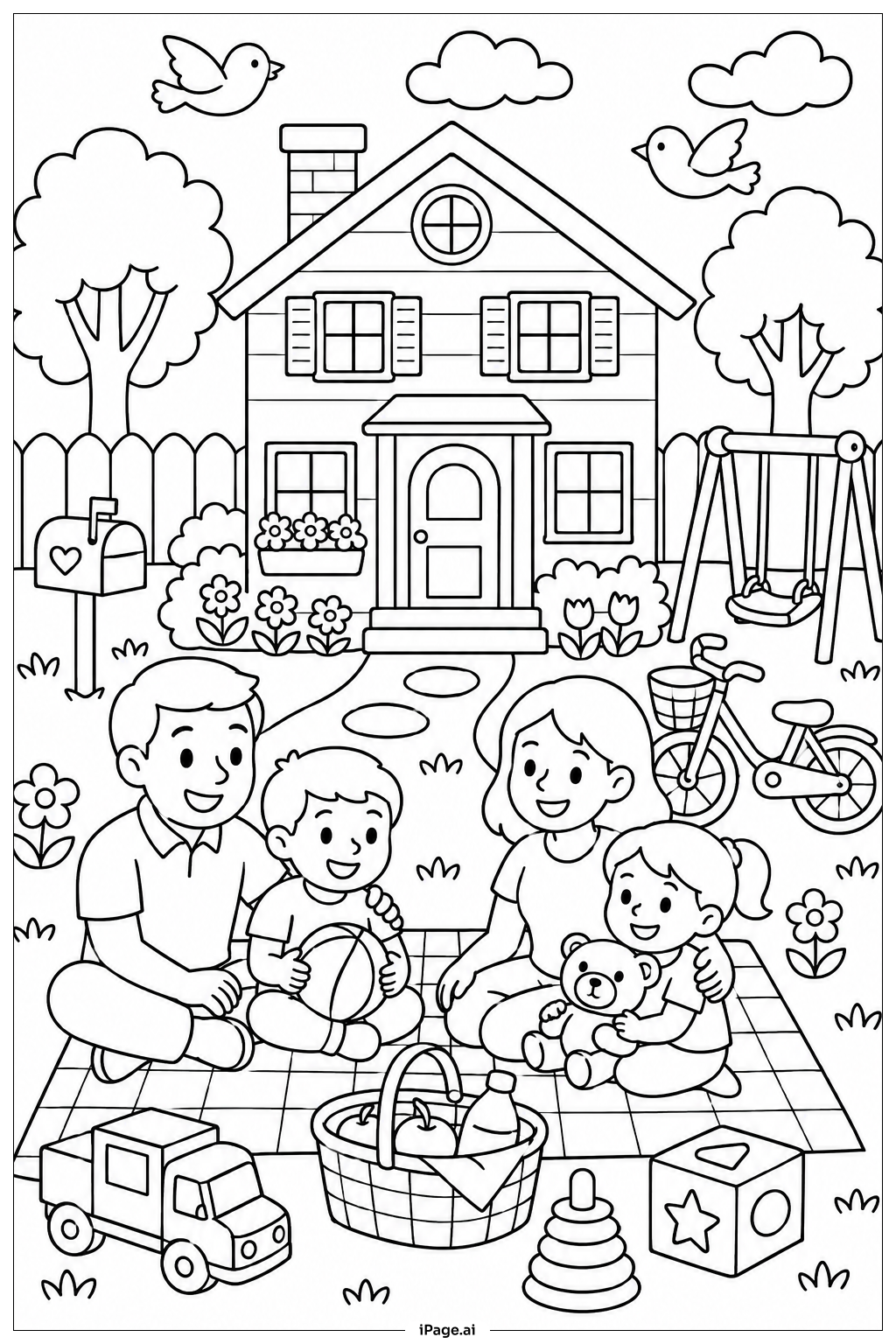
Start with the sky using light blue, and add soft white for the clouds. Color the house walls with warm shades like cream, tan, or light yellow. Use brown or dark gray for the roof, and pick a bright color like red or green for the front door. The wooden fence looks great in light brown or beige. For the trees, use different shades of green to show depth. Color the pond with soft blue and add hints of teal or aqua for the water. Make the lily pads bright green and give the flowers small touches of pink, yellow, or purple. Use earthy greens and browns for the grass and bushes. The stepping stones can be light gray or soft tan. Try using darker shades near edges and lighter shades in the center to give everything a three-dimensional feel. Take your time and enjoy each section!
Coloring challenges: Which parts are difficult to color and need attention for House With Pond coloring page?
• Pond Water Texture: Coloring water realistically can be tricky. The pond surface has ripples and reflections that require blending multiple shades of blue, teal, and white. Children may find it challenging to make the water look natural without making it look too flat or too busy. Try layering light strokes in slightly different directions to suggest movement.
• Tree Canopy Shading: The trees have full, rounded canopies with overlapping layers of leaves. Capturing depth in the foliage means using at least two or three shades of green. Younger colorists may struggle to transition between light and shadow areas smoothly. Using a light green base and adding darker green around the edges helps create a fuller, more realistic look.
• Small Decorative Details: The windows, door frames, fence posts, and flowers all have fine outlines that require careful coloring within tight boundaries. Using a sharp colored pencil or a thin marker tip is recommended to stay inside the lines without smearing neighboring colors.
• Foreground and Background Contrast: Balancing the colors between the front of the image (pond, stepping stones, flowers) and the back (house, trees, sky) is important. If similar colors are used throughout, the image may look flat. Darker, more saturated tones in the foreground and lighter tones in the background help create a sense of distance and depth.
• Lily Pads and Water Plants: The small lily pads floating on the pond have circular shapes that need clean, bright green coloring. Their small size makes it easy to accidentally color outside the lines or miss them entirely. Take your time with these tiny details for a polished finish.
Benefits of coloring books: Advantages of drawing House With Pond coloring page
Coloring this House With Pond scene offers a wide range of wonderful benefits for children and beginners alike. The peaceful, nature-filled setting helps calm the mind and reduce stress, making it a great activity after a busy day. Focusing on staying within the lines and choosing the right colors builds concentration and attention to detail. Children develop fine motor skills as they carefully guide their pencils or markers around small shapes like flowers, fence posts, and lily pads. Choosing colors for the sky, water, trees, and house also encourages creative thinking and personal expression. There is no single right answer, so every child's version can look unique and special. The variety of elements in this scene, from the house and trees to the pond and stepping stones, introduces children to concepts like nature, home, and the outdoors. Completing the full image gives a strong sense of accomplishment and boosts confidence. It is also a great activity to share with friends or family, encouraging teamwork and conversation. Overall, this coloring page is a joyful, relaxing, and enriching experience for young artists of all skill levels.