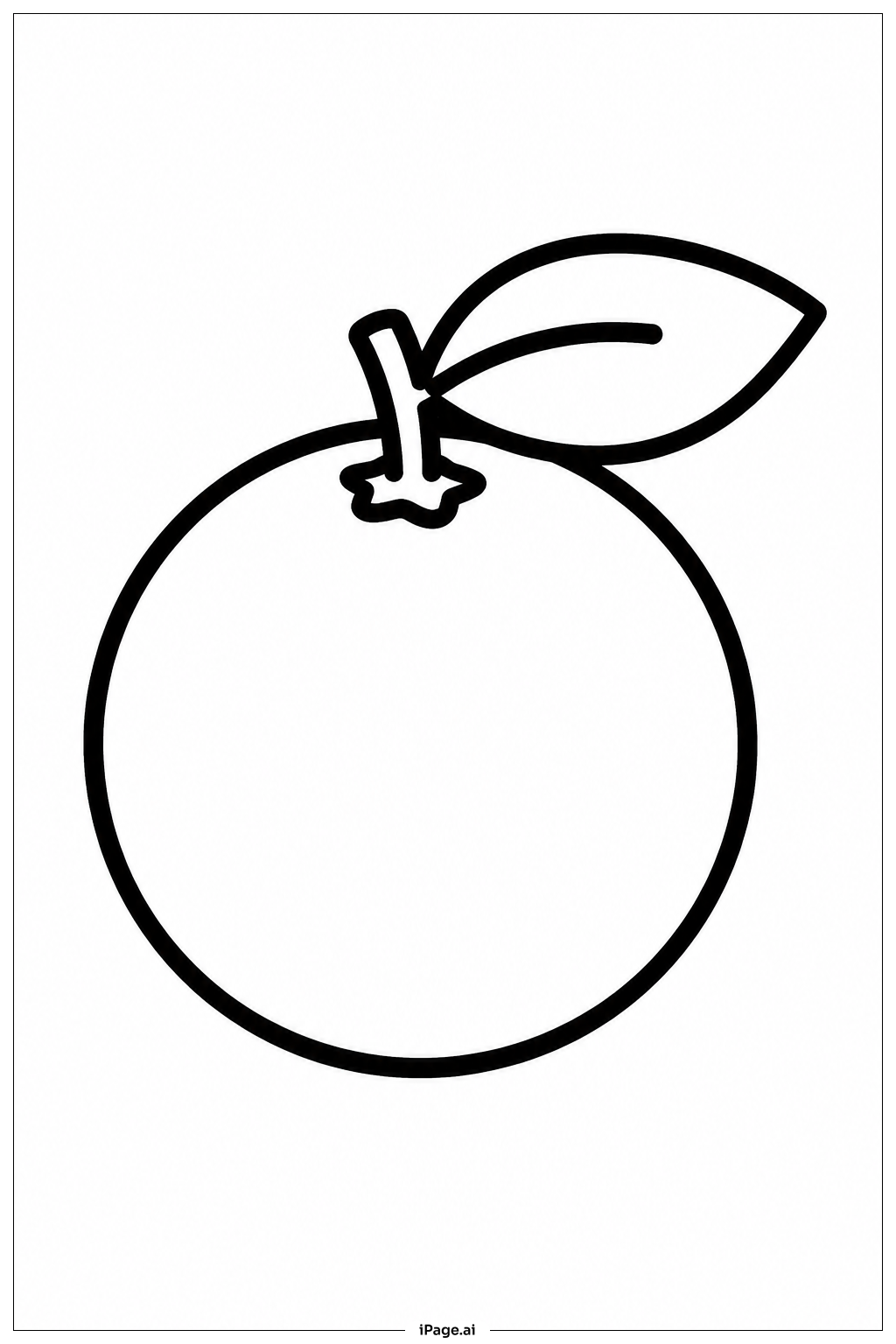
Coloring tips: How to color Whole Orange Fruit coloring page well?
Start with the outer peel of the orange. Use a bright orange color as your base. You can mix in a little yellow toward the center of the fruit to show where light hits it. Add a slightly darker orange or burnt orange around the edges to give it a round, three-dimensional look. For the stem, use a dark brown or tan color. Color the leaves in medium green, then add a slightly darker green along the edges and near the center vein to give them depth. If you want the orange to look extra fresh and juicy, add a small white highlight near the top of the fruit. Keep your strokes light and even for a smooth finish. Younger kids can simply fill the whole orange with one bright orange color and still get a great result. Have fun and make it your own!
Coloring challenges: Which parts are difficult to color and need attention for Whole Orange Fruit coloring page?
• Capturing the Round Shape: An orange is perfectly round, and showing that three-dimensional shape on a flat page can be tricky. To make it look round instead of flat, you need to use at least two shades of orange — a lighter tone in the center where light hits and a darker tone around the edges where shadow falls. Blending these two shades smoothly is the key challenge here.
• Recreating the Textured Peel: The surface of an orange peel has hundreds of tiny dimples and bumps. The coloring page may include small dots or uneven lines to hint at this texture. Coloring around these tiny details without going outside the lines takes patience and a sharp pencil or fine-tipped marker.
• Coloring the Leaves Naturally: The leaves attached to the stem are small and have a slightly curved shape. Keeping the color inside the narrow leaf outline while also adding a vein detail in the center requires careful, steady hand movement. Using two shades of green — one for the base and one for the vein — adds realism but also increases difficulty.
• Stem Proportions: The stem is very small compared to the rest of the fruit. Coloring such a tiny area neatly without smudging the surrounding orange color is a common challenge, especially for younger children who are still developing fine motor control.
• Color Consistency Across the Whole Fruit: Keeping an even, consistent color tone across the large, round surface of the orange without streaks or uneven patches takes time and practice, especially when using colored pencils or crayons.
Benefits of coloring books: Advantages of drawing Whole Orange Fruit coloring page
Coloring this Whole Orange Fruit page offers a wide range of benefits for children and beginners alike. First, it helps build fine motor skills. Carefully staying inside the lines of the round fruit and small leaves trains hand muscles and improves pencil control. Second, it supports color recognition and mixing. Experimenting with shades of orange, yellow, and green helps children understand how colors relate to each other and how to blend them to create depth. Third, it encourages creativity. Even though it is a simple fruit, children can choose unusual or imaginative colors, making the activity a safe space for self-expression. Fourth, it builds focus and patience. The textured peel details and small stem require slow, careful work, which helps children practice sitting still and concentrating on a task. Fifth, it connects coloring to the real world. Oranges are a familiar, everyday fruit, so this page can spark conversations about healthy eating, nature, and where food comes from. Overall, this page is a gentle, enjoyable way to develop important skills while having creative fun.