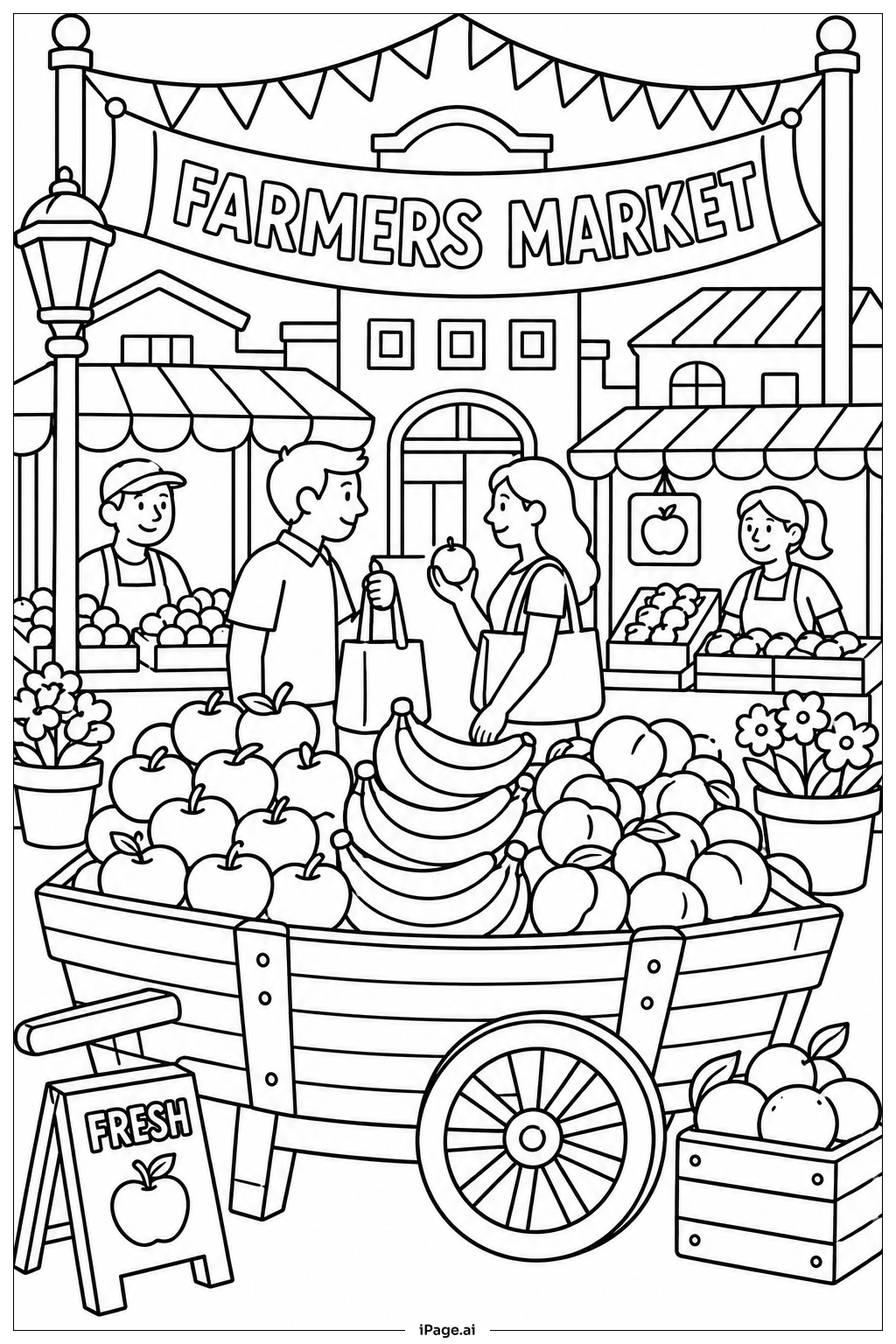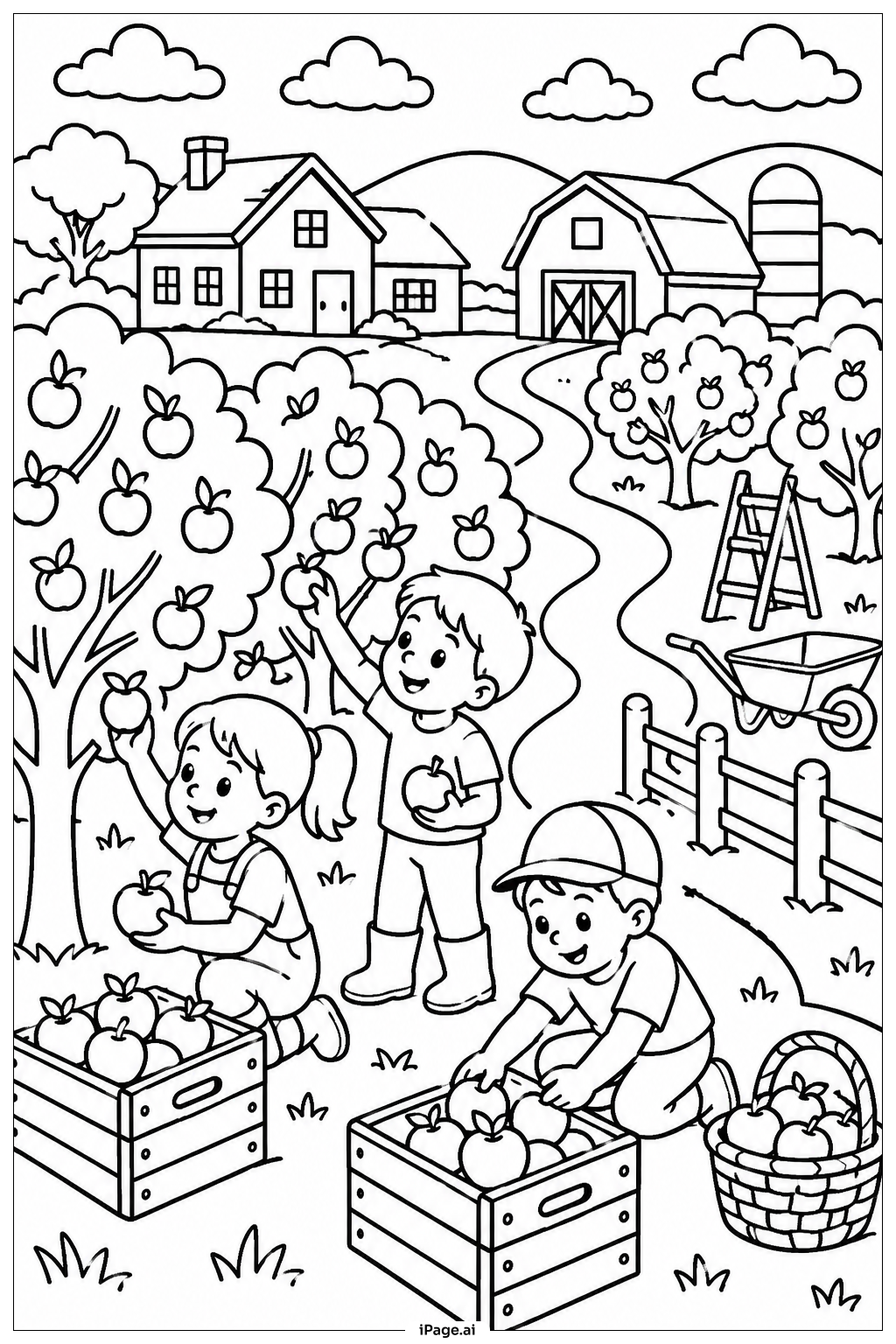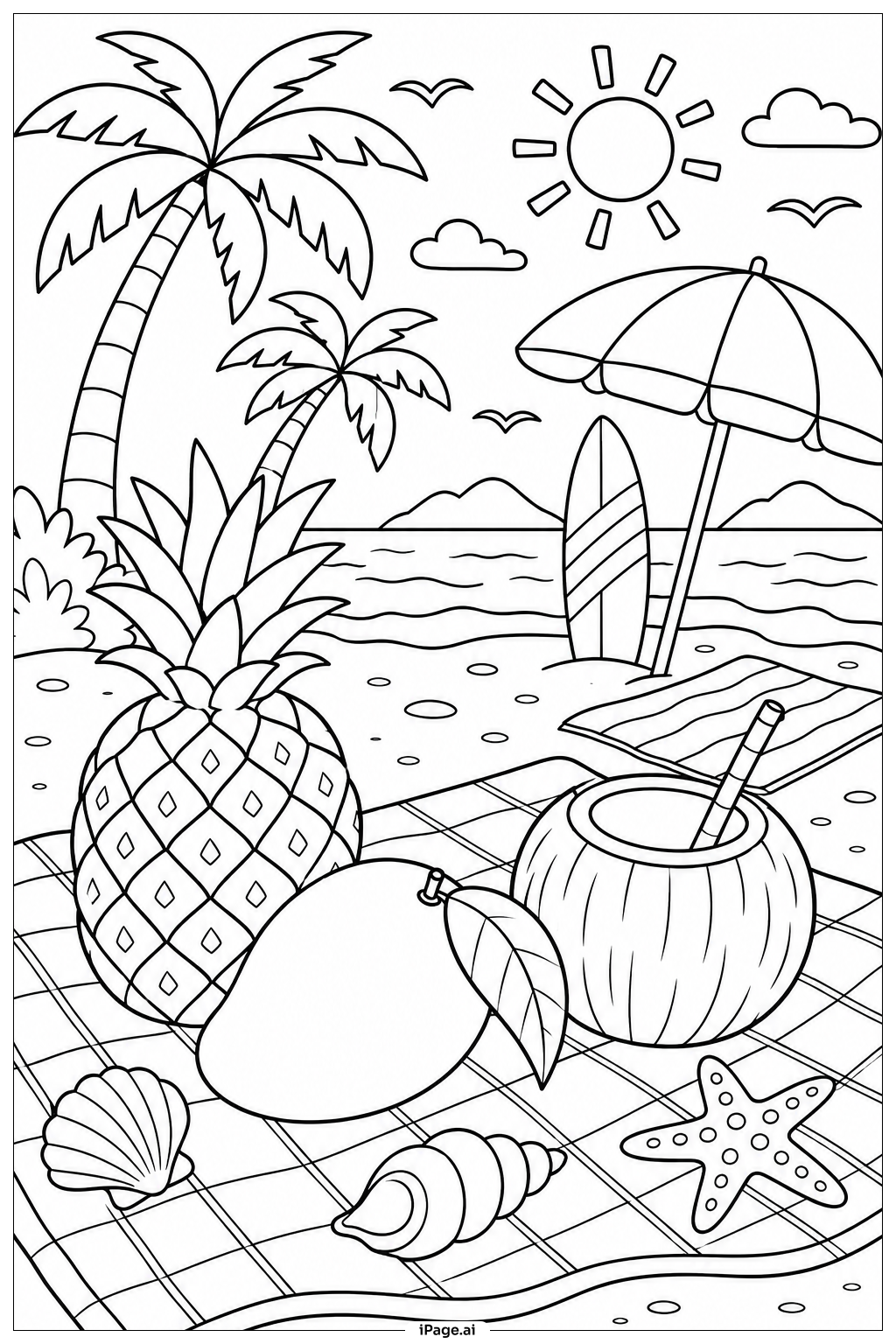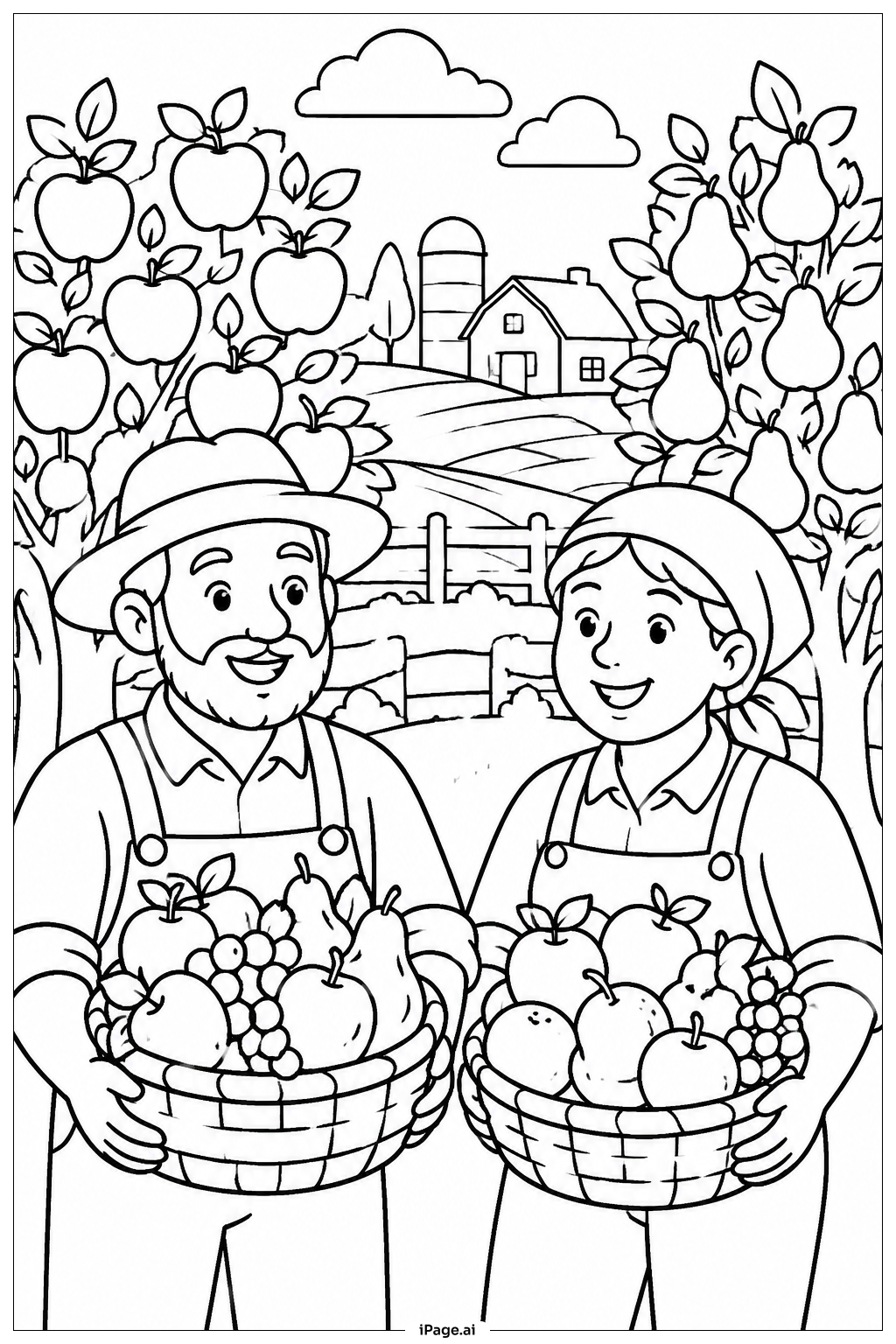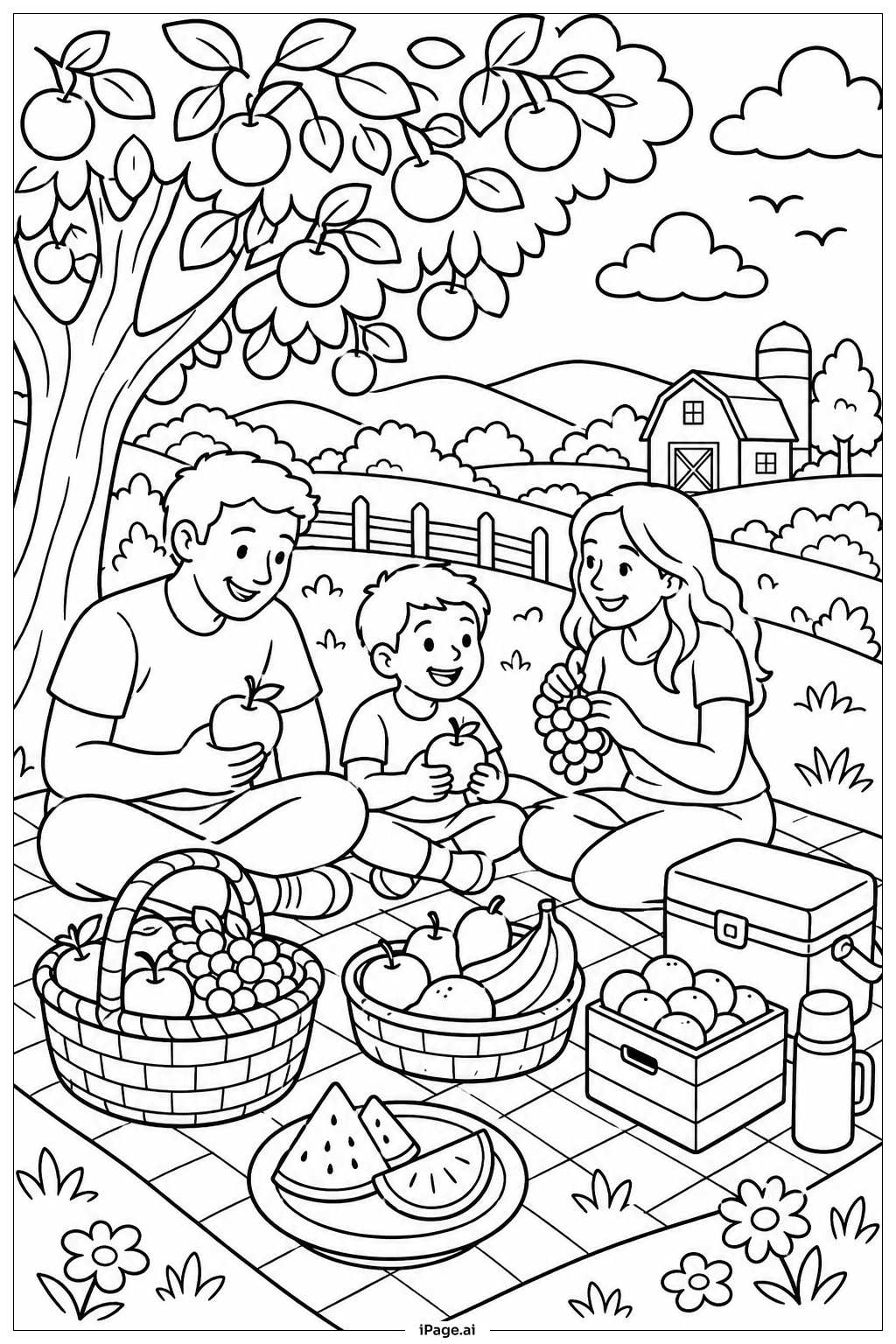
Coloring tips: How to color Fruit Tree Picnic Fruit coloring page well?
Use bright and cheerful colors to bring this picnic scene to life. The Fruit Tree leaves can be colored in different shades of green to create a natural look. For the fruits, try coloring apples red or green, pears yellow or light green, and grapes purple or green. The picnic blanket can have a checkered pattern with contrasting colors like red and white or blue and yellow. Add soft colors for the butterflies such as pink or orange. For the basket, use warm brown tones to resemble woven straw. You can also try shading the fruits to show their roundness and texture. Have fun mixing colors to make the picnic scene vibrant and welcoming.
Coloring challenges: Which parts are difficult to color and need attention for Fruit Tree Picnic Fruit coloring page?
• Multiple fruit types: The image includes various fruits like apples, pears, and grapes, each with different shapes and colors, making it a challenge to choose accurate and harmonious colors for each. • Small details: The leaves and butterfly wings have fine lines and small areas which require careful coloring to stay inside the lines, helping to develop fine motor skills. • Overlapping elements: Some fruits overlap with branches and leaves, so differentiating these parts with appropriate color contrasts can be tricky. • Texture representation: Conveying realistic textures like the smoothness of fruit skin or the weave of the picnic basket through coloring can be challenging for beginners. • Patterned areas: The picnic blanket may include complex checkered or striped patterns that require patience and planning to color neatly and consistently.
Benefits of coloring books: Advantages of drawing Fruit Tree Picnic Fruit coloring page
Coloring this image supports creativity by encouraging children to experiment with colors for the fruits, leaves, and picnic items. It also enhances concentration and fine motor skills as they carefully color within different shapes and small details. The variety of fruit shapes helps children learn to recognize and differentiate natural objects. Additionally, coloring outdoor scenes can foster an appreciation for nature and healthy eating. This activity provides a relaxing and enjoyable way to practice color coordination and develop patience. Overall, it is a fun educational experience that suits kids aged 4 to 16.