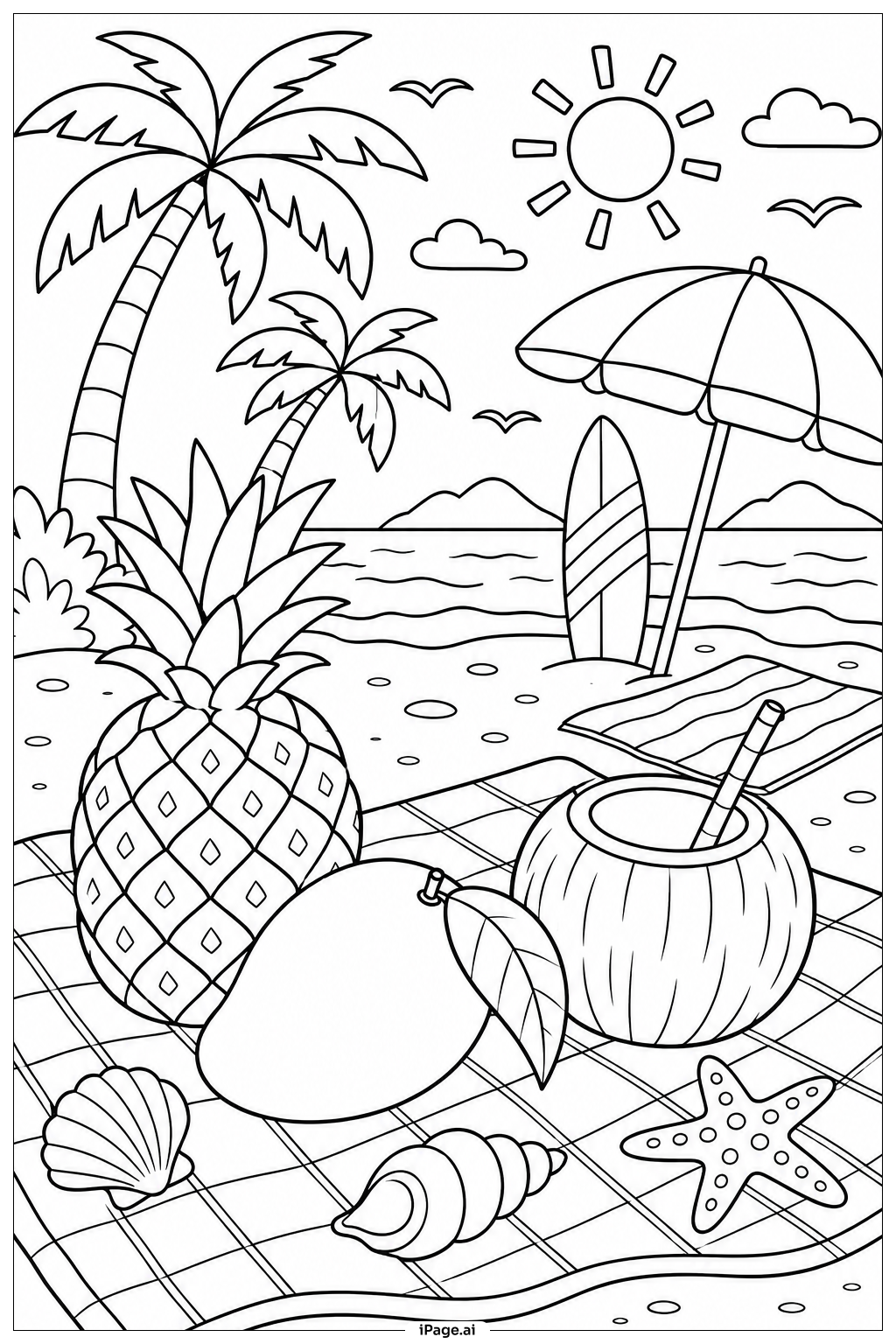
Coloring tips: How to color Tropical Fruit Beach Scene coloring page well?
Start with the background elements first. Color the sky light blue and the sun bright yellow or golden orange. Use sandy beige or tan shades for the beach area. For the palm trees, use rich green for the leaves and brown for the trunks.
Next, move on to the fruits. Use vibrant, bold colors to bring each fruit to life. Color the pineapple with golden yellow and add brown diamond patterns on the skin. Paint the watermelon with bright red on the inside and striped green on the outside. Use sunny yellow for bananas, deep orange for mangoes and papayas, and warm brown tones for the coconuts.
Feel free to mix shades to create depth — for example, add a slightly darker green to the edges of palm leaves, or use a deeper red toward the center of the watermelon. Bright, tropical colors work best here. Try using colored pencils for fine details and markers or crayons for filling large areas quickly. Have fun and let your colors shine!
Coloring challenges: Which parts are difficult to color and need attention for Tropical Fruit Beach Scene coloring page?
• Pineapple Skin Texture: The pineapple features a detailed diamond-grid pattern across its surface, with small cross-hatched lines that can be tricky to color neatly. You need to stay within each small section carefully to keep the texture looking clean and realistic. Using a sharp-tipped colored pencil works best for this area.
• Fruit Variety and Color Coordination: With so many different fruits in one scene, keeping the colors varied and visually balanced is a real challenge. Each fruit needs its own distinct color palette, and placing similar colors too close together can make the image look flat or confusing. Planning your color choices before you start can help a lot.
• Palm Tree Leaves: The palm fronds have long, narrow sections radiating from a central spine. Coloring between these thin strips without going outside the lines requires patience and a fine-tipped tool. The overlapping leaves in the background add another layer of difficulty.
• Background Depth and Layering: Creating a sense of distance between the beach, ocean, and sky takes skill. The horizon line where the sea meets the sky needs careful blending or a clear color transition so the scene feels open and airy rather than flat.
• Small Detail Areas: Elements like the coconut shell ridges, the seeds inside the papaya, and the wave outlines on the water are small and closely packed. These tiny spaces are easy to accidentally color over, so working slowly with a fine point and a steady hand is essential for a polished final result.
Benefits of coloring books: Advantages of drawing Tropical Fruit Beach Scene coloring page
Coloring this tropical fruit beach scene offers a wonderful mix of fun and learning for kids and adults alike. Here are some great reasons to pick up your colors and get started.
It builds focus and patience. Staying inside the detailed lines of the pineapple texture or the tiny wave patterns trains your hand and mind to slow down and concentrate.
It sparks creativity. Choosing colors for so many different fruits encourages you to think about real-world colors while also feeling free to get creative — who says a mango can't be painted with a sunset gradient?
It teaches about nature. Kids learn to recognize tropical fruits like papaya, coconut, and mango, making this a fun and educational activity at the same time.
It reduces stress. Coloring repetitive patterns like the pineapple's skin or the ocean waves has a calming, almost meditative effect that helps both children and adults unwind.
It improves fine motor skills. Handling coloring tools carefully through the detailed sections of this scene strengthens hand-eye coordination and pencil control, which is especially helpful for younger children.
Most of all, finishing this bright, cheerful scene gives a real sense of accomplishment and pride — a colorful tropical artwork you can truly call your own.