Coloring tips: How to color Orchard Harvest Fruit coloring page well?
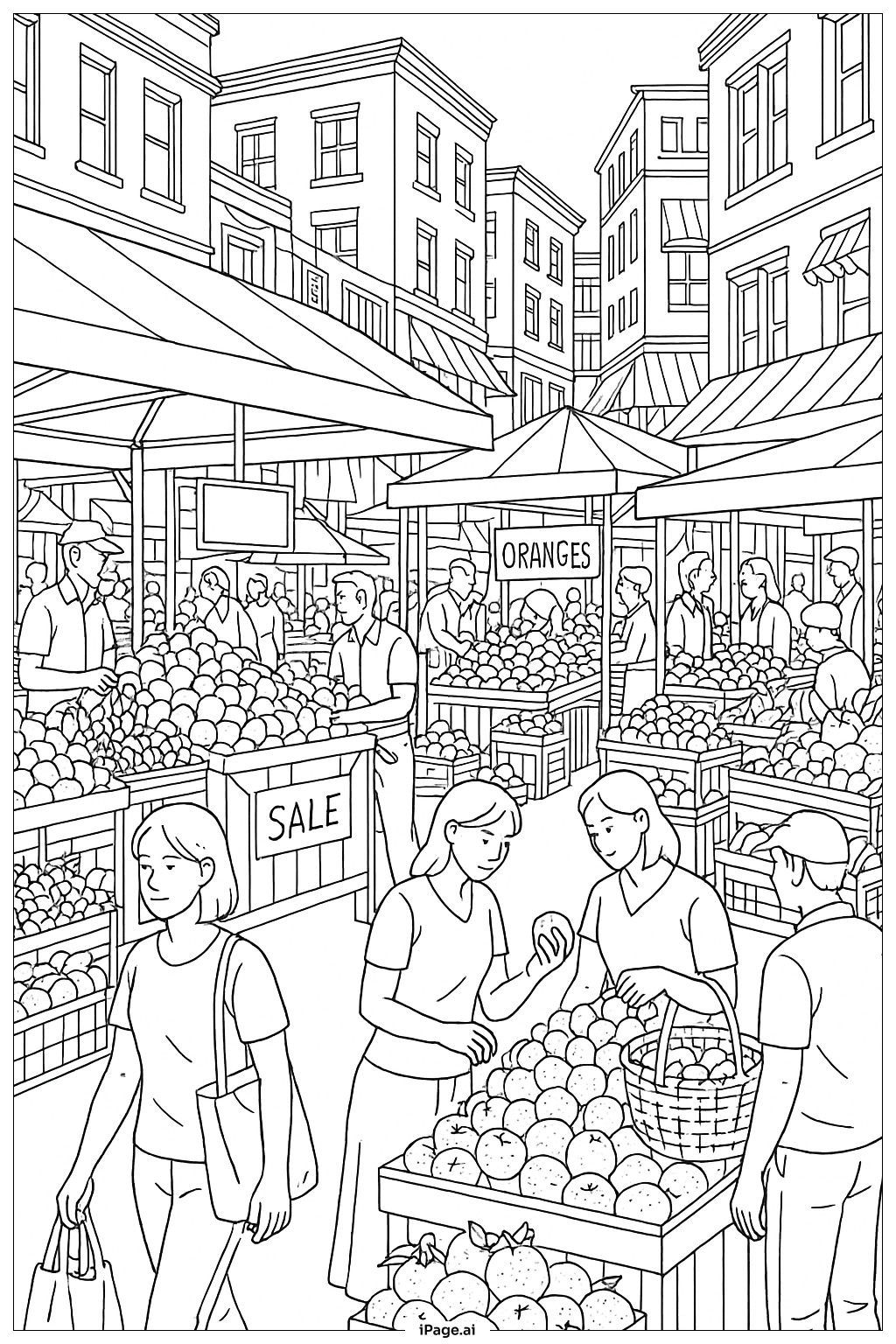
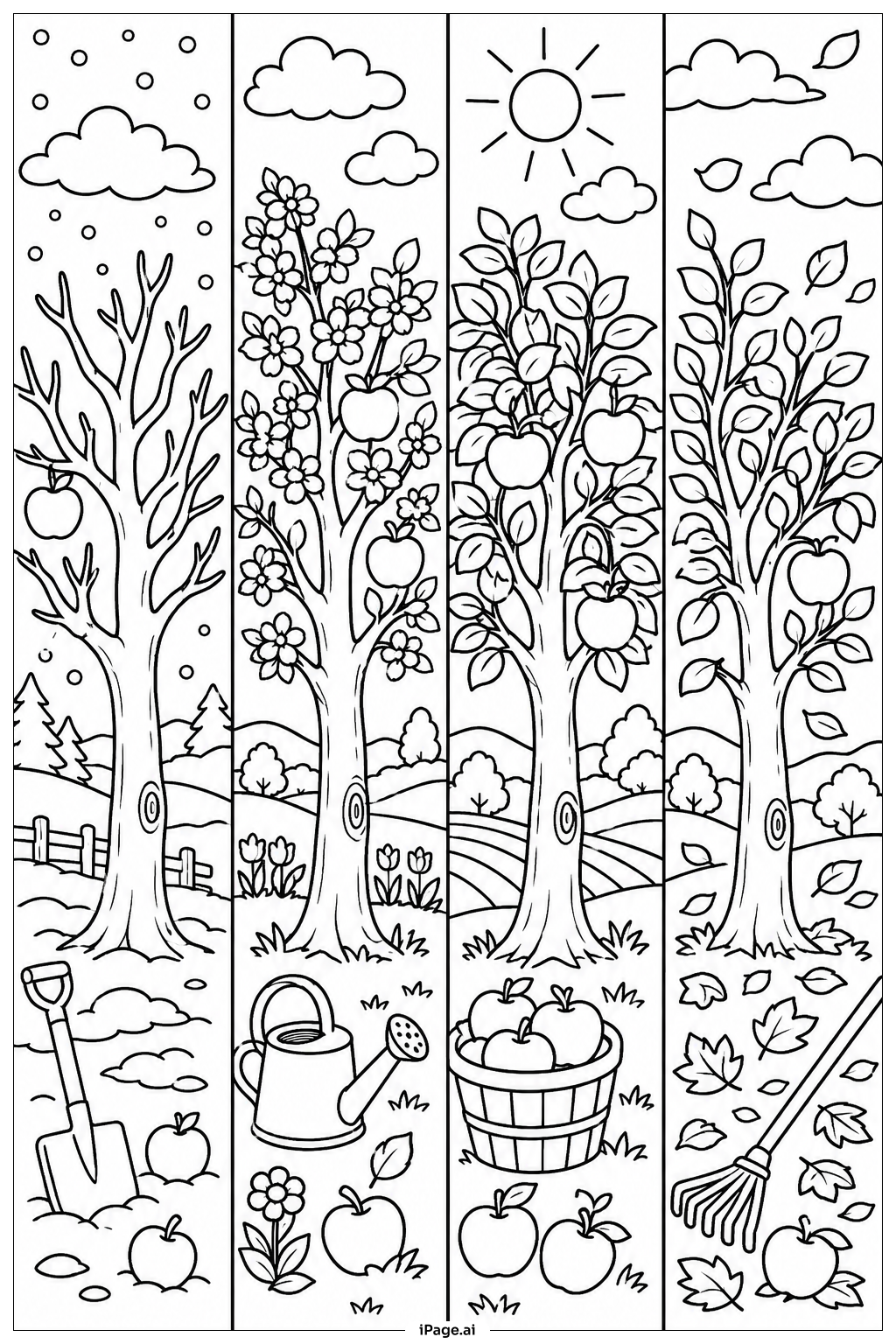
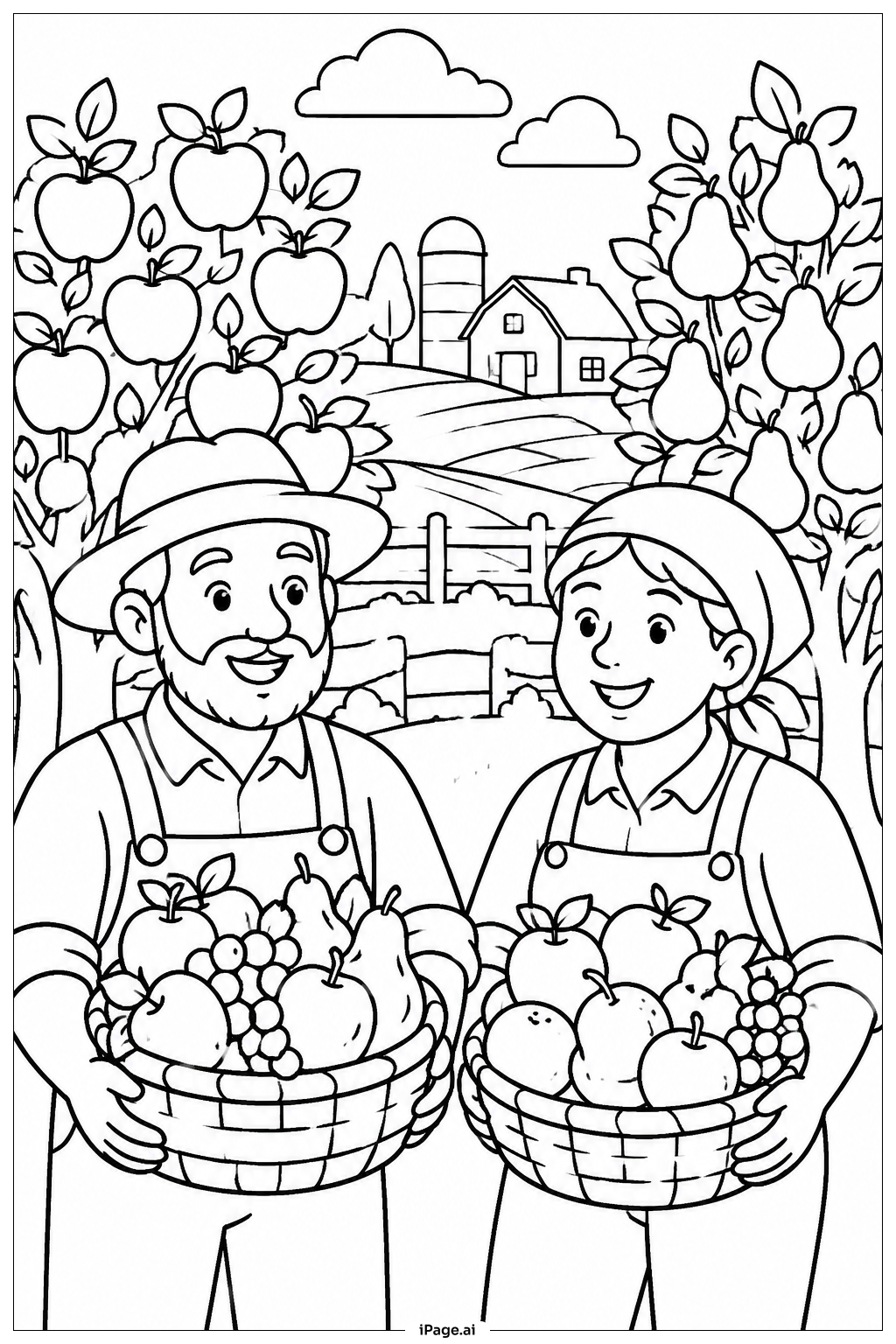
Start with the largest fruits first. Paint apples in bright red or green, and color pears in soft yellow or lime. Use deep purple or rich violet for the grape clusters, adding lighter shades on each individual grape to create a round, shiny look. Oranges look great in warm orange tones with a hint of yellow. Fill the leaves with different shades of green — use darker green on one side and lighter green on the other to show depth. The wooden basket can be colored in warm brown tones with darker lines to show the wood grain. For the background, try a soft sky blue or warm golden yellow to suggest a sunny harvest day. Add touches of red, orange, and yellow to fallen leaves to capture the feel of autumn. Use light colors first, then slowly layer darker shades on top to make the fruits look juicy and fresh.
Coloring challenges: Which parts are difficult to color and need attention for Orchard Harvest Fruit coloring page?
• Grape Cluster Shading: Each grape in the cluster is a small round shape that needs its own highlight and shadow. Coloring dozens of tiny circles without them blending together is tricky. Try leaving a small white dot on each grape and using a slightly darker purple on the lower half to suggest roundness and shine.
• Overlapping Fruits and Leaves: Many fruits in this scene overlap with branches, leaves, and other fruits. Keeping each element visually separate requires careful color choices. Use contrasting shades for neighboring areas — for example, place a light yellow pear next to a dark green leaf so the edges stay clear and easy to read.
• Leaf Vein Details: The leaves contain fine vein lines running through them. These tiny lines are easy to accidentally cover with too much paint or marker. Work around them carefully and consider leaving the veins in a lighter tone or white to keep the natural leaf texture visible.
• Wooden Basket Texture: The basket is made up of woven strips that create a crosshatch pattern. Coloring each strip individually while maintaining consistent warm brown tones requires patience and a steady hand. Using two or three shades of brown — light, medium, and dark — can help give the basket a realistic woven look.
• Color Harmony Across the Scene: With so many different fruits and elements in one image, it can be hard to make everything look balanced. Avoid using too many bright, saturated colors all at once. Mix in some muted or earthy tones to help the scene feel unified and natural rather than chaotic.
Benefits of coloring books: Advantages of drawing Orchard Harvest Fruit coloring page
Coloring this orchard harvest scene offers a wide range of benefits for children and adults alike. For younger kids, identifying and coloring different fruits helps build early learning skills like color recognition, shape awareness, and vocabulary around nature and food. It makes learning fun and engaging without feeling like a lesson.
For older children and teens, working through the many details — the grape clusters, leaf veins, and woven basket — strengthens fine motor skills and hand-eye coordination. Choosing colors and planning how to shade each fruit encourages creative thinking and artistic confidence.
For adults, this type of nature-themed coloring page provides a calming, meditative activity. Focusing on the gentle details of fruits and foliage helps quiet a busy mind and reduce everyday stress. It's a simple way to practice mindfulness without any special equipment.
The harvest theme also connects colorists to the natural world, inspiring an appreciation for seasonal beauty and the abundance of nature. Whether you're a beginner picking up crayons or an experienced artist using watercolors, this page invites everyone to slow down, be present, and enjoy the creative process. Completing the page also gives a satisfying sense of accomplishment that boosts mood and self-expression.