Coloring tips: How to color Watermelon Slice Fruit coloring page well?
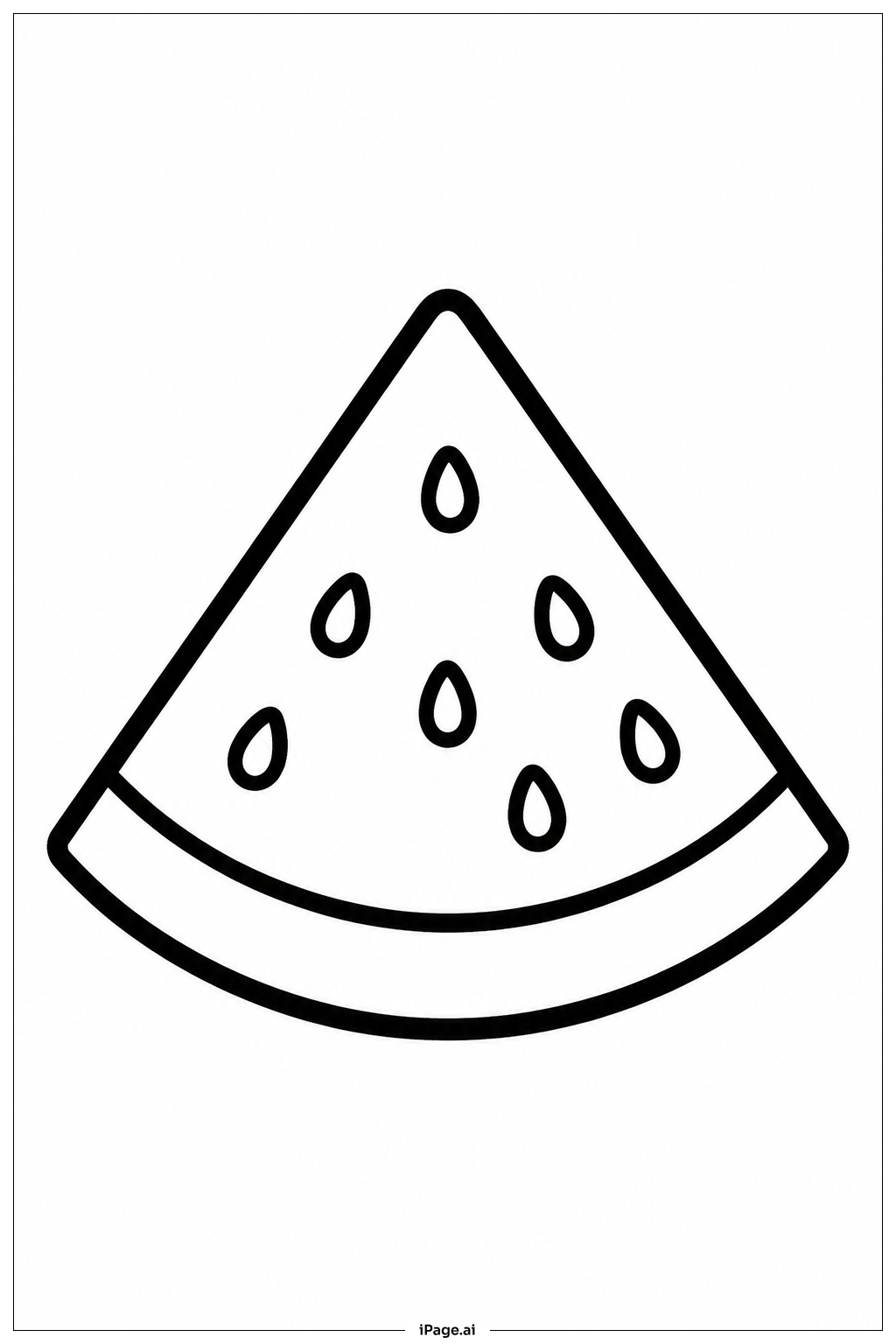
Start with the flesh area and use a bright, vivid red or deep pink. You can add a lighter pink near the edges to give it a juicy, gradient look. For the seeds, use dark brown or black and fill them in completely so they stand out clearly against the red flesh. The inner rind layer looks best in white or very pale yellow — just a light touch of color works well here. For the outer rind, use a medium green, then add a darker green stripe or two along the curved edge to make it look realistic. If you want a fun twist, try using watercolor-style blending or experiment with orange or yellow flesh instead of red for a creative spin. Keep the lines clean and steady, especially around the small seeds.
Coloring challenges: Which parts are difficult to color and need attention for Watermelon Slice Fruit coloring page?
• Blending the Flesh Gradient: The watermelon flesh looks most realistic when colored with a smooth transition from deep red or dark pink in the center to a lighter pink or coral near the rind. Achieving this gradient without streaks or harsh lines can be tricky, especially for younger colorists. Take your time and layer colors gently, building up in small strokes.\n\n• Coloring Around the Seeds: The oval seeds are scattered throughout the flesh area, and staying neatly inside the outlines of each small seed takes steady hands and careful attention. Using a fine-tipped marker or a sharpened colored pencil helps avoid coloring outside the seed borders and muddying the surrounding red.\n\n• Defining the Rind Layers: The watermelon slice has two distinct rind sections — the thin white inner rind and the green outer rind. Keeping these two layers visually separate requires choosing contrasting colors and being careful not to blend them together at the boundary line. A clean edge between white and green is key to making the slice look accurate.\n\n• Adding Texture to the Outer Rind: A plain flat green can look dull. Adding dark green stripes or subtle shading along the outer rind curve adds depth and realism, but controlling where those darker tones go without overcomplicating the shape is a challenge worth practicing.\n\n• Maintaining Clean Outlines: The overall shape of the slice relies on its bold outlines staying crisp and visible. Heavy or messy coloring that bleeds over the lines can flatten the image and reduce the contrast between sections. Light, controlled strokes near all edges will keep the final result looking polished and lively.
Benefits of coloring books: Advantages of drawing Watermelon Slice Fruit coloring page
Coloring this watermelon slice is a wonderful activity for kids and beginners alike. The large, open flesh area gives plenty of room to practice smooth, even coloring strokes, which helps build hand control and muscle coordination over time. Working through the different sections — flesh, seeds, inner rind, and outer rind — encourages children to think about color choices and how colors relate to each other, which sharpens color recognition and creative thinking. The familiar, friendly subject makes it easy for younger kids to stay engaged and feel confident about their work. Completing the image gives a real sense of accomplishment, which boosts self-esteem and motivates kids to keep creating. The act of focusing on staying inside the lines also builds patience and concentration skills that carry over into school and everyday tasks. For older kids, experimenting with shading and gradients on the flesh area introduces basic art techniques in a low-pressure, enjoyable way. Overall, this simple yet satisfying coloring page turns a fun summer image into a meaningful creative experience.