Coloring tips: How to color Smiling Apple Fruit coloring page well?
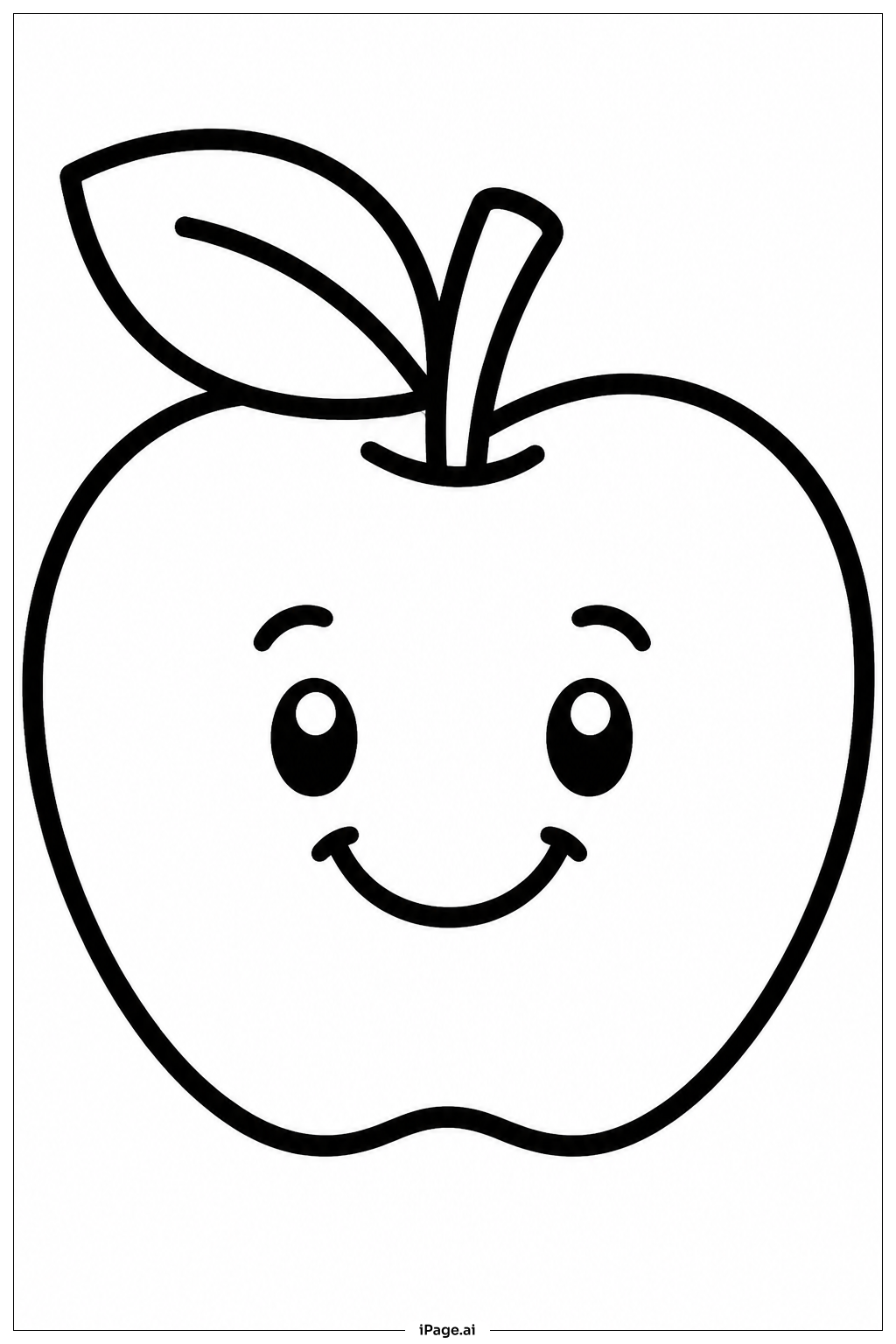
Start by coloring the apple's body with a bright red. You can make it look shiny by leaving a small white circle near the top — this gives the apple a glossy look. Try adding a slightly darker red along the edges to create depth and roundness. For the stem, use a warm brown. The leaf looks great in green — you can use two shades, a lighter green in the center and a darker green on the sides, to make it feel more real. Color the eyes with black or dark brown, and leave tiny white dots inside to make them look bright and alive. For the smile, use a simple dark brown or black outline. If you want to get creative, add a rosy pink blush on each cheek of the apple to make it look even more cheerful and cute. Keep the background light — a soft yellow or sky blue works well to make the apple stand out.
Coloring challenges: Which parts are difficult to color and need attention for Smiling Apple Fruit coloring page?
• Shading the Round Apple Body: The apple has a large, curved surface that can be tricky to shade evenly. To make it look three-dimensional, you need to apply darker red tones on the sides and bottom, and keep the top center lighter. Blending smoothly between light and dark areas without harsh lines takes practice and patience, especially for younger children.
• Coloring the Facial Features Neatly: The smiling face includes eyes and a curved mouth drawn within a small area of the apple. Staying inside the lines of these small features requires careful control, particularly when using markers or thick crayons. Colored pencils work best here to keep the details clean and precise.
• Keeping the Leaf Details Clean: The small leaf at the top of the apple has its own outline and veins. Filling in the leaf while keeping the stem separate requires a steady hand. Using two different shades of green inside the leaf can be challenging without accidentally blending into the stem or the apple body.
• Balancing Colors Across the Whole Image: Choosing colors that work well together — the red apple, brown stem, green leaf, and skin-toned or rosy cheeks — without making the image look too busy or unbalanced is a creative challenge. Picking colors that complement each other helps the final result look unified and appealing.
• Adding Highlights Without Special Tools: Creating a natural shiny highlight on the apple surface without white gel pens or special markers can be difficult. Leaving an uncolored white space on the page requires planning ahead before you begin coloring.
Benefits of coloring books: Advantages of drawing Smiling Apple Fruit coloring page
Coloring this Smiling Apple Fruit page offers a wide range of benefits for children and beginners alike. The friendly, expressive face on the apple immediately draws kids in, making the activity feel fun and engaging rather than like a task. As children choose colors and fill in the apple's body, stem, and leaf, they naturally develop fine motor skills and hand-eye coordination. Carefully staying within the bold outlines helps build pencil control, which supports handwriting development in younger children. The simple but playful design encourages creativity — kids can stick with realistic red tones or go wild with purple, rainbow, or fantasy colors, which builds confidence in self-expression. Coloring the facial features, like the eyes and smile, introduces children to basic concepts of proportion and detail work. The calm, focused nature of coloring also promotes mindfulness and emotional regulation, helping children relax and unwind. For parents and teachers, this image is a great conversation starter about healthy eating habits and the importance of fruits in our diet. Overall, this smiling apple is a joyful, rewarding coloring experience that blends creativity, skill-building, and a touch of nutrition education all in one cheerful page.