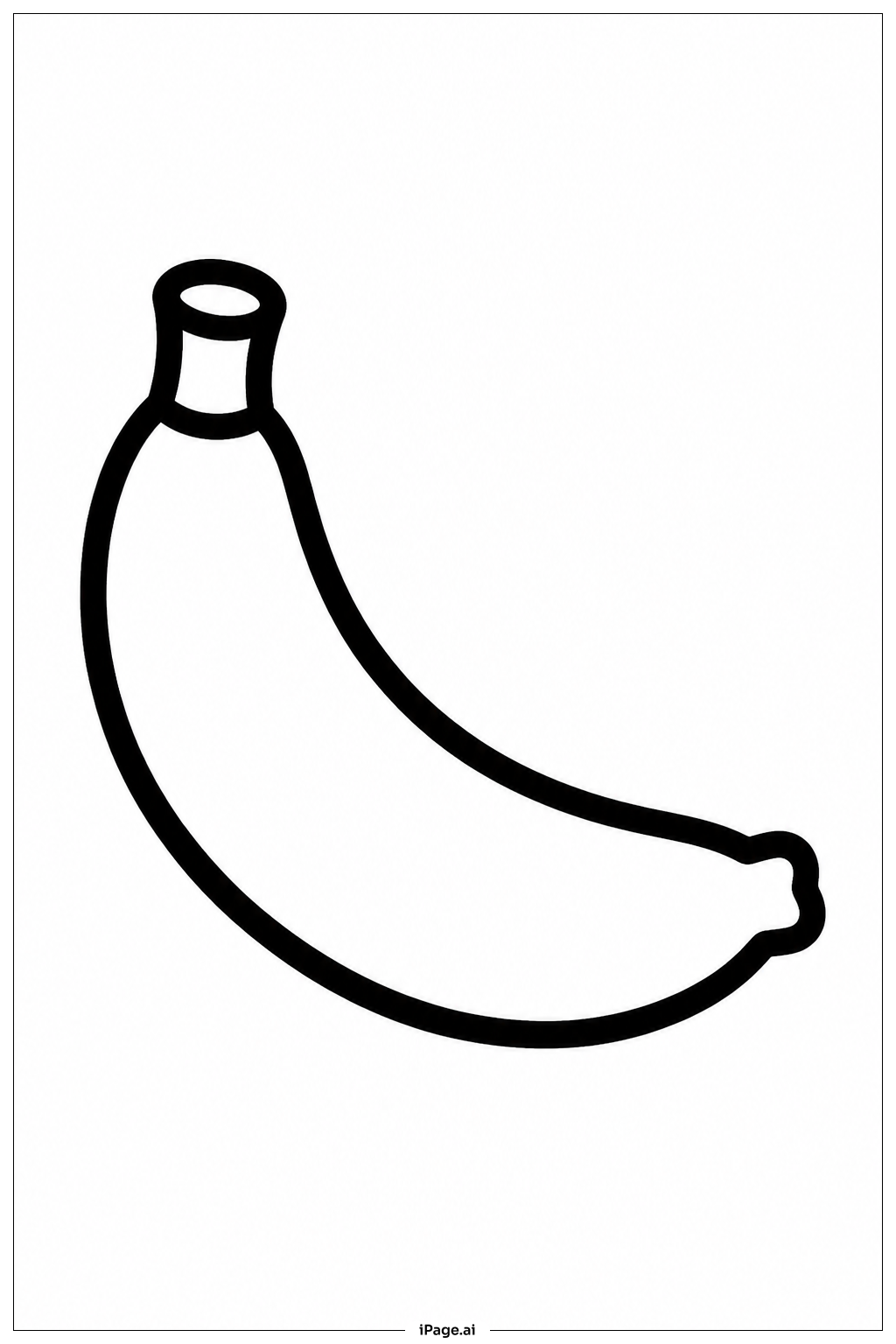
Coloring tips: How to color Single Banana Fruit coloring page well?
Start by coloring the main body of the banana with a bright, sunny yellow. You can use a lighter yellow or leave small white spots near the center to show that the banana is fresh and ripe. For the tips of the banana, use a darker brown or dark green to show the natural ends of the fruit. The stem at the top can be colored in light brown or tan. To make the banana look more three-dimensional, try adding a slightly deeper shade of yellow or orange-yellow along the edges and the curved underside. This helps show shadow and gives the fruit a round, full shape. Keep your strokes smooth and follow the curves of the banana for a natural look. If you want to make the image more fun, try adding a colorful background, like a bright blue sky or a soft green to suggest a tropical setting. There are no strict rules — just have fun with it!
Coloring challenges: Which parts are difficult to color and need attention for Single Banana Fruit coloring page?
• Achieving Smooth, Even Yellow Tones: The banana's large surface area requires consistent, smooth coloring to avoid streaks or uneven patches. Young colorists may find it tricky to fill such a broad, curved shape without leaving gaps or pressing too hard in some spots. Taking your time and using light, overlapping strokes in the same direction will help create a clean, even finish.
• Capturing the Natural Curve and Shape: The banana has a distinctive curved form, and following its outline closely while coloring can be challenging. It is important to stay within the bold lines and follow the natural flow of the shape. Rushing through this step can lead to colors going outside the outline, especially around the pointed tips.
• Adding Shading and Dimension: A flat yellow fill looks fine, but adding light and shadow makes the banana look more realistic and three-dimensional. Knowing where to place darker yellow or orange shading along the sides and underside takes some practice. Without shading, the banana may look flat and less lifelike.
• Coloring the Tips and Stem Accurately: The small dark tips at each end of the banana and the short stem at the top require careful attention and more controlled coloring. These areas are narrow, making it easy to go outside the lines or color them the wrong shade. Using a finely sharpened pencil or a thin marker works best for these small details.
• Balancing the Overall Color Composition: Choosing colors for a background or surrounding elements while keeping the banana as the clear focal point can be a fun but tricky challenge. The background color should complement the yellow of the banana without overpowering it.
Benefits of coloring books: Advantages of drawing Single Banana Fruit coloring page
Coloring this Single Banana Fruit page offers many wonderful benefits for children and beginners alike. First, it helps build fine motor skills. Carefully filling in the curved shape of the banana trains the hands and fingers to move with control and precision, which is great for young learners. Second, it improves focus and concentration. Staying within the lines and choosing the right colors encourages children to slow down, pay attention, and think carefully about what they are doing. Third, it teaches color recognition and creativity. Children learn about realistic fruit colors while also feeling free to experiment with their own color choices, boosting imagination and artistic confidence. Fourth, coloring is a calming and relaxing activity. It helps reduce stress and anxiety, giving kids a quiet, enjoyable way to unwind after a busy day. Fifth, completing a coloring page gives a sense of achievement. Finishing the banana and seeing the colorful result builds self-esteem and motivates children to keep creating. Overall, this simple and cheerful banana image is a great starting point for anyone exploring the joy of coloring.