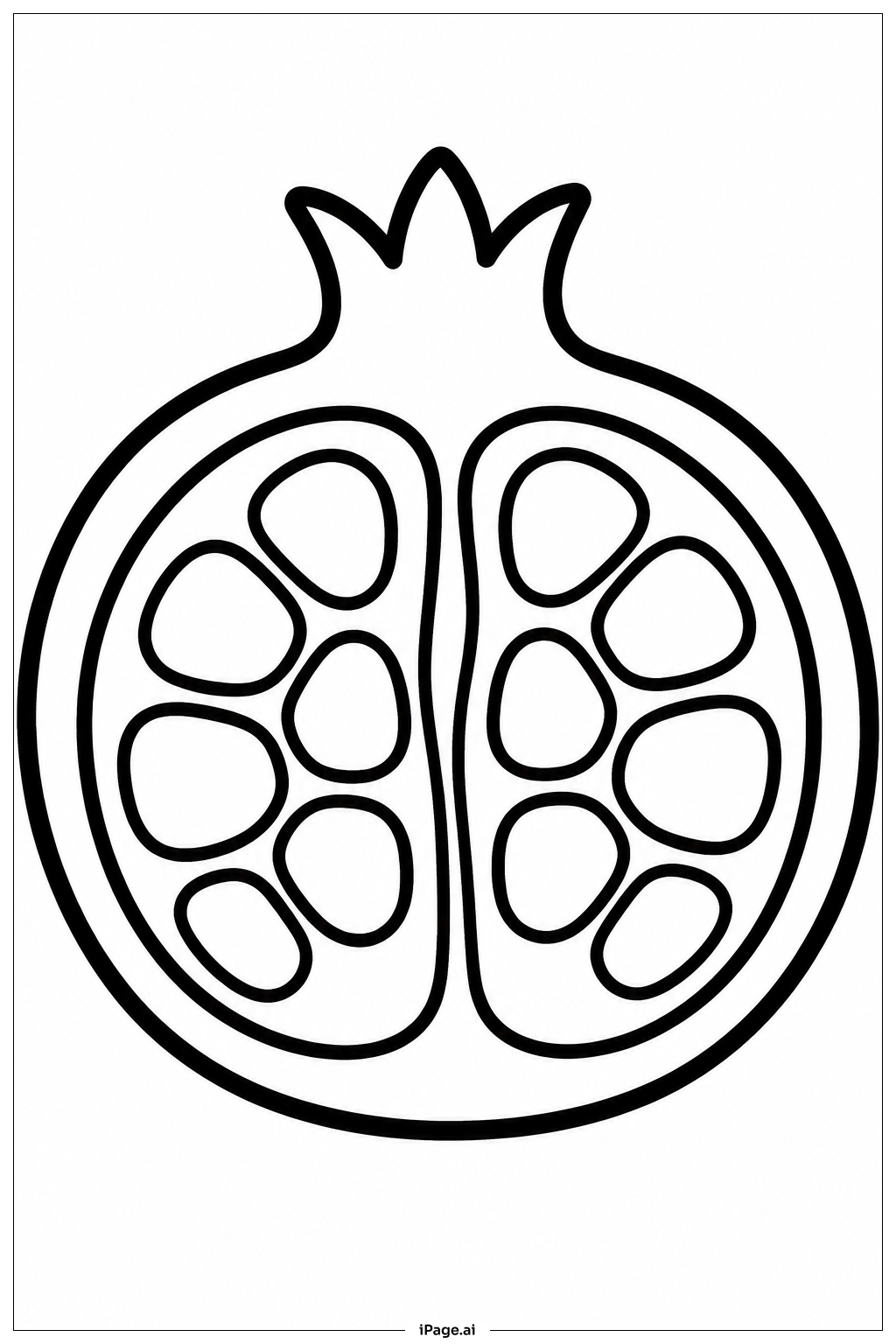
Coloring tips: How to color Pomegranate Half Fruit coloring page well?
Start with the outer skin of the pomegranate. Use a deep red or crimson for the rind to give it a rich, natural look. You can add a touch of orange or brown along the edges to show depth and texture.
For the inner membranes, try a pale yellow or light cream color. These thin walls separate the sections and help each part stand out clearly.
The arils — the small seed sacs — are the most fun part to color! Use bright ruby red or deep pink for most of them. You can also mix in a few lighter pink or even translucent white arils to make the inside look shiny and juicy.
The crown at the top of the fruit looks great in dark red or brown. Add a little shading to make it look three-dimensional.
Feel free to use colored pencils, crayons, or watercolors. Blending two shades of red on the arils can create a beautiful, gem-like effect. Take your time with each tiny section — the result will look amazing!
Coloring challenges: Which parts are difficult to color and need attention for Pomegranate Half Fruit coloring page?
Coloring a pomegranate half comes with several fun but tricky challenges. Here are the main ones to watch out for:
• Small Aril Details: The inside of the pomegranate is filled with dozens of tiny, round seed sacs called arils. Each one is small and closely packed together. Staying inside the lines for each individual aril takes a lot of patience and a fine-tipped coloring tool. Rushing this section can cause the colors to bleed into one another and lose the jewel-like effect.
• Thin Membrane Walls: The inner walls that separate the fruit sections are very narrow and delicate. Coloring them a different shade from the arils without accidentally overlapping takes a steady hand and careful control. Using a very sharp colored pencil or a fine marker works best here.
• Creating Depth and Dimension: The pomegranate rind has a thick, rounded shape. To make it look three-dimensional rather than flat, you need to apply darker shading along the edges and lighter tones toward the center. This technique, called shading, can be tricky for beginners but makes a huge difference in the final result.
• Consistent Color Across Arils: Because there are so many arils, keeping the color consistent across all of them while still adding subtle variation (lighter vs. darker areas) is a real challenge. Planning your color choices before you start helps a lot.
• Balancing the Overall Composition: The outer skin and inner sections need to look like they belong together. Choosing colors that complement each other — like deep red skin with bright ruby arils and cream membranes — requires a little color planning to keep the image looking balanced and natural.
Benefits of coloring books: Advantages of drawing Pomegranate Half Fruit coloring page
Coloring a pomegranate half is a wonderful activity with many great benefits for kids and adults alike.
For younger children, coloring the tiny arils and detailed sections helps build fine motor skills and hand-eye coordination. Carefully staying inside small shapes trains the fingers and builds the control needed for writing and drawing.
The repeating patterns inside the pomegranate make it a great image for practicing focus and patience. Finishing each small section one at a time teaches kids to work steadily toward a bigger goal — a skill that helps in school and everyday life.
Choosing colors for the fruit encourages creative thinking. Kids learn about color mixing, shading, and how to make something look realistic or imaginative. There are no wrong choices, so it builds confidence too.
For older children and adults, the detailed structure of the pomegranate makes it a relaxing and meditative coloring experience. Focusing on small, repetitive shapes can help reduce stress and calm a busy mind.
Learning about the pomegranate while coloring it also sparks curiosity about nature, food, and science. It is a simple way to connect art with the natural world. Overall, this coloring page is both enjoyable and enriching for colorists of all ages and skill levels.