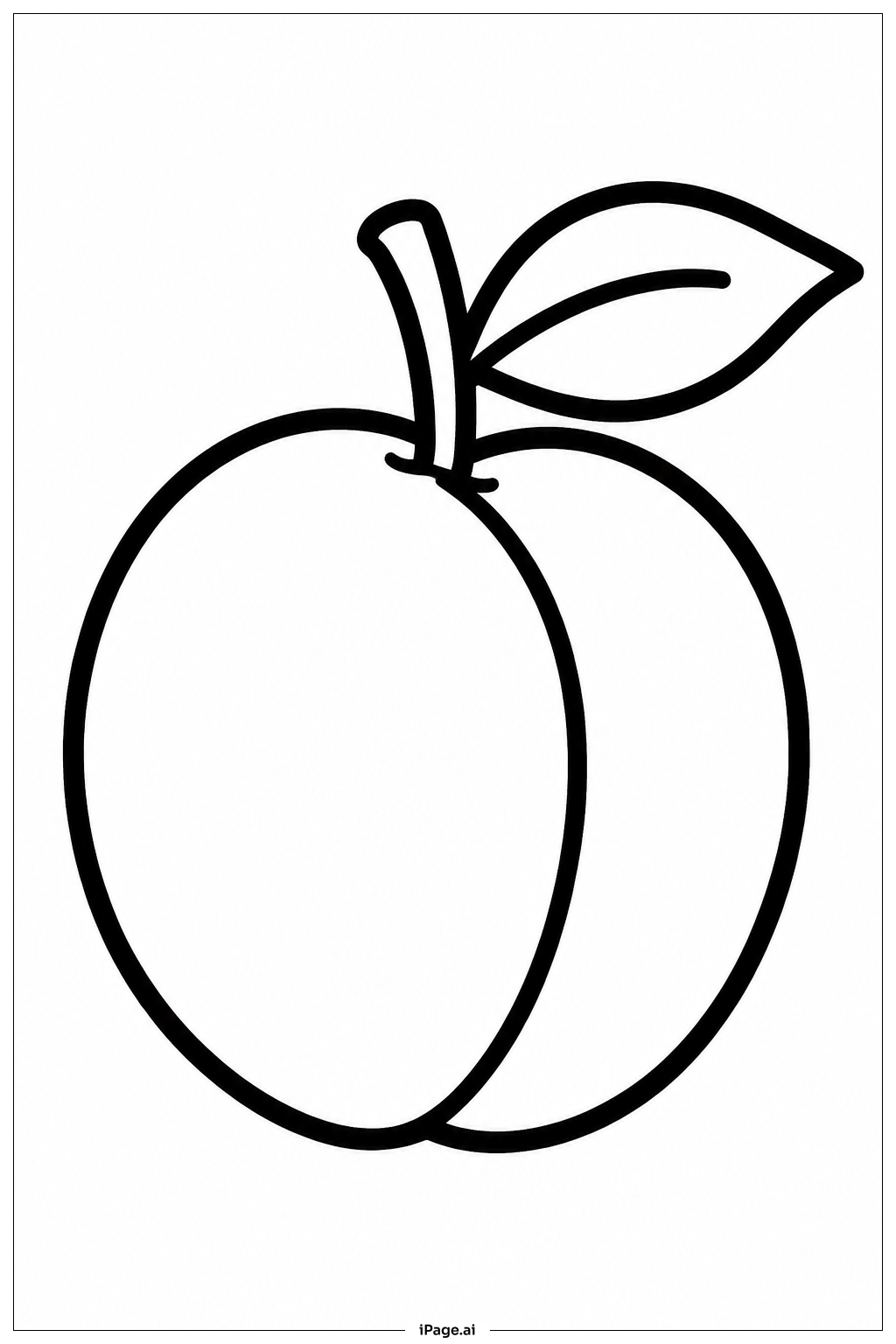
Coloring tips: How to color Plum Fruit coloring page well?
Start with the plum's body by using deep purple or dark violet as your base color. You can add a lighter shade of lavender or pink on one side to show where light hits the fruit, giving it a round, three-dimensional look. Leave a small white spot near the top to suggest a shiny surface. For the stem, use a warm brown or dark tan color. The leaf works beautifully in medium or dark green. Color the leaf veins in a slightly lighter or darker shade of green to make them stand out. If you want a more creative look, try using red-purple or blue-purple tones on the plum. Younger kids can keep it simple with a single flat purple color, while older kids can experiment with blending and shading to make the fruit look juicy and real.
Coloring challenges: Which parts are difficult to color and need attention for Plum Fruit coloring page?
• Shading the Plum's Curved Surface: Plums have a smooth, round body that looks best when colored with gradual shading. Showing the transition from dark purple on the edges to lighter lavender or pink in the center can be tricky, especially for younger colorists who are still learning how to blend colors smoothly without leaving visible streaks or hard lines.
• Capturing the Shiny Highlight: One of the most recognizable features of a plum is its glossy skin. Leaving a small, well-placed white spot to represent the light reflection requires careful planning before you start coloring. Coloring over that spot by accident makes it very difficult to fix, especially when using markers or crayons.
• Coloring the Stem Neatly: The stem is a small, narrow shape that sits at the top of the plum. Staying inside such a tiny area without letting color bleed into the fruit or background takes a steady hand and a fine-tipped tool. This detail can be frustrating for younger children who are still developing fine motor control.
• Detailing the Leaf Veins: The leaf contains a central vein and several smaller branching veins. Coloring around these lines without covering them up requires patience and precision. Using two slightly different shades of green for the leaf body and the veins helps them stand out, but choosing and applying two close shades neatly adds an extra layer of difficulty.
• Keeping Color Within the Outlines: For beginners, staying inside the bold outlines of both the plum and the leaf while switching between multiple colors is a consistent challenge that improves with practice and focus.
Benefits of coloring books: Advantages of drawing Plum Fruit coloring page
Coloring this plum fruit page offers a wonderful range of benefits for children of all ages. For younger kids, tracing and filling in the smooth curves of the plum helps build fine motor skills and hand-eye coordination. Learning to stay within the outlines strengthens pencil control, which directly supports early writing development.
Choosing colors for the plum, stem, and leaf encourages creative thinking and decision-making. Kids learn about color relationships, like how light and dark shades of purple can work together to make a shape look round and real. This builds early understanding of color theory in a fun, hands-on way.
Focusing on a single image from start to finish also helps children practice concentration and patience. Completing the page gives them a satisfying sense of achievement that boosts confidence and self-esteem.
For older kids, the challenge of shading and highlighting the plum's surface turns this into a genuine artistic exercise. It teaches them to observe how light falls on objects in real life and then translate that observation into their artwork.
Beyond skills, coloring is simply a calming and enjoyable activity. It gives children a healthy creative outlet, reduces stress, and encourages a love of art that can last a lifetime.