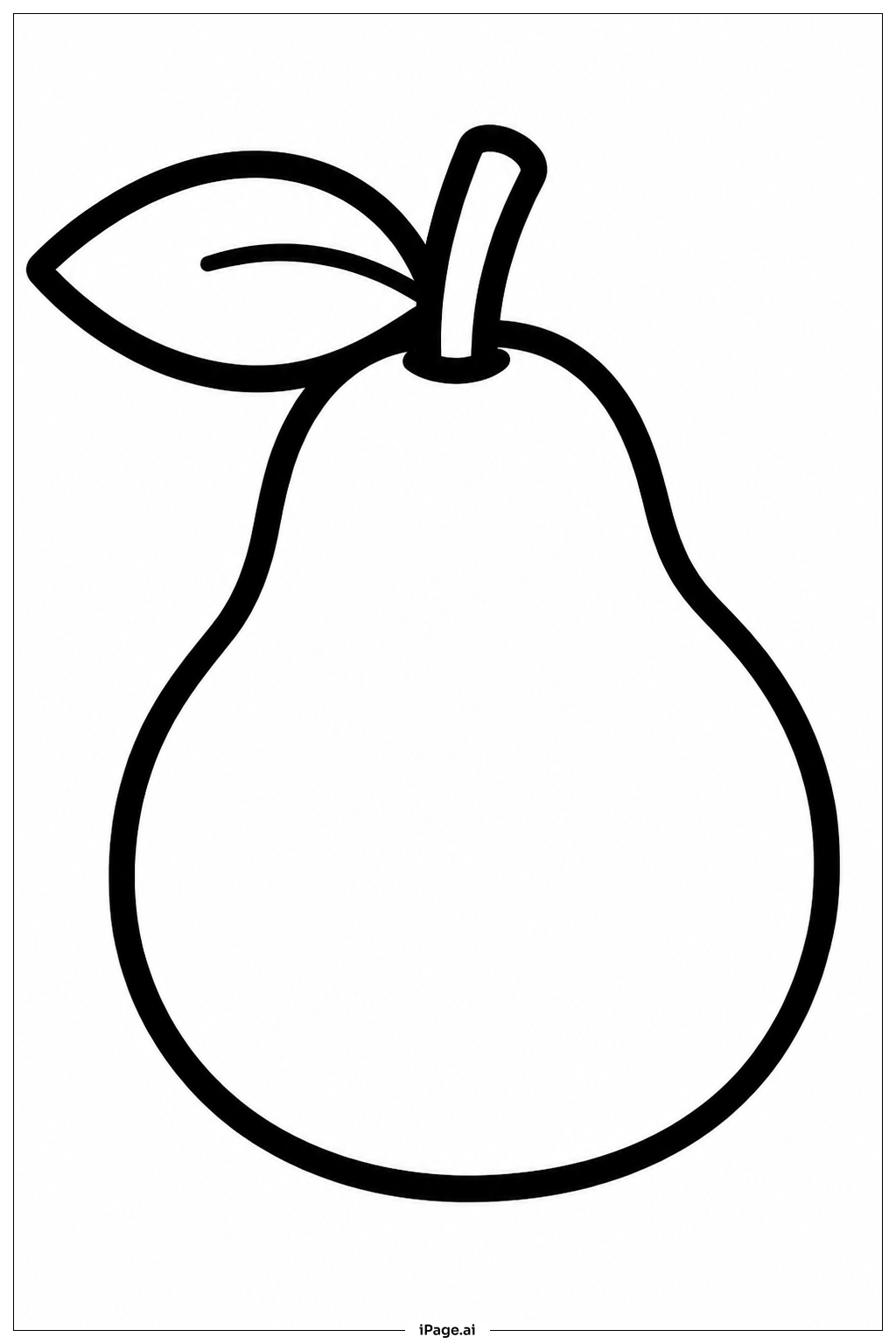
Coloring tips: How to color Pear With Leaf Fruit coloring page well?
Start with the pear's body using a soft yellow or light green. You can add a warm golden-yellow on one side to show where sunlight hits the fruit. Blend in a touch of orange or rosy pink near the bottom for a realistic, ripe look. For the leaf, use medium green as your base color. Add darker green along the edges and in the shadow areas near the stem to give the leaf depth. Use a lighter green or yellow-green to highlight the center vein and the areas closest to the light source. The stem looks great in a warm brown or tan color. If you want a fun, creative twist, try coloring the pear in unexpected shades like purple, red, or blue to make it pop. Young colorists can keep things simple with flat, bold colors, while older kids can practice blending and shading to make the fruit look juicy and real.
Coloring challenges: Which parts are difficult to color and need attention for Pear With Leaf Fruit coloring page?
• Blending Colors on the Pear's Body: The pear has a smooth, curved surface that looks best when colors transition gradually from light to dark. Achieving a natural gradient — such as going from pale yellow to golden orange — can be tricky for younger colorists. It takes patience to layer colors gently without pressing too hard or leaving harsh lines between shades.
• Leaf Vein Details: The leaf includes a network of fine veins branching outward from the center. Coloring around these thin lines without accidentally covering them requires careful control of the coloring tool. Younger children may find it helpful to use a fine-tipped marker or a sharpened colored pencil to stay within the narrow spaces between veins.
• Creating Depth and Shadow: The natural curves of both the pear and the leaf create areas of light and shadow. Showing this depth means using at least two or three tones of the same color — light, medium, and dark. Understanding where to place shadows (usually the underside and shaded side) and highlights (the top or side facing the light) is a concept that takes practice to master.
• Staying Within Clean Outlines: The pear and leaf edges have smooth, flowing curves. Coloring neatly along these rounded outlines without going outside the lines can be challenging, especially at the narrow top near the stem and at the pointed tip of the leaf. Slow, careful strokes work best in these areas.
• Stem Proportion: The stem is small and narrow compared to the rest of the image. Fitting color into this tiny section without smudging the surrounding areas requires a steady hand and a fine-tipped tool.
Benefits of coloring books: Advantages of drawing Pear With Leaf Fruit coloring page
Coloring this pear image offers a wonderful range of benefits for children of all ages. First, it helps build fine motor skills. Carefully coloring within the smooth curves of the pear and the delicate leaf trains hand muscles and improves pencil control, which is great preparation for handwriting. Second, it encourages color awareness and creativity. Choosing colors for the pear, leaf, and stem teaches children about natural colors found in the real world, while also giving them freedom to experiment with imaginative combinations. Third, the activity supports focus and patience. Taking time to blend shades and fill in the small vein details helps children practice sitting with a task and working through it carefully. Fourth, it introduces basic concepts of light and shadow in a fun, hands-on way. Children learn how adding a darker shade on one side of the pear makes it look round and three-dimensional. Finally, completing the finished image gives a strong sense of achievement and pride, which boosts confidence and motivates continued creative practice. It is a calm, screen-free activity that nurtures both artistic skill and emotional well-being.