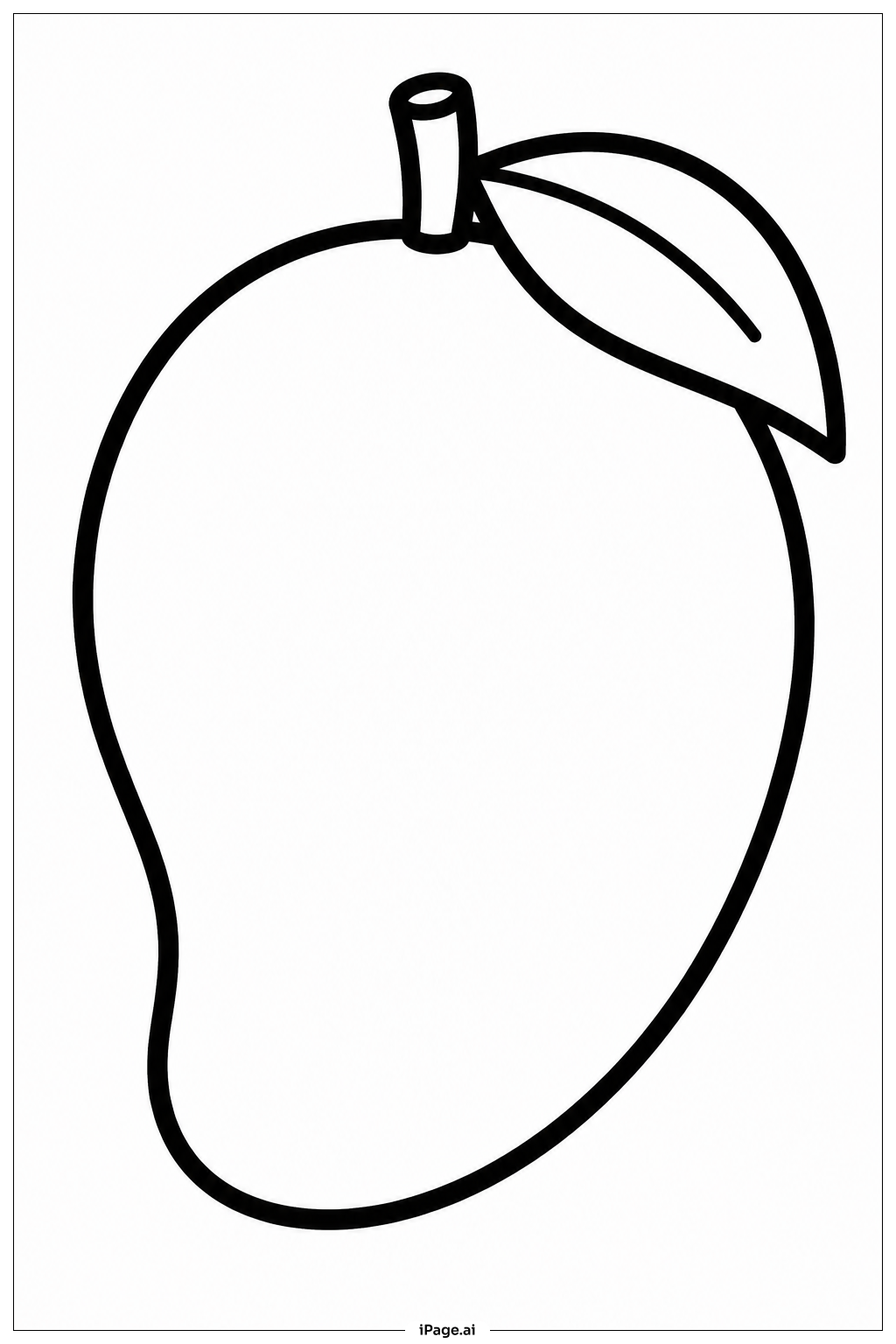
Coloring tips: How to color Mango Fruit coloring page well?
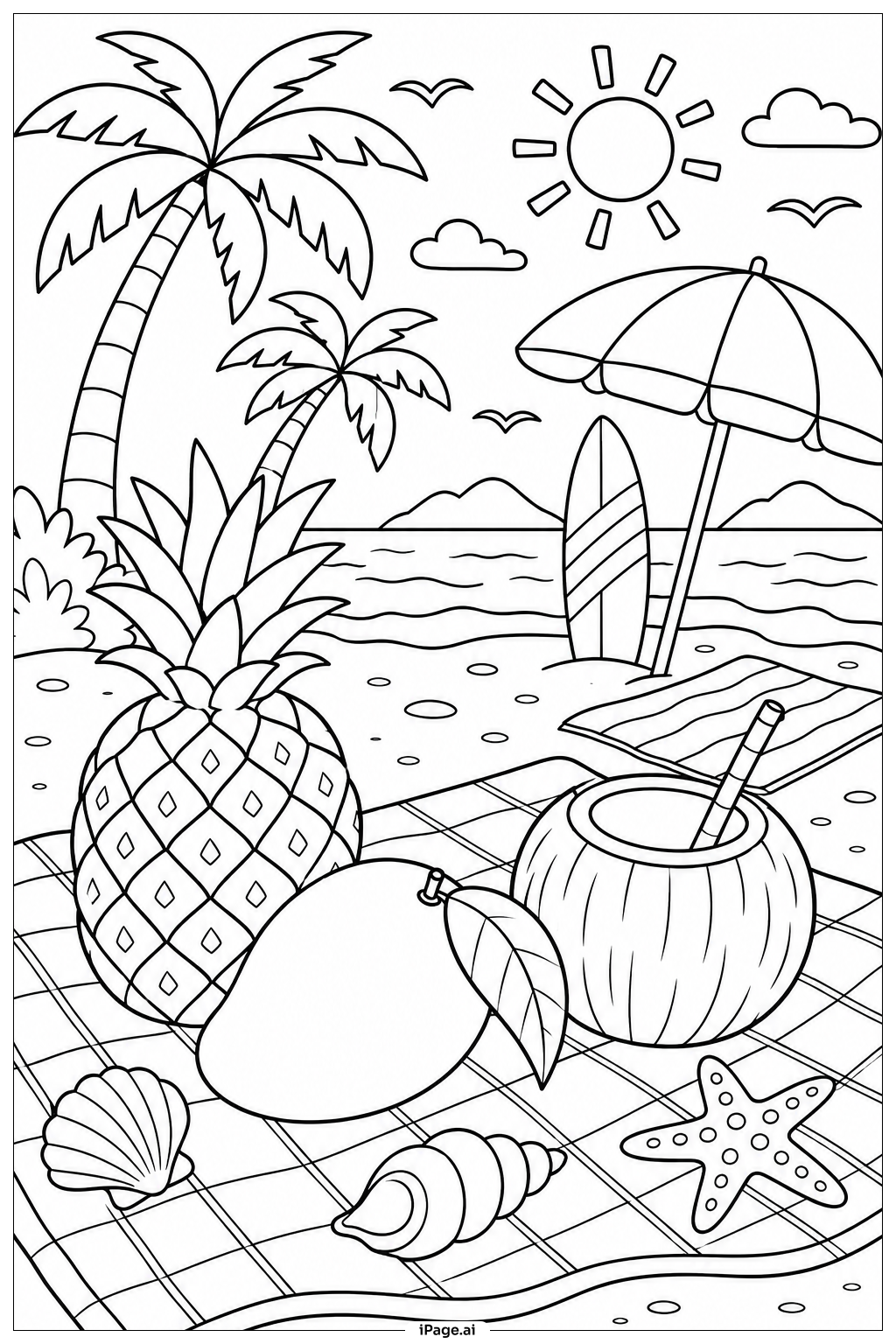
Start with the mango body using shades of yellow, orange, and red. Mangos are famous for their warm, gradient colors, so try blending yellow at the center and adding orange or red near the edges for a sun-ripened look. Use a deep golden yellow as your base, then layer light orange on top, and add touches of red or pink on one side to show where the sun kissed the fruit. For the stem, use a short stroke of dark brown. The leaf looks great in bright green, with a slightly darker green along the edges and veins to give it depth. If you want a fun twist, try coloring the mango in a light green to show an unripe fruit. Keep your strokes smooth and follow the rounded shape of the mango for a natural finish.
Coloring challenges: Which parts are difficult to color and need attention for Mango Fruit coloring page?
• Color Gradients on the Mango Skin: One of the biggest challenges is blending multiple colors smoothly across the mango's surface. A real mango often shows yellow, orange, and red all at once. Transitioning between these colors without harsh lines takes practice and patience. Try layering colors lightly and blending with circular motions or a blending tool.
• Staying Within the Curved Outlines: The mango has a large, smooth, curved body. Keeping color neatly inside these gentle curves can be tricky, especially near the top and bottom where the shape narrows. Younger colorists may find it helpful to outline the edges with their chosen color first before filling in the middle.
• Adding Depth to a Round Shape: Making the mango look three-dimensional on a flat page is a real challenge. The key is shading — leaving a small area lighter (the highlight) and darkening the sides and bottom. Without this contrast, the fruit can look flat. Using a white colored pencil or simply leaving a small spot uncolored can help create the illusion of a shiny surface.
• Coloring the Leaf Veins: The leaf attached to the stem has fine vein lines running through it. Coloring around these tiny details requires a sharp pencil and a steady hand. If the veins are left white, they create a nice natural contrast. Alternatively, coloring them in a slightly darker green can make the leaf look more realistic.
• Stem Proportion: The stem is small and narrow compared to the large mango body. Using too much pressure or a thick marker can easily cover it up. A fine-tipped tool works best here to keep the stem visible and neat.
Benefits of coloring books: Advantages of drawing Mango Fruit coloring page
Coloring this Mango Fruit page offers a wonderful mix of fun and learning for kids of all ages. Here are some great benefits:
Learning About Nature: Kids get to explore what a real tropical fruit looks like, building their knowledge of the natural world in a hands-on, enjoyable way.
Color Mixing Skills: Blending yellow, orange, and red to create a realistic mango teaches children how colors work together. This is a great early introduction to color theory.
Fine Motor Development: Carefully coloring within the rounded curves and around the small leaf details helps children strengthen the hand muscles they need for writing and other precise tasks.
Focus and Patience: Completing the full illustration from the fruit to the leaf and stem encourages children to slow down, concentrate, and finish what they start — a valuable habit for school and everyday life.
Creative Expression: There are no strict rules here. A child can make their mango any color they like, giving them the freedom to express their imagination and build confidence in their creative choices.
Relaxation and Calm: Coloring is a naturally calming activity. The simple, satisfying act of filling in a familiar fruit shape can help reduce stress and create a sense of peaceful focus, even for young kids.