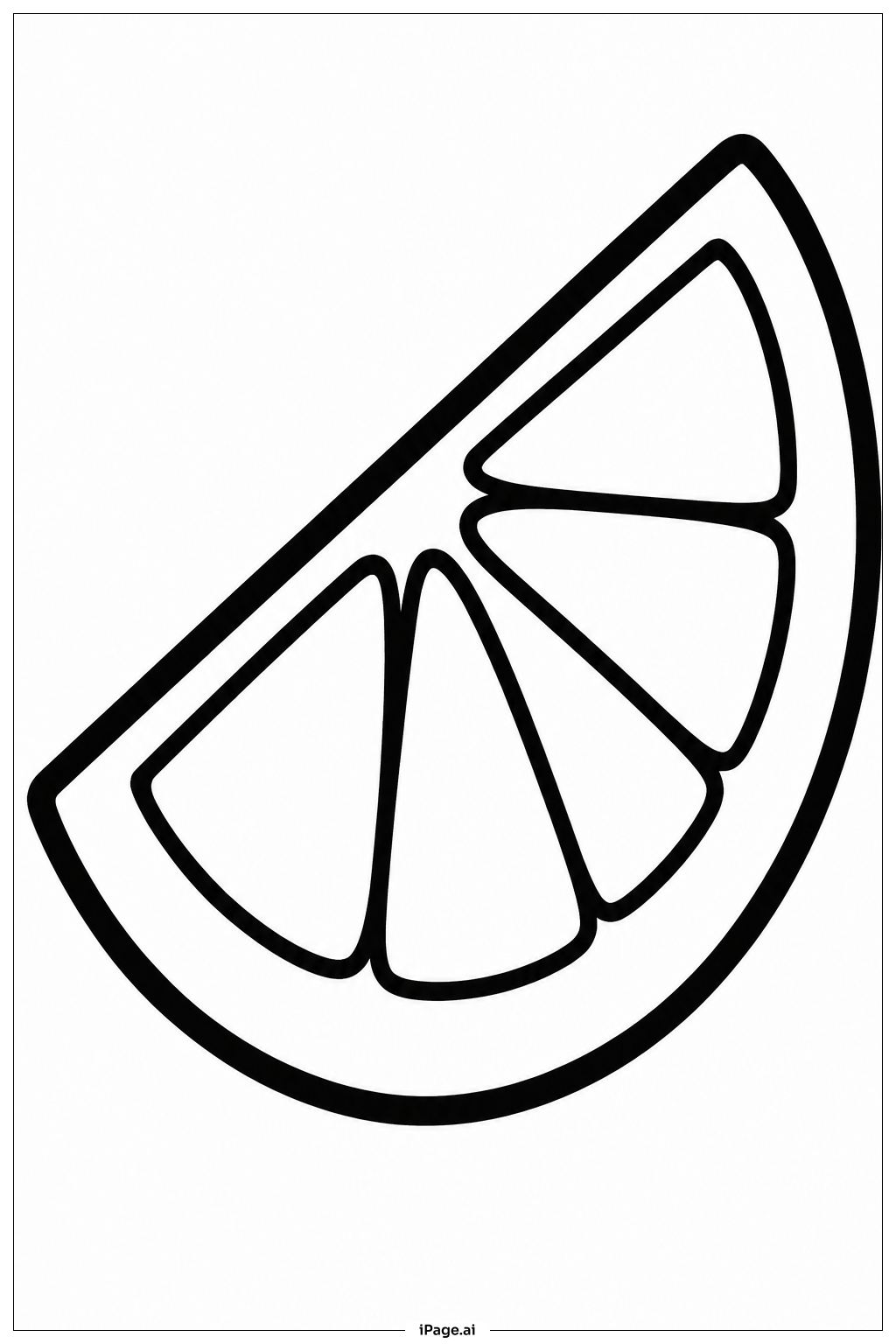
Coloring tips: How to color Lemon Wedge Fruit coloring page well?
Start with the outer rind and color it bright yellow. Use a slightly darker yellow or yellow-orange along the curved edge to add depth. The white pith just inside the rind can stay very light — a pale cream or soft white works well. For the juicy inner flesh, use a warm lemon yellow. Try adding a slightly deeper yellow along the membrane lines to make each segment pop. The tiny juice cells inside each segment can be colored with a lighter, almost golden yellow to give a fresh, glossy look. If you want the lemon to look extra juicy, leave small white spots on the flesh to mimic light reflections. Keep your strokes smooth and even for a clean finish. This is a great image for beginners — the sections are clearly outlined, so it is easy to stay within the lines and have fun experimenting with shades of yellow.
Coloring challenges: Which parts are difficult to color and need attention for Lemon Wedge Fruit coloring page?
• Rind Texture Detail: The outer rind has a bumpy, pitted surface that requires careful attention. Filling this area evenly without smudging into the pith layer takes patience, especially for younger colorists. Using a sharp pencil tip or a fine marker helps keep the texture looking neat and distinct from the smoother inner layers.
• Pith Layer Separation: The thin white pith sits between the rind and the flesh. Keeping this area clean and separate from both the yellow rind and the yellow flesh is tricky because all three zones sit very close together. Choosing a pale cream shade and coloring lightly helps define this layer without blending it into the surrounding sections.
• Membrane Lines and Segments: The inner flesh is divided by thin membrane lines radiating outward from the tip. Coloring each segment individually without crossing over these fine lines requires a steady hand. Using a lighter touch near the borders of each segment and filling toward the center reduces the chance of bleeding over the lines.
• Juice Cell Details: Each segment is filled with small teardrop-shaped juice cells. These tiny shapes are the hardest part of the image. Coloring them with precision calls for a very fine tool. For younger children, it is perfectly fine to color over them as part of the overall flesh area rather than coloring each cell individually.
• Consistent Yellow Tones: The entire lemon is built around shades of yellow, which means the challenge is creating visible contrast using only a narrow color range. Layering light and slightly deeper yellows, or adding a touch of green to the rind edge, keeps the image from looking flat.
Benefits of coloring books: Advantages of drawing Lemon Wedge Fruit coloring page
Coloring this lemon wedge page brings a range of great benefits for kids and beginners alike. Working with the clearly outlined sections helps children practice staying within the lines, which builds fine motor skills and hand control over time. Because the image is built around a single fruit slice, it is simple enough to feel rewarding but detailed enough to keep things interesting.
Choosing the right shades of yellow to show the rind, pith, and flesh teaches kids about color variation and how small changes in tone can make a drawing look more realistic. This builds early color theory awareness in a fun, low-pressure way.
The repetitive motion of filling in segments and juice cells is also calming and meditative. It helps children focus, slow down, and practice patience — skills that carry over into school and daily life.
Learning about the parts of a lemon while coloring it connects art with basic science and nature. Kids can talk about where lemons grow, what they taste like, and how they are used in cooking, turning a simple coloring activity into a small learning moment.
Overall, this page is a fun, accessible, and genuinely educational activity for children of all skill levels.