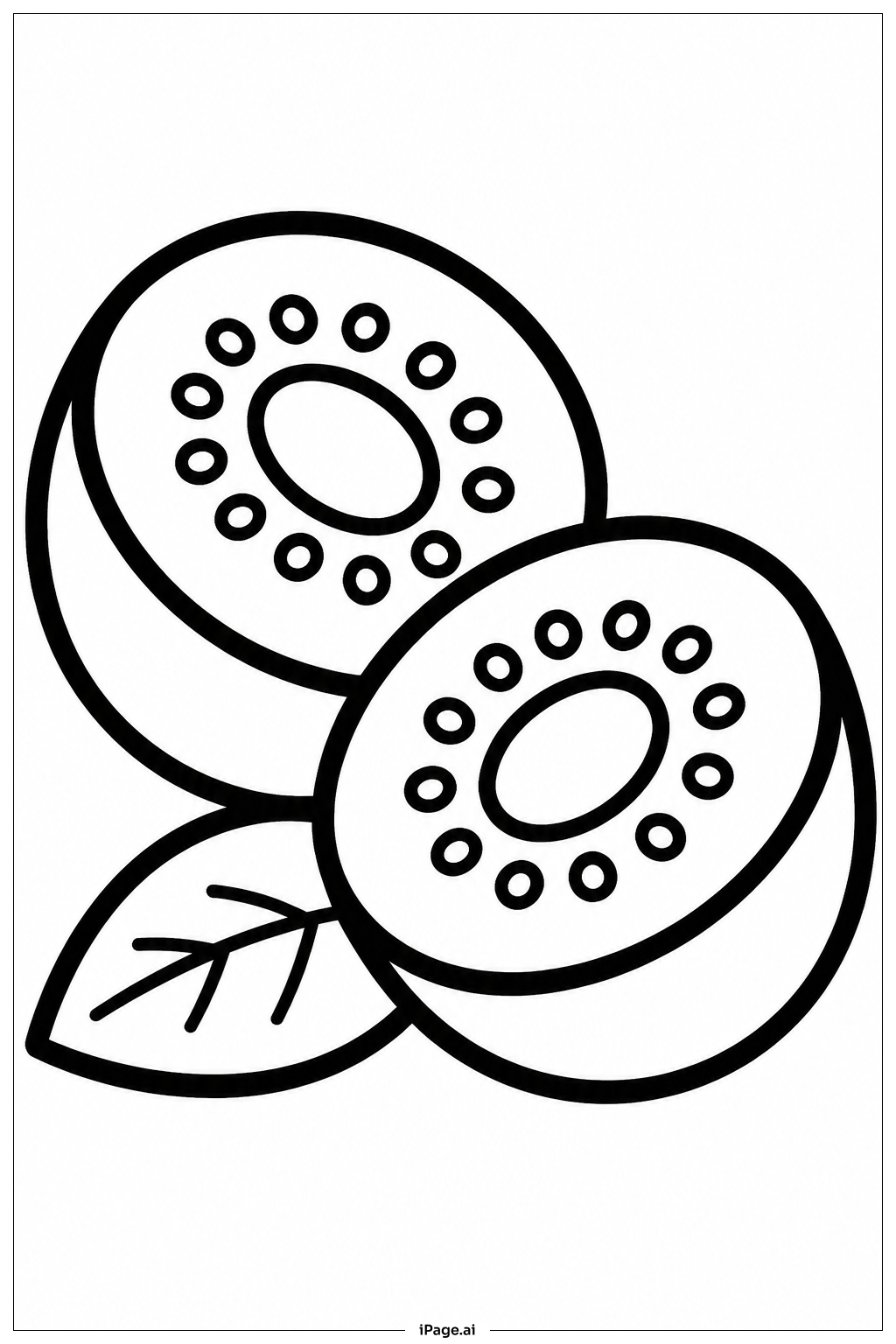
Coloring tips: How to color Kiwi Halves Fruit coloring page well?
Start by coloring the outer skin of the kiwi a warm brown or tan color. Use a slightly darker shade for the rough, fuzzy texture along the edge. For the flesh, choose a bright lime green or yellow-green. Color the area near the core a lighter, almost white or pale yellow tone to show where the fruit is softer. The tiny seeds can be colored dark brown or black. Use a small, fine-tipped marker or colored pencil for the seeds so they stay neat. The core in the very center can be a creamy white or soft yellow. Try blending two shades of green — lighter near the center and darker toward the skin — to make the fruit look juicy and real. This image is great for practicing smooth, careful coloring within small spaces.
Coloring challenges: Which parts are difficult to color and need attention for Kiwi Halves Fruit coloring page?
• Tiny Seed Details: The kiwi has many small seeds arranged in a circular pattern around the core. Each seed is very small and closely spaced. Coloring each one individually without going outside the lines takes a steady hand and a sharp pencil tip. Young colorists may find this section the most challenging part of the whole image.
• Smooth Flesh Gradient: The inner flesh of the kiwi looks best when colored with a gradual shift from light near the core to a deeper green toward the skin. Creating this smooth transition — called a gradient — is tricky, especially with crayons. It works better with colored pencils or watercolors, and requires gentle layering and blending.
• Fuzzy Skin Texture: The outer skin of the kiwi is not perfectly smooth. It has a rough, slightly hairy texture. Capturing this look with coloring tools requires short, irregular strokes rather than flat, even coloring. Getting this right takes patience and practice.
• Radiating Line Patterns: Fine lines extend outward from the core to the skin, dividing the flesh into sections. These lines are thin and delicate. Coloring carefully around them without accidentally covering them is important. If these lines disappear under color, the image loses its natural look.
• Keeping Symmetry Between Two Halves: Since the image shows two kiwi halves side by side, keeping the colors consistent between both halves adds to the visual appeal. Using the same color choices and pressure on both sides helps create a balanced, satisfying finished piece.
Benefits of coloring books: Advantages of drawing Kiwi Halves Fruit coloring page
Coloring this kiwi halves image offers many great benefits for kids and beginners alike. First, it helps build fine motor skills. The small seeds and thin lines require careful, precise movements that strengthen the small muscles in your hands and fingers. This is great practice for writing and drawing too.
Second, it teaches children about nature and healthy food. As they color the kiwi, kids learn what the inside of a real fruit looks like. This can spark curiosity about fruits, nutrition, and the natural world around them.
Third, this image encourages creativity. There is no single right way to color it. Kids can use realistic green tones or explore imaginative colors like purple, blue, or rainbow shades. Making their own color choices builds confidence and self-expression.
Fourth, focusing on the detailed patterns of the kiwi helps improve concentration and patience. Completing a detailed image gives a real sense of achievement and boosts self-esteem.
Finally, coloring is a calming, screen-free activity. It helps children relax, reduce stress, and enjoy a quiet, creative moment. This simple fruit coloring page is a wonderful way to combine fun, learning, and mindfulness all at once.