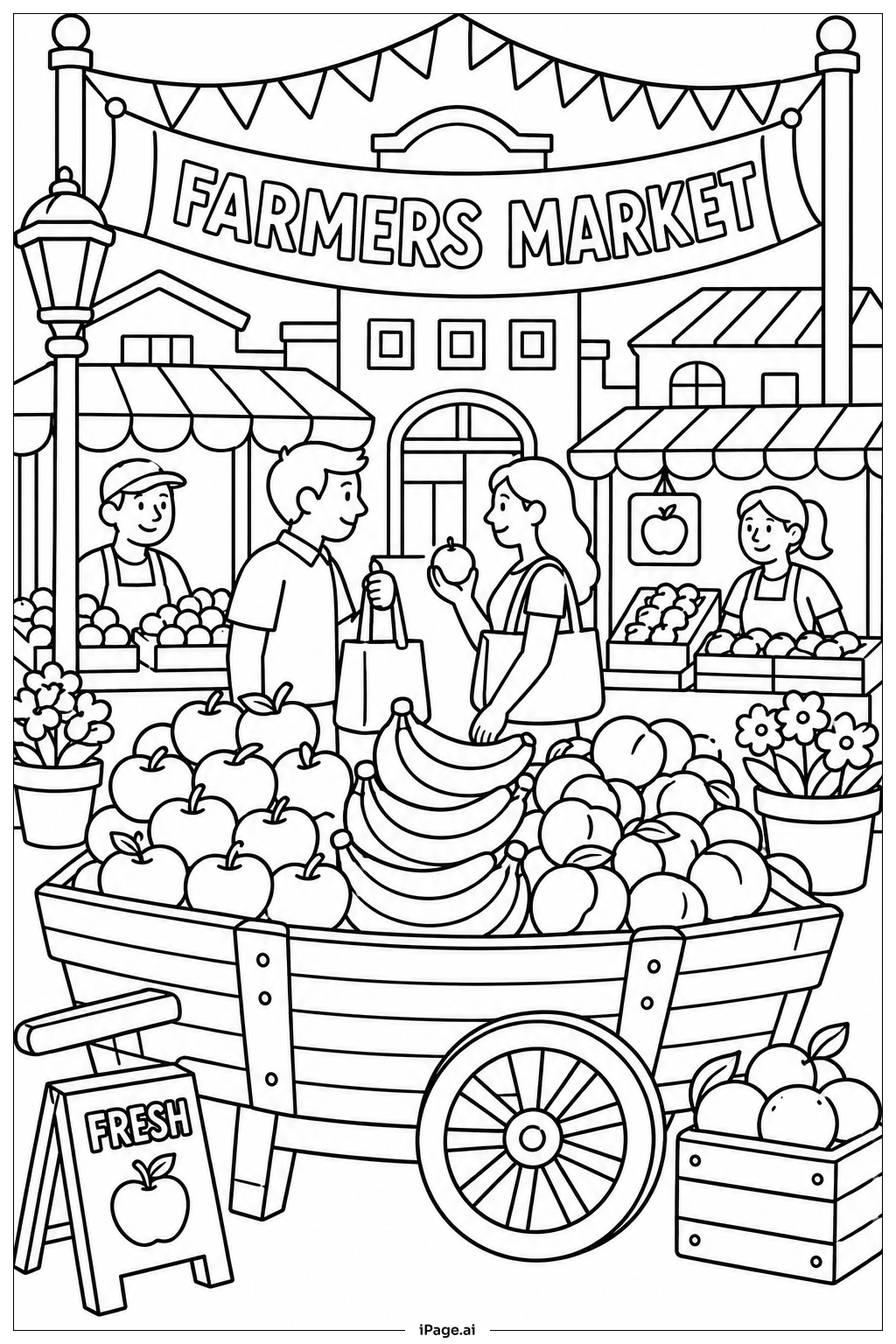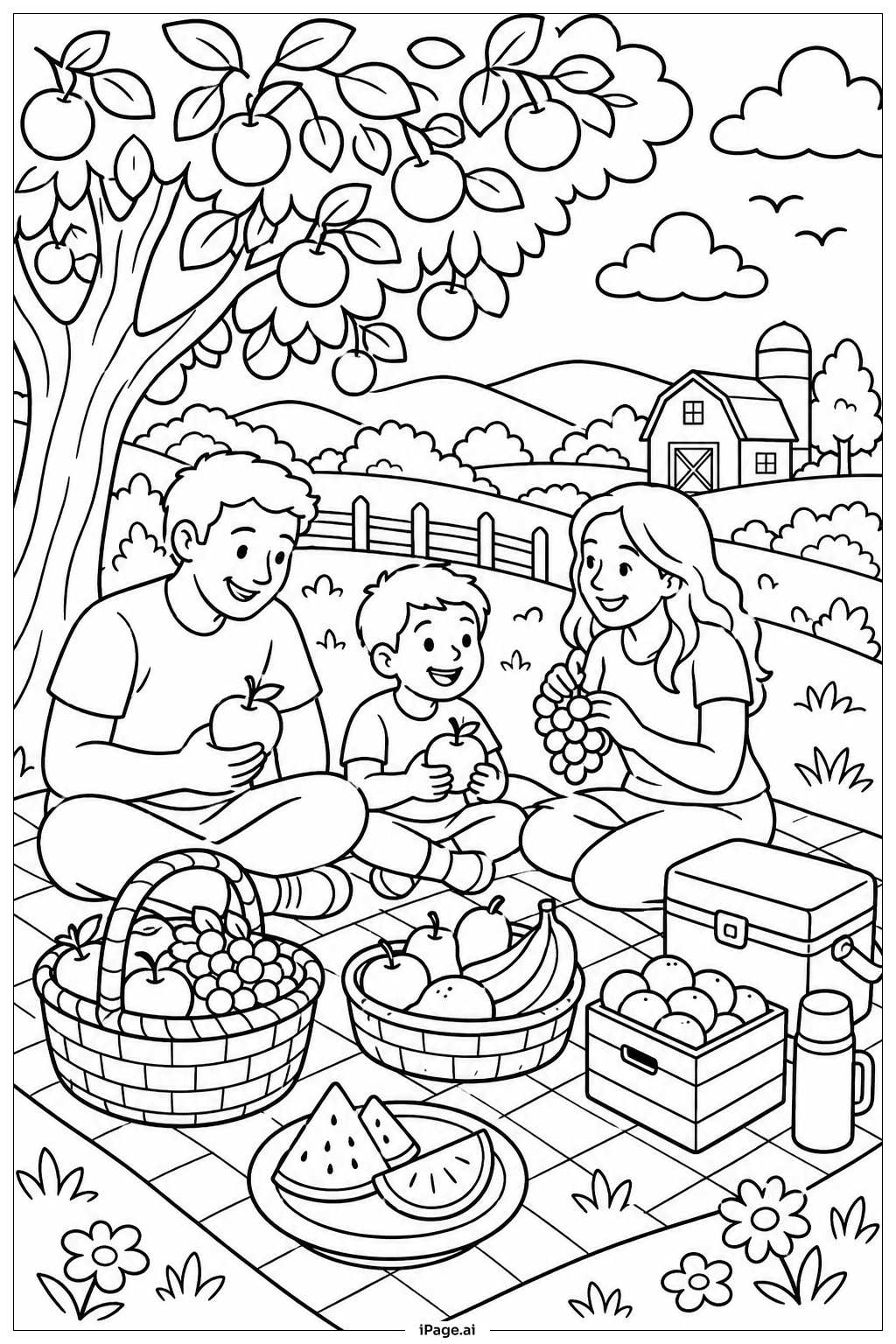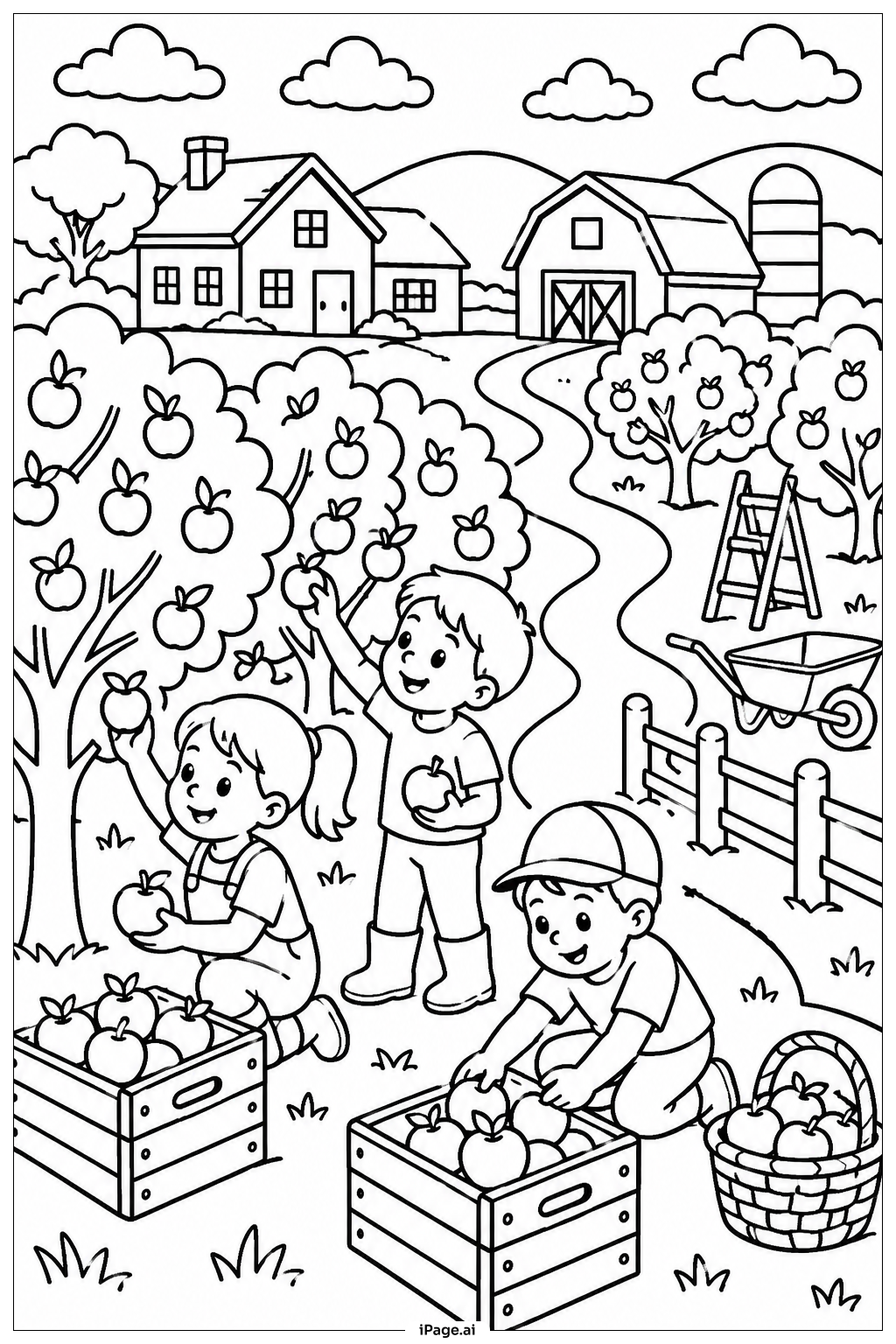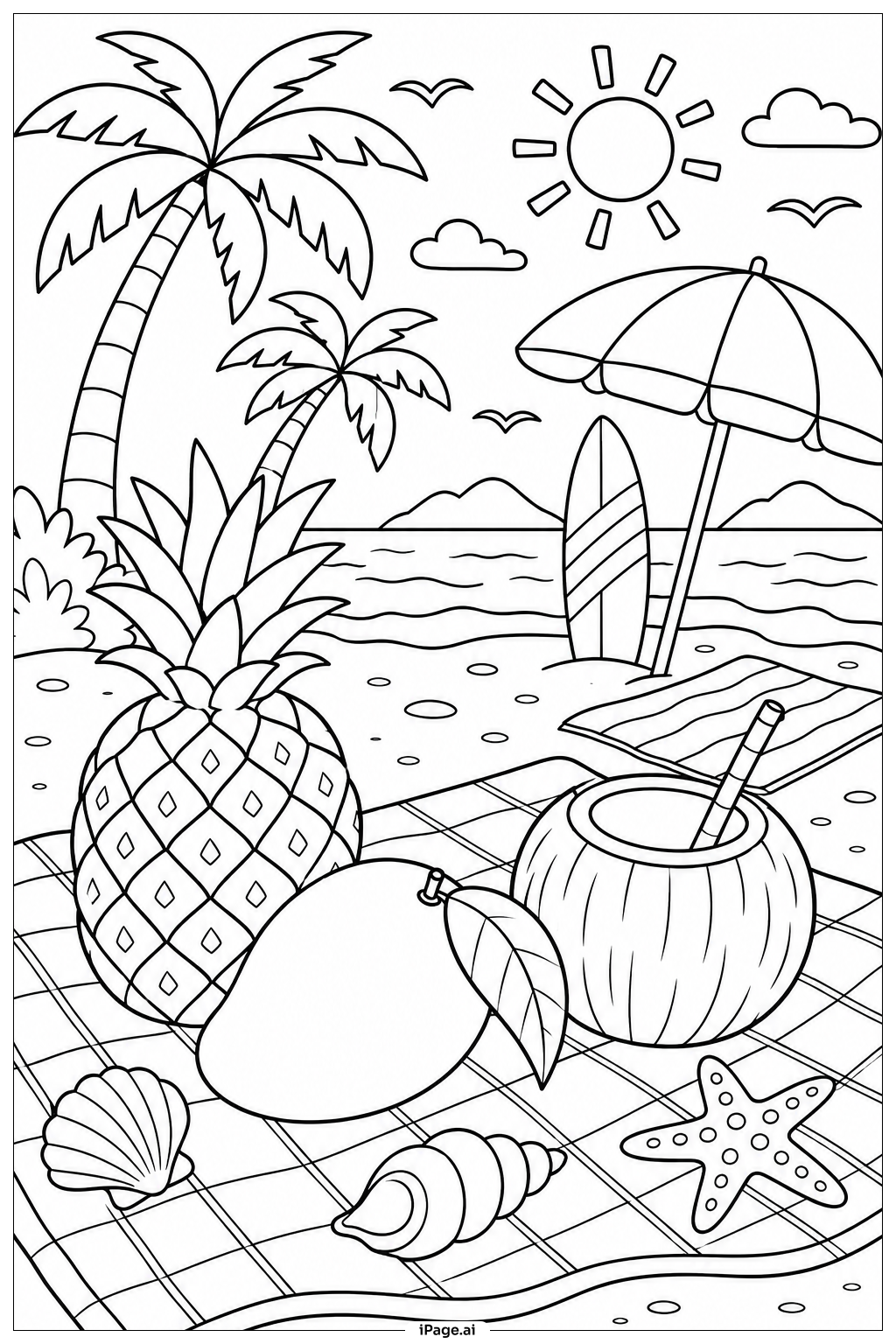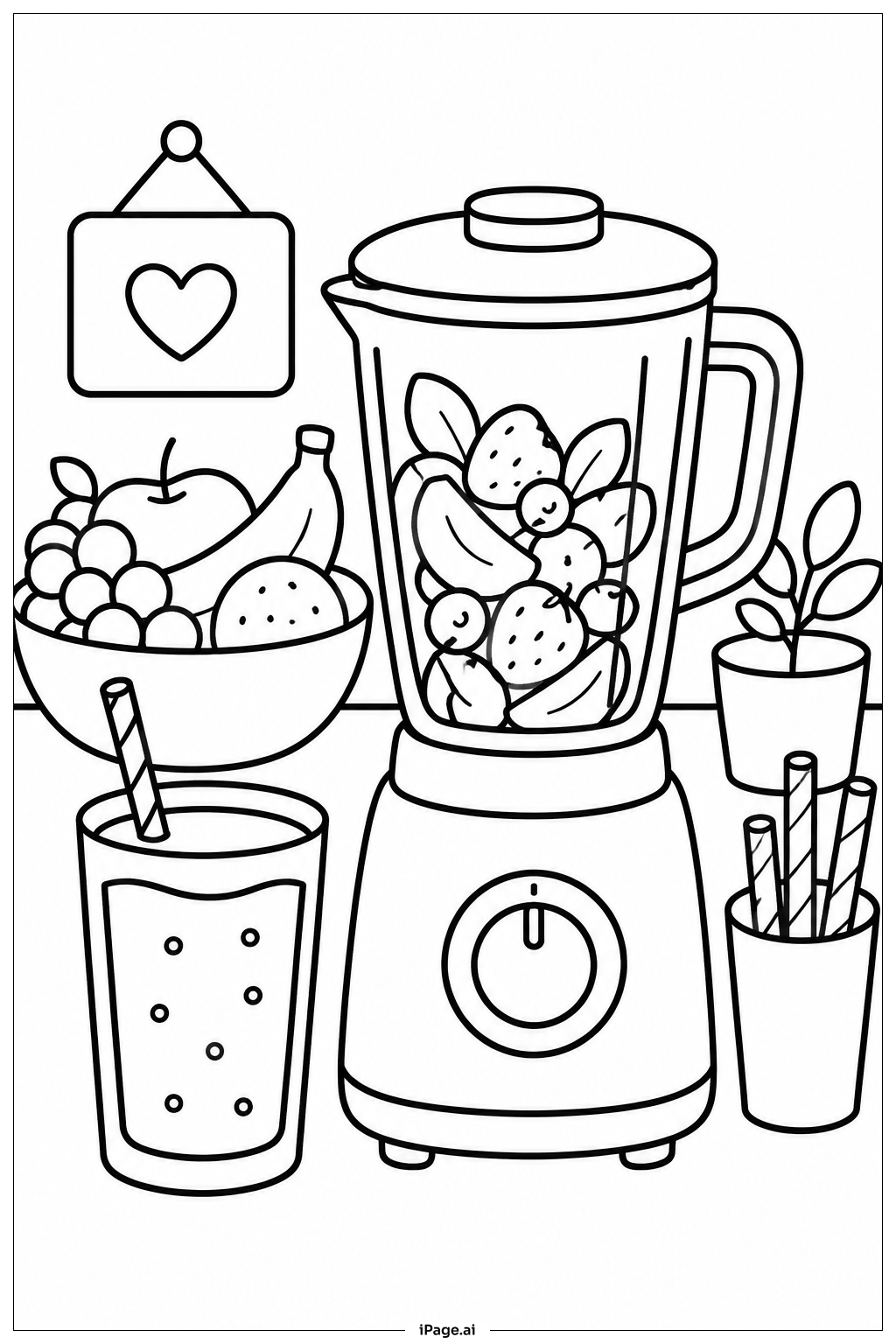
Coloring tips: How to color Fruit Smoothie Counter Fruit coloring page well?
Start by coloring the largest fruits first to set the mood for the whole scene. Use bright, bold colors — red and pink for strawberries, sunny yellow for bananas, orange for mangoes and citrus slices, and golden yellow for pineapples. For the smoothie inside the blender and cup, try blending two colors like pink and orange to show a mixed fruit drink. Add a soft green to leaves and fruit tops. Use a lighter shade of each fruit color for the cut slices to show the inside texture. The counter surface can be light brown or cream. Keep the overall palette vibrant and cheerful to make the scene feel fresh and fun. Kids can get creative by inventing their own smoothie color — maybe a purple berry blend or a bright green tropical mix!
Coloring challenges: Which parts are difficult to color and need attention for Fruit Smoothie Counter Fruit coloring page?
• Blender and Smoothie Details: The blender has a clear jar with liquid inside, which can be tricky to color. You need to show the blended smoothie while keeping the jar looking transparent. Try using a light tint of your smoothie color inside the jar and leaving a thin white highlight along the edge to suggest glass.\n• Overlapping Fruits: Many fruits overlap each other on the counter. Coloring them without mixing up which part belongs to which fruit takes careful attention. Work one fruit at a time and use slightly different shades to help each piece stand out from its neighbor.\n• Cut Fruit Textures: Fruit slices like oranges and kiwis have detailed inner patterns — sections, seeds, and rinds. These small areas need a steady hand and a fine-tipped coloring tool. Use a darker shade for the rind edge and a lighter tone for the inner flesh to give a realistic look.\n• Leaves and Small Accents: Pineapple crowns, strawberry leaves, and fruit stems are small but important. They add life to the image. Use varying shades of green — darker for shadows between leaves and lighter for the tips — to make them look full and natural.\n• The Smoothie Cup: The cup with its straw and swirly design needs clean, careful coloring. The straw can be striped with two alternating colors. The cup itself can have a gradient effect, lighter at the top and deeper in color toward the bottom, to suggest a thick, creamy smoothie.
Benefits of coloring books: Advantages of drawing Fruit Smoothie Counter Fruit coloring page
Coloring this fun fruit smoothie scene offers a wonderful mix of creative and educational benefits for kids. Working through all the different fruits helps children learn to recognize and name a variety of foods, connecting art with real-world knowledge in a playful way. Choosing and mixing colors for each fruit sharpens color recognition and encourages kids to think about how colors work together to create a vibrant, appetizing scene. The detailed textures in fruit slices, leaves, and the blender train fine motor skills and hand-eye coordination, especially when coloring small sections carefully. Staying focused on each element of the image builds patience and attention to detail, skills that support learning in many areas. The cheerful, food-themed subject matter can also spark conversations about healthy eating and nutrition, making it a great activity for parents and teachers to share with children. Most of all, completing a colorful, finished image gives kids a real sense of accomplishment and pride in their creative work. It is a joyful, screen-free activity that keeps young minds engaged and imaginations active.