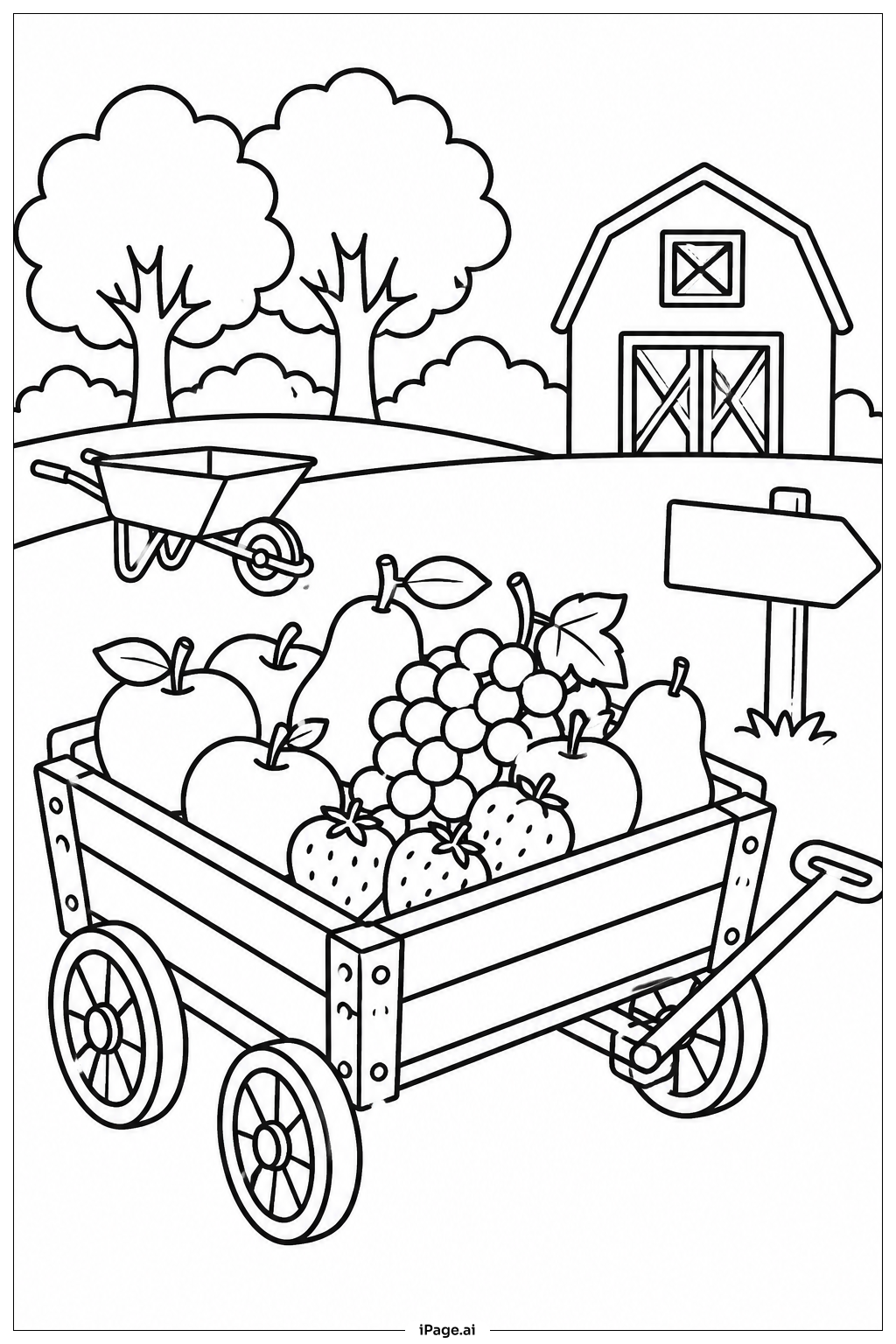
Coloring tips: How to color Fruit Picking Cart Fruit coloring page well?
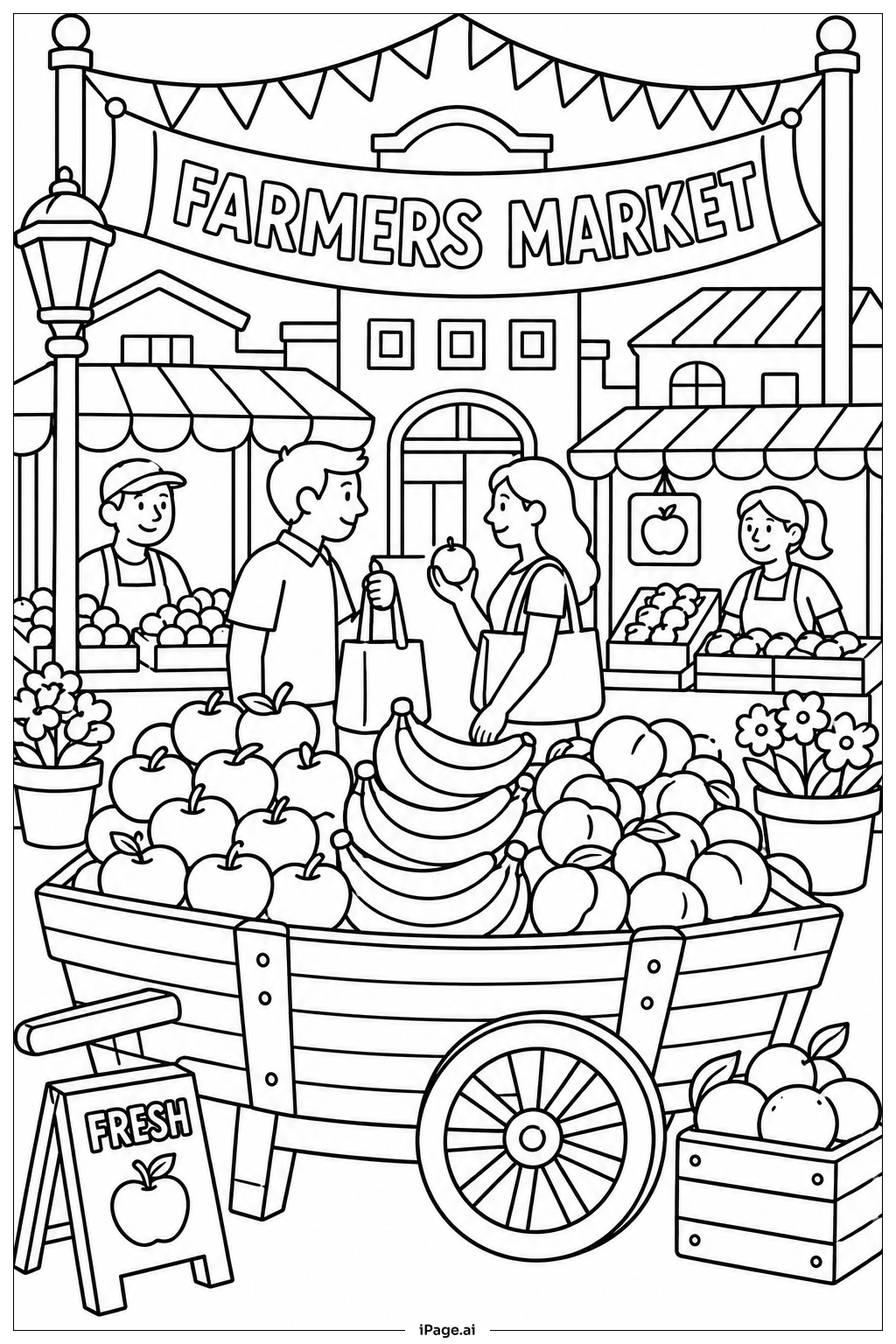
Start with the fruits first since they are the main focus. Use bright, bold colors to make each fruit stand out. Color apples red or green, bananas yellow, oranges a warm orange, grapes purple or green, and strawberries red with tiny yellow seeds. For the cart, use brown shades to give the wooden slats a natural look. Add darker brown lines to show wood grain and depth. Color the spoked wheels dark brown or gray. Use green for any leaves and vines. Try adding a light yellow or cream background to make all the bright fruit colors pop. If you want extra fun, mix different shades of the same color on each fruit to make them look round and three-dimensional. Take your time with small details like seeds, stems, and wood grain — they really bring the whole picture to life!
Coloring challenges: Which parts are difficult to color and need attention for Fruit Picking Cart Fruit coloring page?
• Distinguishing Individual Fruits: The cart is packed with many different fruits stacked closely together. It can be tricky to tell where one fruit ends and another begins. Look carefully at the outlines before choosing colors so each fruit gets its own distinct shade and does not blend into its neighbor.
• Coloring the Wooden Cart: The cart body is made of many narrow wooden slats with horizontal and vertical lines. Staying within each slat while also creating a consistent wood-brown tone takes patience and a steady hand. Using two or three shades of brown can help add depth and texture to the wood without making it look flat.
• Rendering the Spoked Wheels: The large wheels have multiple thin spokes radiating from a central hub. These narrow sections are small and close together, making it easy for colors to bleed across the lines. A thin-tipped colored pencil or fine marker works best here to keep each spoke clean and precise.
• Adding Depth to Stacked Fruits: Because fruits are piled on top of each other, some areas naturally fall in shadow while others catch the light. Showing this depth by using lighter colors on top and slightly darker shades on the sides and bottom makes the pile look full and realistic rather than flat.
• Small Leaf and Stem Details: Scattered throughout the cart are small leaves, curling vines, and short stems. These tiny elements require careful coloring with a sharp pencil or fine-tip marker to avoid accidentally coloring over the surrounding fruit or cart wood.
Benefits of coloring books: Advantages of drawing Fruit Picking Cart Fruit coloring page
Coloring this fruit picking cart page offers a wonderful range of benefits for children and beginners alike. Working through the many different fruits helps kids learn to identify colors in nature — connecting red with apples, yellow with bananas, and purple with grapes in a playful, hands-on way. This builds early knowledge about food and the natural world.
The variety of shapes and textures in this image — round fruits, long bananas, thin cart slats, and spoked wheels — gives young colorists great practice in staying within lines and developing fine motor control. These skills directly support handwriting and other detailed hand movements used in school.
Choosing which colors to use for each fruit and how to shade the wooden cart encourages creative thinking and decision-making. Kids learn that there is no single right answer, which builds confidence and a sense of artistic ownership.
The repetitive, focused nature of coloring also helps children slow down, concentrate, and find a calm, meditative rhythm. This is especially helpful for managing restless energy or stress after a busy school day. Completing a detailed image like this gives a satisfying sense of achievement that motivates kids to keep creating and exploring their artistic abilities.