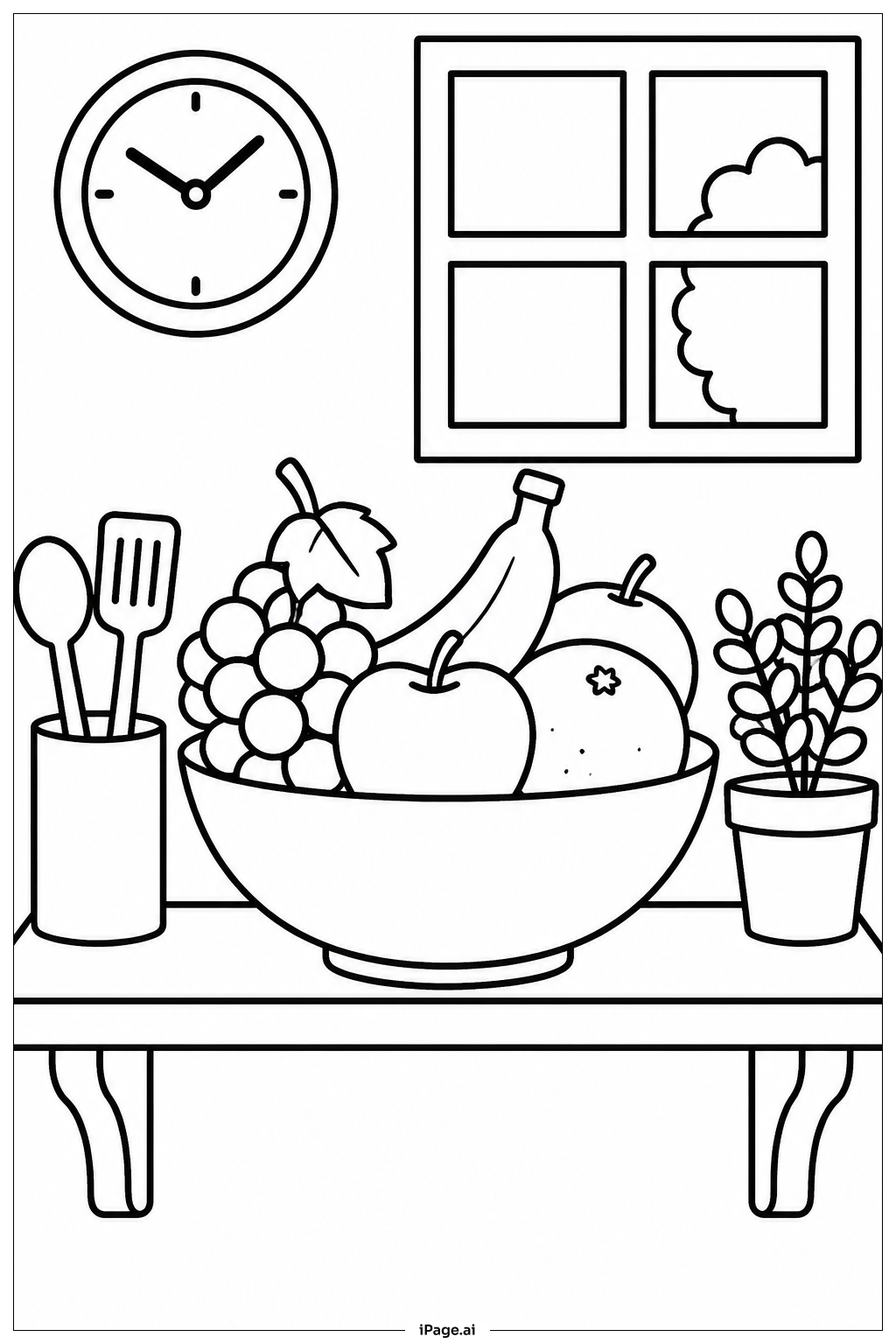
Coloring tips: How to color Fruit On Kitchen Shelf coloring page well?
Start with the lightest fruits first. Color the bananas a bright yellow, then move on to the oranges using a warm orange shade. Give the apples a bold red or green — both look great. Use deep purple or violet for the grapes, and add tiny highlights to make them look round and juicy. The strawberries look best in bright red with small yellow seeds dotted across them. Color the pineapple body in golden yellow and its spiky crown in different shades of green. For the cherries, use a rich dark red. The wooden shelf can be colored in light brown or tan. Add shadows under each fruit using slightly darker tones of the same color to give the scene a sense of depth. Feel free to mix and match — there are no wrong color choices here. Have fun and make the shelf look as fresh and colorful as a real fruit market!
Coloring challenges: Which parts are difficult to color and need attention for Fruit On Kitchen Shelf coloring page?
• Small Fruit Details: Many fruits on the shelf have tiny details such as seeds on strawberries, small dots on oranges, and delicate lines on grape skins. Coloring these small areas requires a fine-tipped colored pencil or marker to stay within the lines and bring out the texture accurately without smudging nearby colors.
• Overlapping Shapes: Several fruits overlap each other on the shelf, such as grapes clustering together and cherries sitting beside apples. Where two fruits touch, it can be tricky to keep their colors separate and clean. Using a thin brush or a sharp pencil tip at the edges helps create clear color boundaries.
• Creating Round, Three-Dimensional Fruit: Fruits like oranges, apples, and grapes are naturally round. Making them look three-dimensional requires adding lighter tones in the center and darker shades near the edges. This shading technique can be challenging for younger colorists who are still learning about light and shadow.
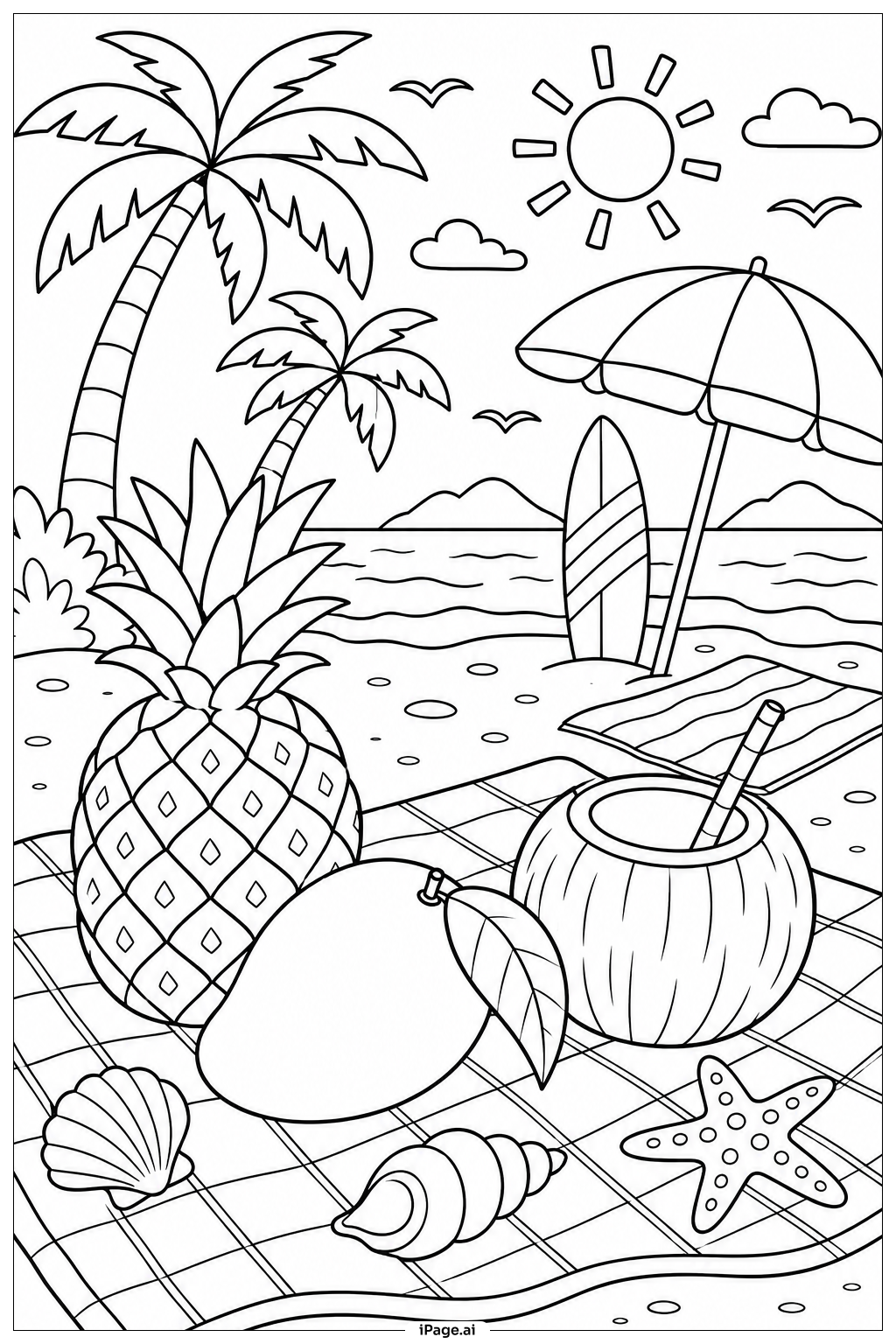
• The Pineapple Texture: The pineapple has a unique diamond-pattern skin that is made up of many small sections. Each section can be colored slightly differently to show the bumpy texture. This repetitive and detailed task requires patience and careful color application to avoid making the pattern look flat or messy.
• Balancing the Overall Color Palette: With so many different fruits in one scene, choosing colors that look good together without clashing is a real challenge. The goal is a vibrant but balanced composition where no single fruit overpowers the others. Planning the color scheme before starting is a helpful strategy.
Benefits of coloring books: Advantages of drawing Fruit On Kitchen Shelf coloring page
Coloring this fruit shelf scene offers a wide range of benefits for kids and beginners alike. Working with so many different fruit shapes helps young colorists practice identifying colors found in the real world, building a stronger connection between what they see in nature and what they put on paper. This kind of real-world color matching sharpens observation skills in a fun and engaging way.
The variety of shapes — round oranges, curved bananas, clustered grapes — gives children plenty of practice with fine motor control. Carefully coloring within each outline strengthens the small hand muscles used for writing and drawing.
Trying to shade fruits to look round and three-dimensional introduces basic art concepts like light, shadow, and depth in a very approachable way. These are foundational skills that support future drawing and painting.
Since the scene has many fruits to color, it also encourages focus and patience. Finishing the whole shelf gives a real sense of accomplishment. The bright, cheerful subject matter keeps motivation high throughout the activity.
Finally, coloring familiar foods like apples, strawberries, and bananas can spark conversations about healthy eating and nutrition, making this a great cross-topic activity that combines creativity with early learning about food and health.