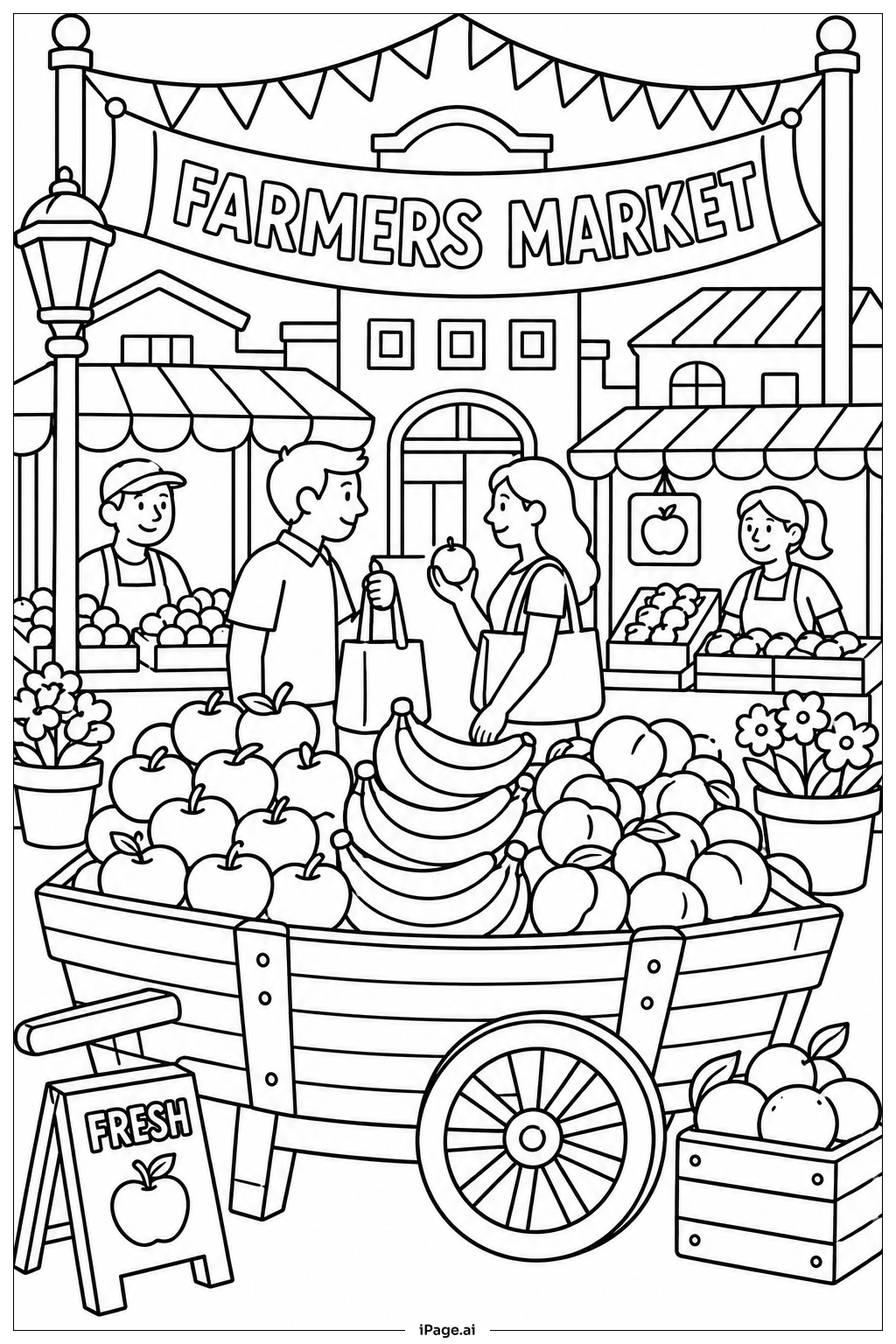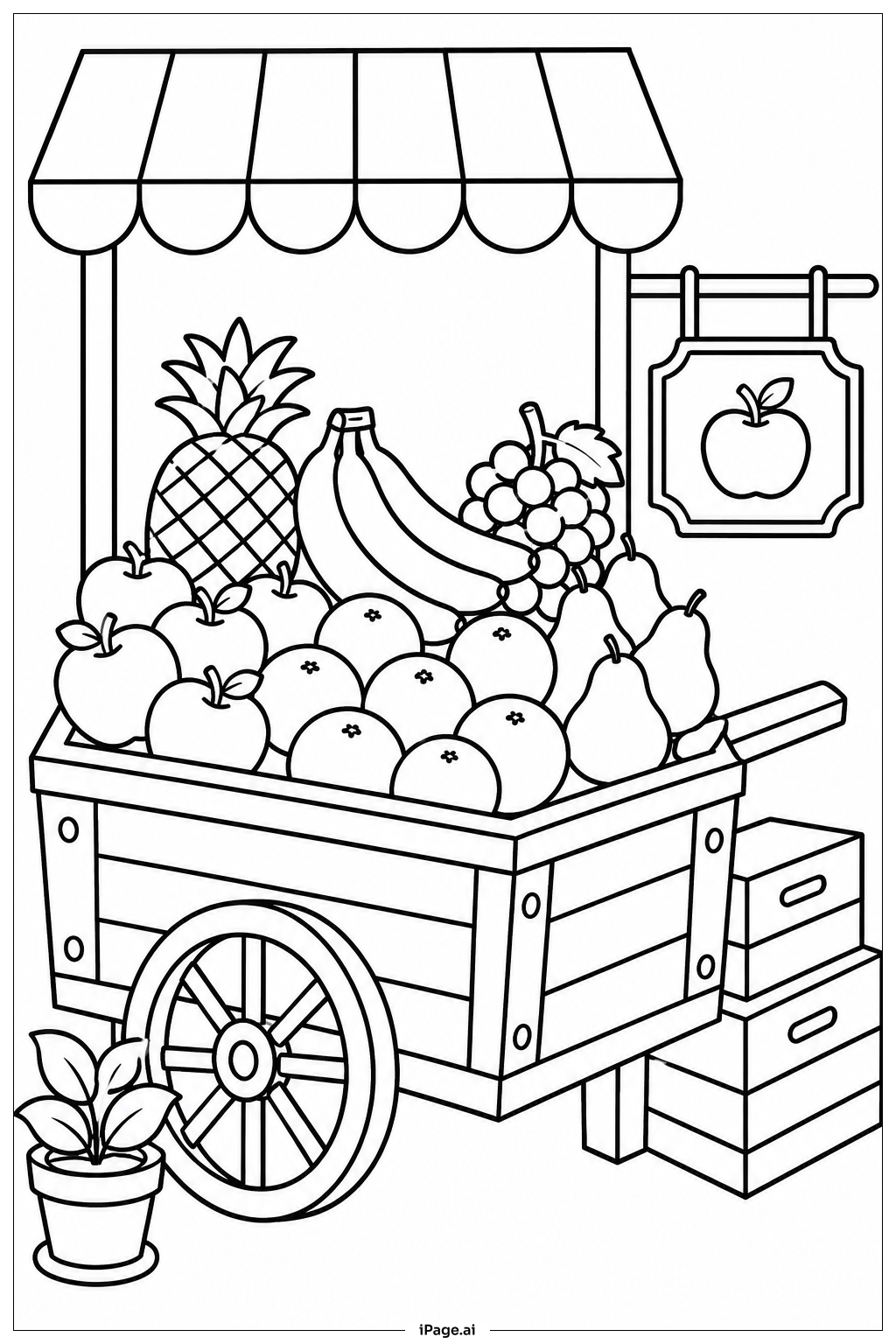
Coloring tips: How to color Fruit Market Cart Fruit coloring page well?
Start with the fruits that have the brightest, most recognizable colors. Use yellow for bananas, red or green for apples, orange for oranges, and deep purple or green for grapes. Paint the pineapple with golden yellow and add brown diamond patterns on its skin. Color the watermelon with bright green on the outside and bold red on the inside if cut open. Use warm browns for the wooden cart frame and wheels, adding a darker shade along the edges to show depth and shadow. For the baskets, try tan or light brown tones. Leaves and stems look great in various shades of green. Don't be afraid to mix light and dark shades of the same color to make each fruit look round and three-dimensional. Adding a soft shadow under the cart and fruits helps bring the whole scene to life. Have fun mixing colors and making the market cart as vibrant and cheerful as a real fruit stand!
Coloring challenges: Which parts are difficult to color and need attention for Fruit Market Cart Fruit coloring page?
• Variety of Fruit Shapes: The cart holds many different fruits, each with its own unique shape, texture, and color. Keeping track of which color belongs to which fruit — especially where they overlap or are stacked close together — requires careful attention and patience. Young colorists may need to plan ahead before picking up their colors.
• Overlapping and Layering: Many fruits are piled on top of one another, creating overlapping areas that can be tricky to color neatly. Staying within the lines where two fruits touch, such as where a bunch of grapes sits next to a pineapple, takes a steady hand and fine-tipped tools like colored pencils or thin markers.
• Wooden Cart Texture: The rustic wooden cart has planks, spokes, and grain-like lines that are small and closely spaced. Coloring these details evenly without muddying the wood tones requires blending darker and lighter browns carefully to suggest the natural look of aged wood.
• Creating Depth and Volume: Fruits are round and three-dimensional objects. Showing that roundness on a flat page means using shading — adding darker tones on one side and lighter tones on the other. This technique can be challenging for beginners but is a great skill to practice.
• Small Details and Highlights: Tiny features like fruit stems, leaf veins, pineapple skin patterns, and grape shine spots are small and easy to accidentally color over. Using a sharp pencil tip or a fine-point marker helps preserve these details and gives the finished artwork a polished, realistic look.
Benefits of coloring books: Advantages of drawing Fruit Market Cart Fruit coloring page
Coloring this fruit market cart scene offers a wide range of benefits for children and young learners. First, it builds fine motor skills as kids carefully color inside the lines around small, detailed fruit shapes and the intricate wooden cart. This steady, focused hand movement strengthens the muscles used for writing and drawing.
Second, it supports color recognition and learning. Children naturally connect the fruits with their real-life colors — red apples, yellow bananas, orange oranges — reinforcing early science and nature knowledge in a fun, hands-on way.
Third, the variety of shapes and textures in this image encourages creative thinking. Kids can experiment with shading, blending, and pattern-making, developing their artistic confidence along the way.
Fourth, focusing on a detailed coloring task like this promotes concentration and mindfulness. Sitting quietly and working through the image from one section to the next builds patience and the ability to stay on task.
Finally, completing the full cart scene gives children a real sense of accomplishment. Seeing a finished, colorful piece of artwork they created themselves boosts self-esteem and pride. This image is a wonderful choice for Coloring Pages that are both educational and genuinely enjoyable for Boys, Girls, and Adults alike.