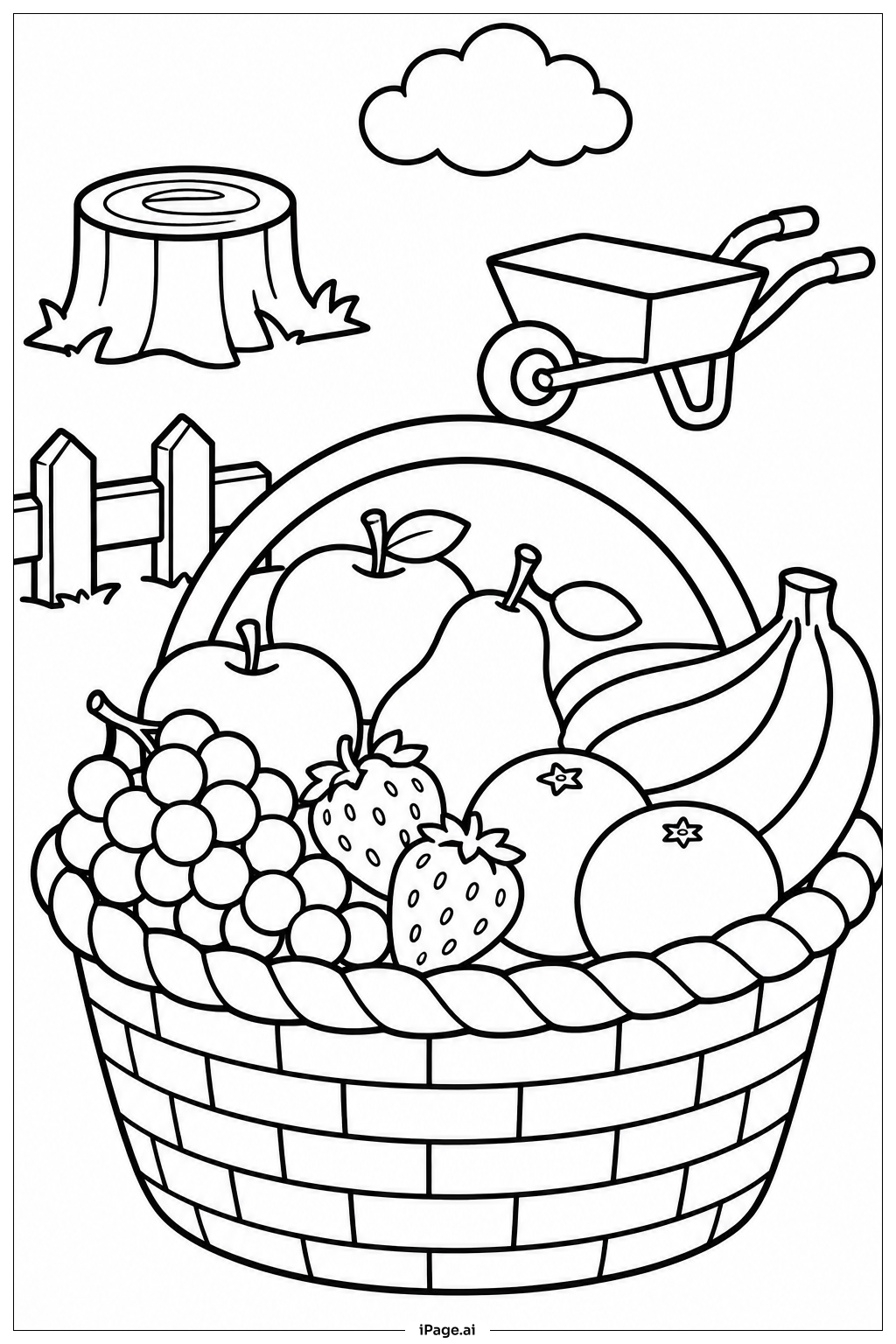
Coloring tips: How to color Fruit Harvest Basket coloring page well?
Start by coloring the fruits in their natural shades. Use bright red or green for apples, deep purple or green for grapes, warm yellow for pears and lemons, and vivid orange for oranges. Color strawberries in bright red with tiny yellow seeds. For the leaves and vines, use different shades of green to add depth. The woven basket looks great in warm tan, brown, or golden tones. Try using darker shades on the inner parts of the weave to make it look three-dimensional. Add light yellow or white highlights on the fruits to make them look shiny and fresh. Feel free to mix colors creatively and make each fruit stand out with its own unique shade. This is a great image to explore blending and shading techniques.
Coloring challenges: Which parts are difficult to color and need attention for Fruit Harvest Basket coloring page?
• Woven Basket Texture: The basket features an intricate crisscross weave pattern with many small intersecting lines. Staying within these tiny sections requires careful use of fine-tipped coloring tools. Alternating light and dark shades across the weave is important to make the texture look realistic and three-dimensional, which can be tricky for younger colorists.
• Overlapping Fruits: Many fruits in the basket overlap each other, creating layered compositions. Keeping the colors of each fruit distinct while they touch or overlap requires careful attention. Without clear boundaries, colors can blend together and make individual fruits hard to identify.
• Small Leaf and Vine Details: The leaves and curling vines woven between the fruits are small and closely spaced. Coloring these tiny shapes without accidentally going over the edges onto neighboring fruits takes a steady hand and patience. Using a fine-tipped marker or a sharp colored pencil is strongly recommended here.
• Highlights and Shading on Fruits: Fruits have rounded, smooth surfaces that reflect light. To make them look natural and three-dimensional, colorists need to leave lighter areas near the top of each fruit and apply darker tones toward the sides and bottom. This technique of shading and highlighting can be challenging for beginners who are still learning color gradation.
• Color Variety Management: With so many different fruits packed together, choosing a harmonious color palette is important. Using too many bright, saturated colors at once can make the image look overwhelming. Balancing bold fruit colors with softer tones for the basket and leaves requires thoughtful planning before starting.
Benefits of coloring books: Advantages of drawing Fruit Harvest Basket coloring page
Coloring this Fruit Harvest Basket image offers a wide range of benefits for children and beginners alike. Working through the many details of the image helps strengthen fine motor skills and improves hand-eye coordination as colorists carefully fill in small spaces. The variety of fruits encourages color recognition and helps younger children learn the natural colors associated with different fruits in a fun and engaging way. Choosing which colors to use for each element also nurtures creative thinking and decision-making skills. The process of shading rounded fruits introduces basic art concepts like light and shadow in an approachable way. Completing a detailed image like this builds a sense of accomplishment and boosts confidence. The repetitive, focused nature of coloring also promotes mindfulness and helps reduce stress, making it a relaxing and therapeutic activity. Overall, this harvest scene combines learning, creativity, and relaxation in one enjoyable coloring experience.