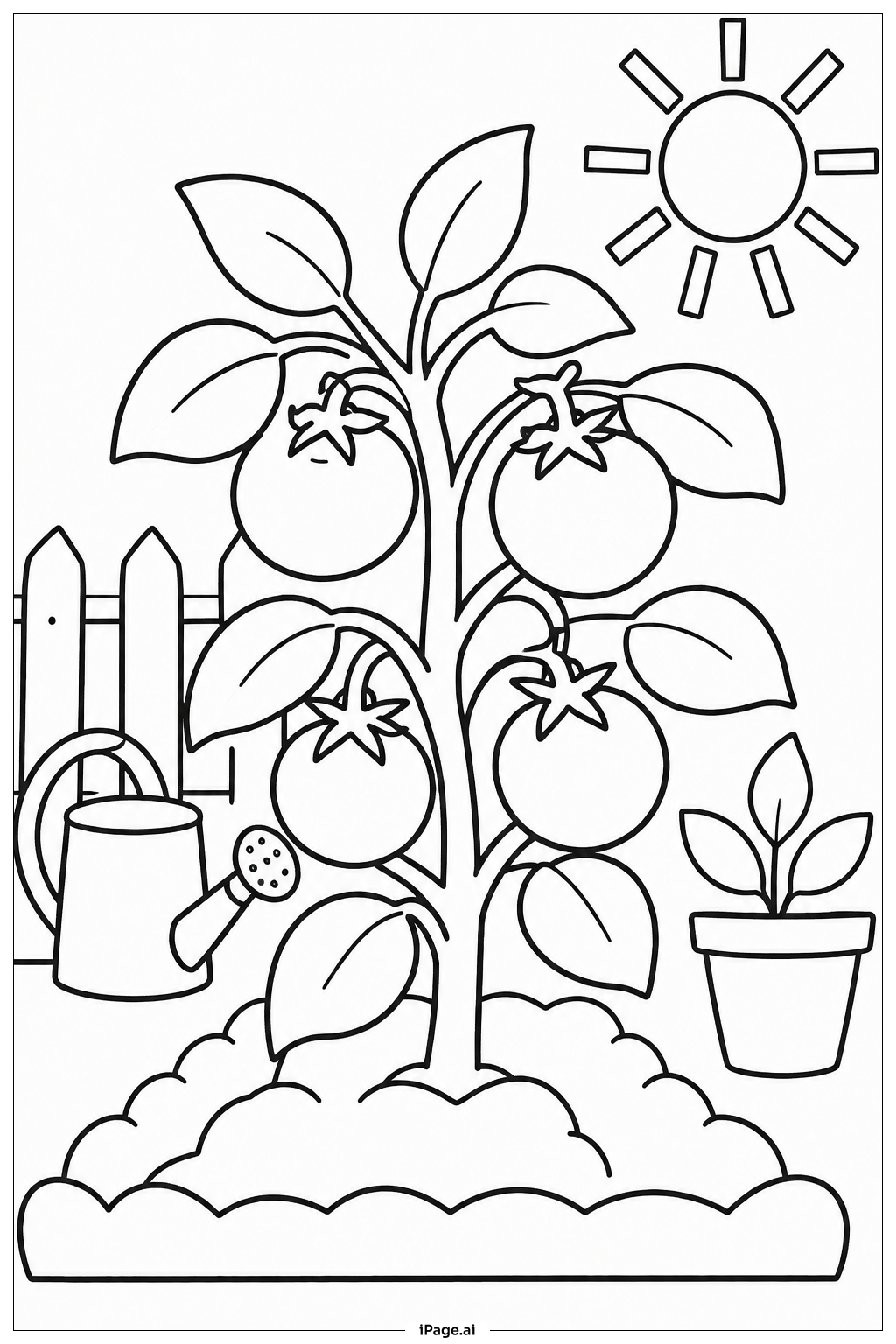
Coloring tips: How to color Fruit Garden Row Fruit coloring page well?
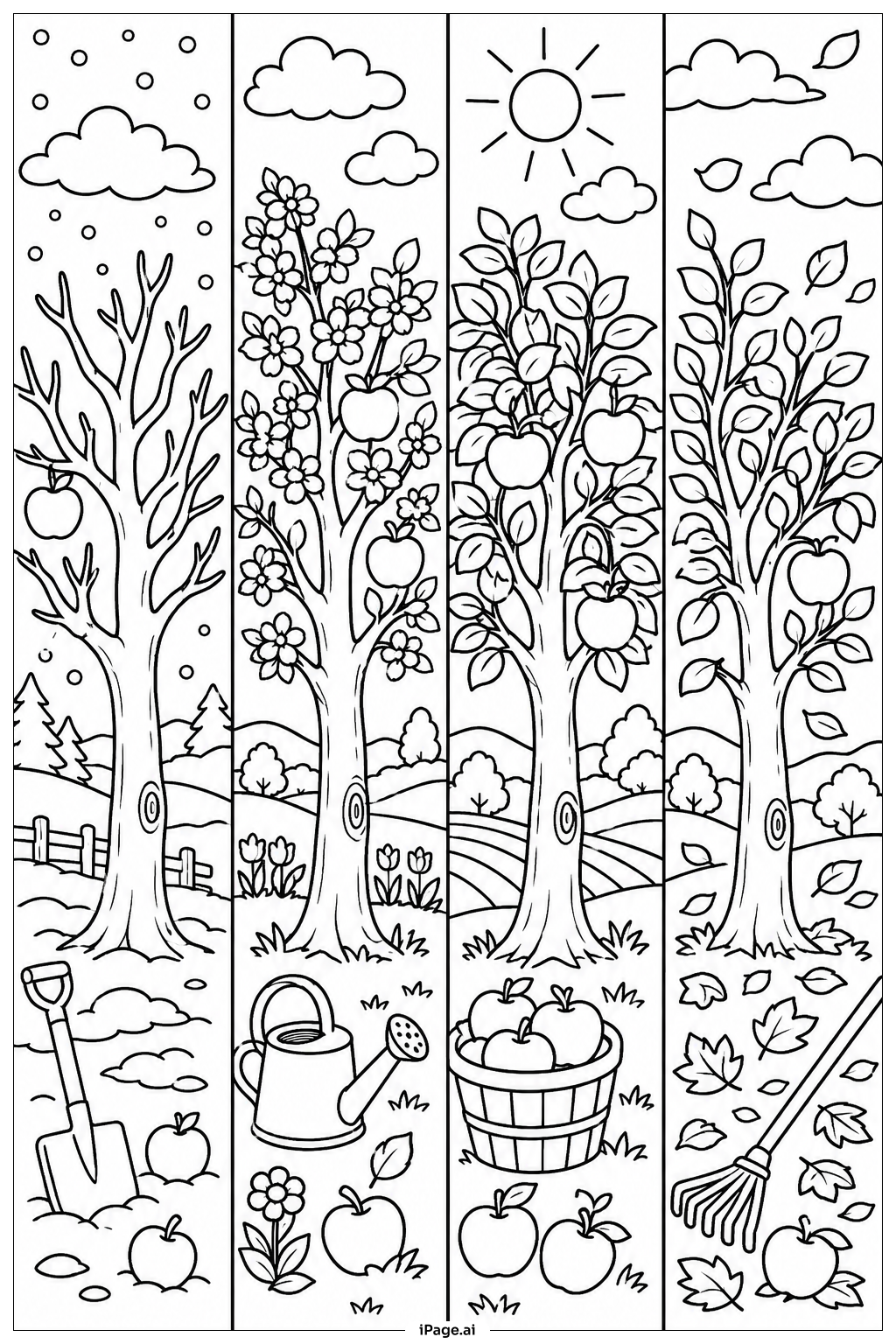
Start with the brightest fruits first to set the mood for the whole page. Color strawberries a bold red and add tiny yellow dots for the seeds. Use deep red or dark pink for the cherries and a lighter green for their stem. Give the apple a classic red, green, or even yellow tone — any works well. The pineapple looks great in golden yellow with warm brown criss-cross lines on its body and bright green for the spiky crown leaves. For the grapes, try purple or deep violet, leaving a small white dot on each grape to show a shiny highlight. Use different shades of green for all the leaves to keep things lively. Mixing light and dark tones of the same color adds a natural, three-dimensional look. Feel free to add a soft background in sky blue or pale yellow to make the fruits pop off the page.
Coloring challenges: Which parts are difficult to color and need attention for Fruit Garden Row Fruit coloring page?
• Tiny Seed Details on the Strawberry: The strawberry has many small seed dots spread across its surface. Staying inside each tiny dot without going over the surrounding red area takes steady hands and a sharpened pencil or fine-tipped marker. Young colorists may find this the trickiest part of the page.
• Pineapple Texture Pattern: The pineapple body has a criss-cross grid pattern that divides the surface into small diamond sections. Each section can be colored individually to create a realistic look, but keeping colors neat within those small areas requires patience and control. Using two close shades of yellow or orange can make this section look really impressive.
• Grape Cluster Highlights: Each grape in the cluster is a small round shape. Adding a bright highlight dot or leaving a white spot on each grape takes careful planning. If the grapes are colored all one flat tone, they can look dull, so blending light and shadow within each small circle is a real skill-builder.
• Overlapping Leaves and Stems: Several fruits share overlapping leaves and thin stems. Deciding which leaf goes in front and which sits behind, and then using slightly different green shades to show that depth, can be confusing for beginners. Tracing the outline of each leaf before filling it in helps a lot.
• Keeping Each Fruit Visually Distinct: Since all the fruits are lined up close together, making sure each one stands out from its neighbor is a challenge. Choosing colors that contrast well at the borders — for example, a red apple next to golden pineapple — keeps the row looking organized and vibrant.
Benefits of coloring books: Advantages of drawing Fruit Garden Row Fruit coloring page
Coloring this fruit garden row offers a wonderful mix of fun and learning for kids of all ages. Working through each fruit one by one builds focus and concentration, helping children practice staying on task in an enjoyable way.
Because each fruit has its own unique shape, texture, and color, this page is a great introduction to observational thinking. Kids learn to notice real-world details — like the pattern on a pineapple or the shine on a cherry — and translate that into their coloring choices.
Fine motor skills get a solid workout here. Filling in small seed dots, following curved outlines, and blending shades within tight spaces all strengthen hand control and pencil grip, skills that directly support handwriting development.
The variety of fruits also sparks creativity. There is no single right answer for how to color an apple or a bunch of grapes, so children feel free to experiment with different color combinations and techniques. That creative freedom builds confidence.
For older kids, layering colors to create light and shadow effects turns this into a satisfying artistic challenge. Completing the full row gives a real sense of accomplishment and pride. Overall, this page makes coloring both a relaxing and genuinely educational activity.