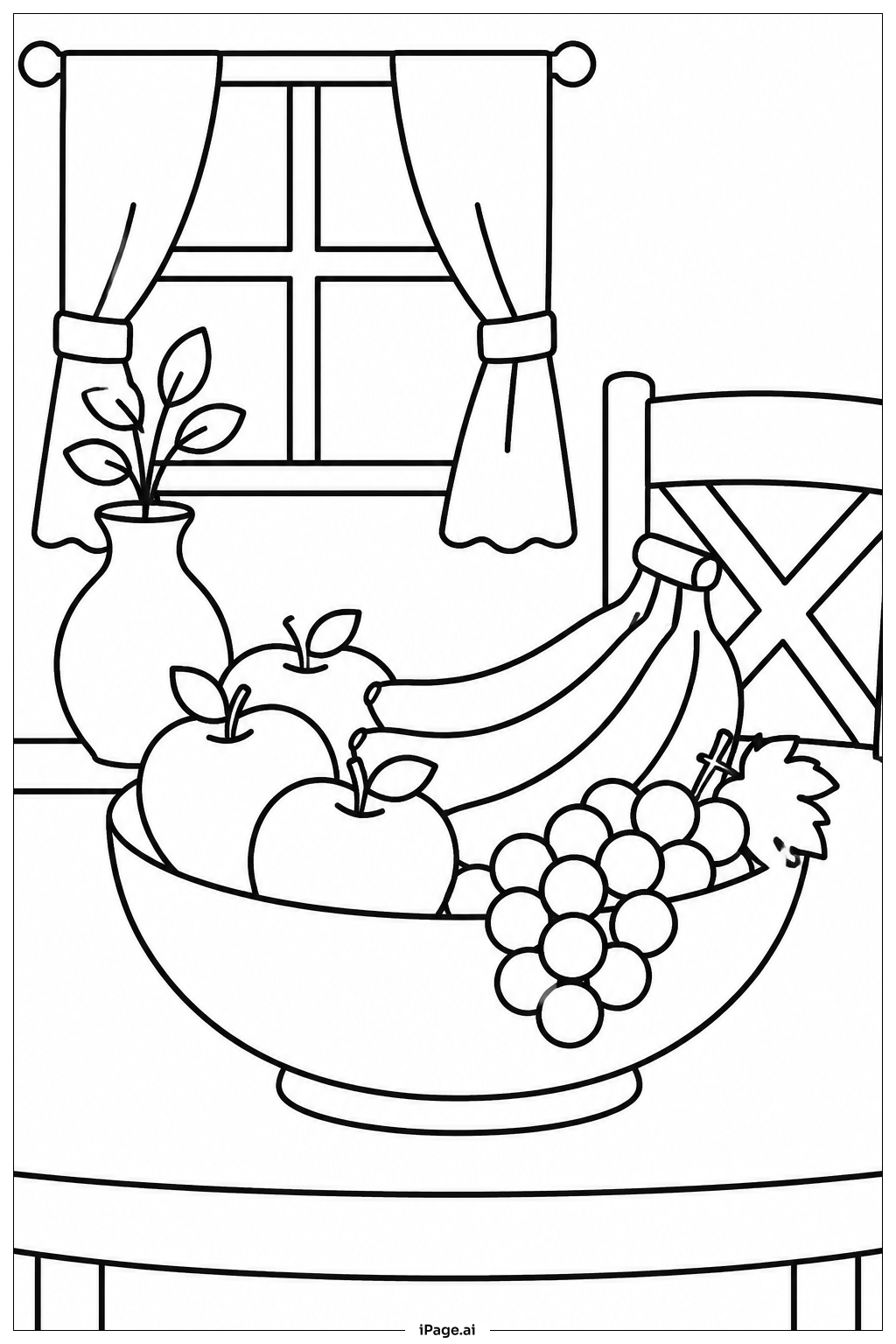
Coloring tips: How to color Fruit Bowl On Table Fruit coloring page well?
Start with the lightest colors and work toward the darker ones. Use bright red or green for the apples, and sunny yellow for the bananas. The grapes look great in deep purple or red-violet. Try orange for the citrus fruit and soft green or golden yellow for the pears. Add a light brown or warm beige to the bowl itself. You can shade the inside of the bowl with a slightly darker tone to give it depth. For the leaves, use two or three shades of green to make them look layered and real. Don't forget the table — a light wood tone like tan or soft brown works nicely. Take your time with each fruit and try to use at least two shades per item to make the colors pop. This image is great for practicing blending and layering colors.
Coloring challenges: Which parts are difficult to color and need attention for Fruit Bowl On Table Fruit coloring page?
• Coloring Individual Fruits Without Overlapping: The bowl is packed with many fruits placed close together. Each fruit has its own shape and color, so keeping the colors clean and separate can be tricky. Children need to color carefully near the edges where two fruits touch each other, using a fine-tipped marker or a sharpened colored pencil to stay within the lines.
• Adding Depth and Shading to Round Shapes: Fruits like apples, oranges, and grapes are round, and making them look three-dimensional requires shading. This means using a lighter color in the center and a darker tone toward the edges. For younger colorists, this technique can be challenging without some practice or guidance.
• Coloring the Grape Cluster: Grapes are made up of many small overlapping circles. Each individual grape needs its own highlight and shadow to look realistic. This is one of the most detail-heavy parts of the image, requiring patience and a steady hand to avoid muddying the colors together.
• Distinguishing the Bowl from the Fruits: The bowl sits beneath and around the fruits, and its edges can be hard to identify clearly. Colorists need to look closely at the outlines to figure out where the bowl ends and the fruit begins. Choosing a neutral tone for the bowl — like cream, tan, or light gray — helps it stand out without competing with the vivid fruit colors.
• Balancing the Overall Color Composition: With so many different fruits and colors in one image, making the finished piece look balanced and visually pleasing takes some planning. It helps to think about color placement before starting so that similar colors are spread evenly across the image.
Benefits of coloring books: Advantages of drawing Fruit Bowl On Table Fruit coloring page
Coloring this fruit bowl image offers many wonderful benefits for kids and beginners alike. First, it helps children learn to recognize different fruits and their natural colors, connecting art with everyday knowledge about healthy eating. This makes the activity both creative and educational. Second, working through all the small details — like the grape cluster, banana curves, and leaf shapes — helps build fine motor skills and hand control. These are important skills for writing and other daily tasks. Third, deciding which colors to use and how to arrange them encourages creative thinking and imagination. Children get to make their own choices and feel proud of the results. Fourth, focusing on a detailed image like this helps improve concentration and patience. Sitting quietly and working through each section teaches kids how to stay on task. Fifth, the process of coloring is naturally calming and can reduce stress or anxiety, making it a great quiet-time activity. Finally, completing the image gives a strong sense of achievement. Whether simple or detailed, the finished fruit bowl is something to display and feel good about. It is a fun, healthy, and rewarding activity for all ages.