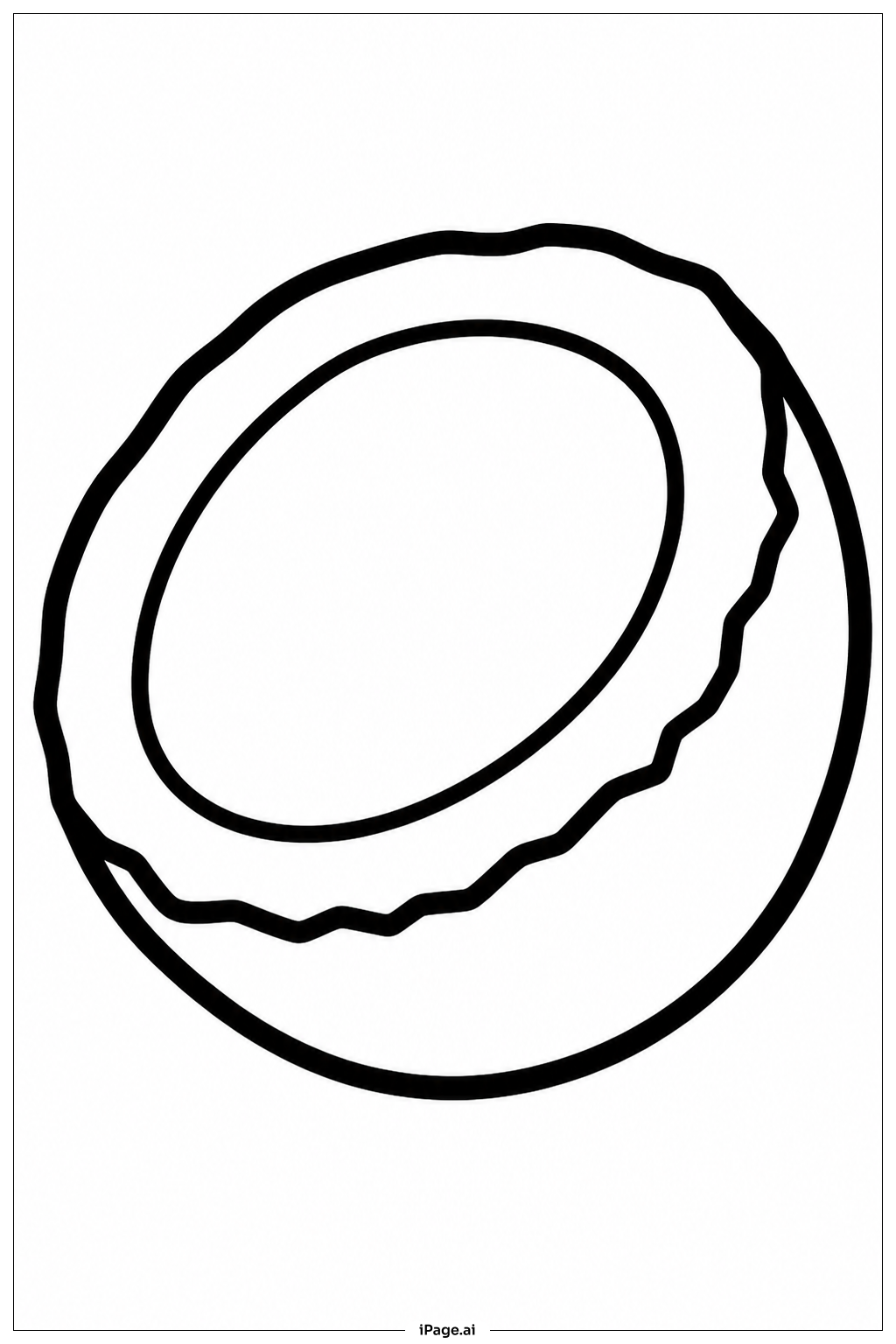
Coloring tips: How to color Coconut Half Fruit coloring page well?
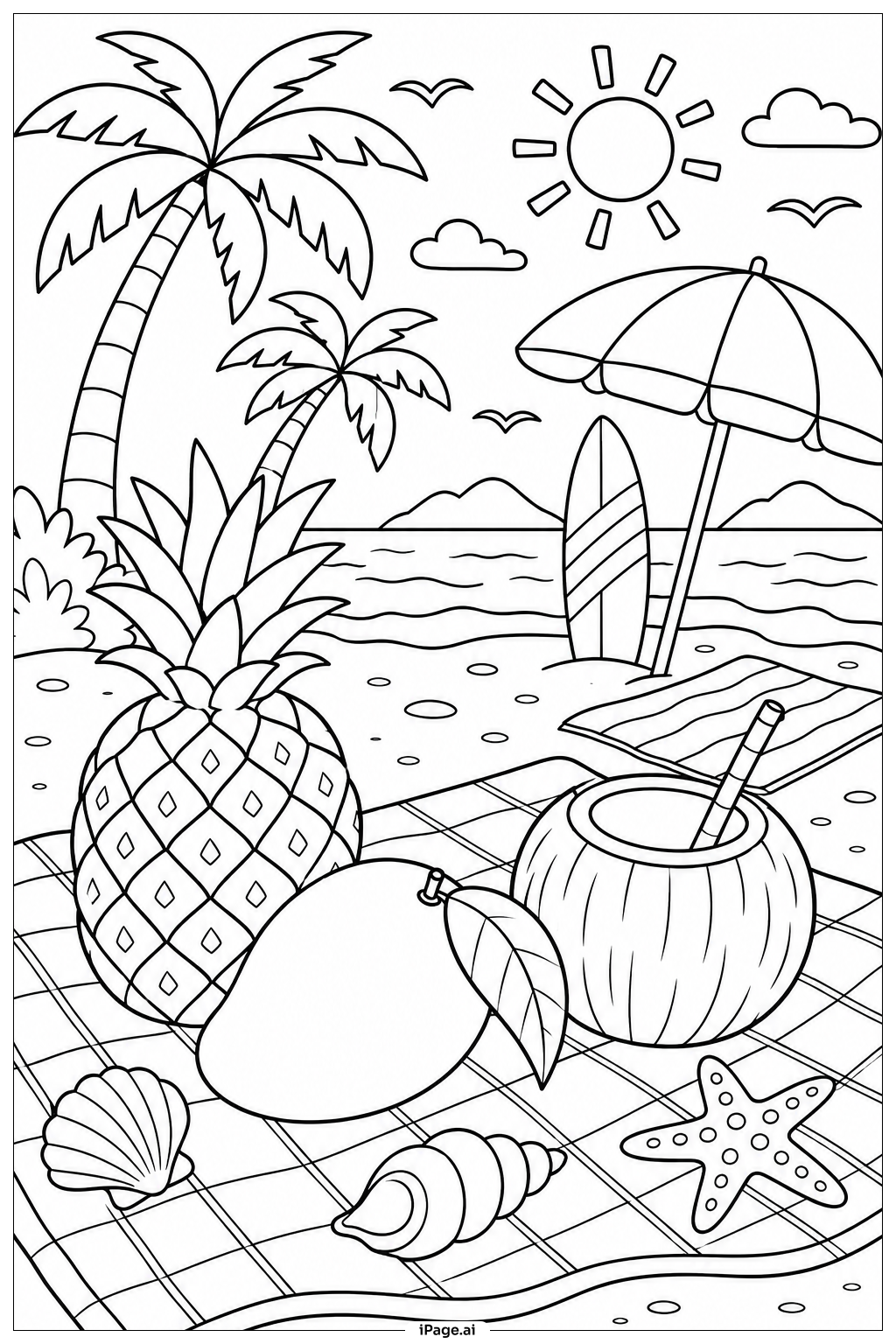
Start with the outer husk using shades of brown and tan. Use dark brown for the rough, fibrous outer layer and a lighter golden brown for the inner shell. For the white coconut meat, use a very light cream or off-white color. You can add a soft yellow tint to give it a warm, natural look. The hollow center can be left white or lightly shaded with pale gray or blue to suggest the inside of the fruit. Try using short, textured strokes on the husk to show its rough, stringy surface. Smooth, gentle strokes work best for the soft coconut meat inside. Adding a bit of shading along the edges of the meat will make it look round and three-dimensional. Keep the colors natural and earthy to make the fruit look realistic and fresh.
Coloring challenges: Which parts are difficult to color and need attention for Coconut Half Fruit coloring page?
• Fibrous Husk Texture: The outer husk of the coconut is made up of many thin, tangled fibers. Recreating this rough, layered texture with colored pencils or markers can be tricky. You need to use short, overlapping strokes in multiple shades of brown to capture the messy, stringy look without making it appear too flat or too dark.
• Layered Shell Structure: The coconut half shows several distinct layers — the outer husk, the hard inner shell, and the white meat. Keeping each layer visually separate while using a similar color family (browns and whites) requires careful shading and clear boundary lines. Blending too much can make the layers look merged and unclear.
• Curved Inner Meat: The white coconut flesh curves smoothly along the inside of the shell. To make it look realistic and three-dimensional, you need to apply gradual shading from the edges toward the center. Getting the gradient just right takes patience, especially for younger colorists who may not yet be familiar with blending techniques.
• Hollow Center Shadow: The empty cavity inside the coconut should look deep and slightly dark to give the impression of depth. Adding the right amount of shadow without making it look like a solid black hole is a fine balance. Light gray, pale blue, or soft lavender can help suggest depth in a natural way.
• Color Consistency Across the Half: Since both halves of the coconut mirror each other, keeping your colors and shading consistent on both sides can be challenging. Any difference in pressure or color choice between the two sides can make the image look uneven or unfinished.
Benefits of coloring books: Advantages of drawing Coconut Half Fruit coloring page
Coloring this coconut half image offers a range of fun and meaningful benefits for kids and beginners alike. First, it helps children learn about tropical fruits and how they look on the inside, turning a simple activity into a mini science lesson about nature and plants. Identifying the different parts — the husk, shell, and meat — builds early vocabulary and knowledge about the natural world. The variety of textures in this image, from the rough outer husk to the smooth inner flesh, encourages kids to experiment with different coloring techniques like short strokes and blending. This builds fine motor skills and improves hand control over time. Choosing the right shades of brown, cream, and white also develops color awareness and an eye for natural tones. Working through the details of the image, such as the layered shell and curved meat, trains focus and patience. Completing the page gives children a real sense of accomplishment. Overall, this coloring page is a great mix of creativity, learning, and relaxation for young colorists.